
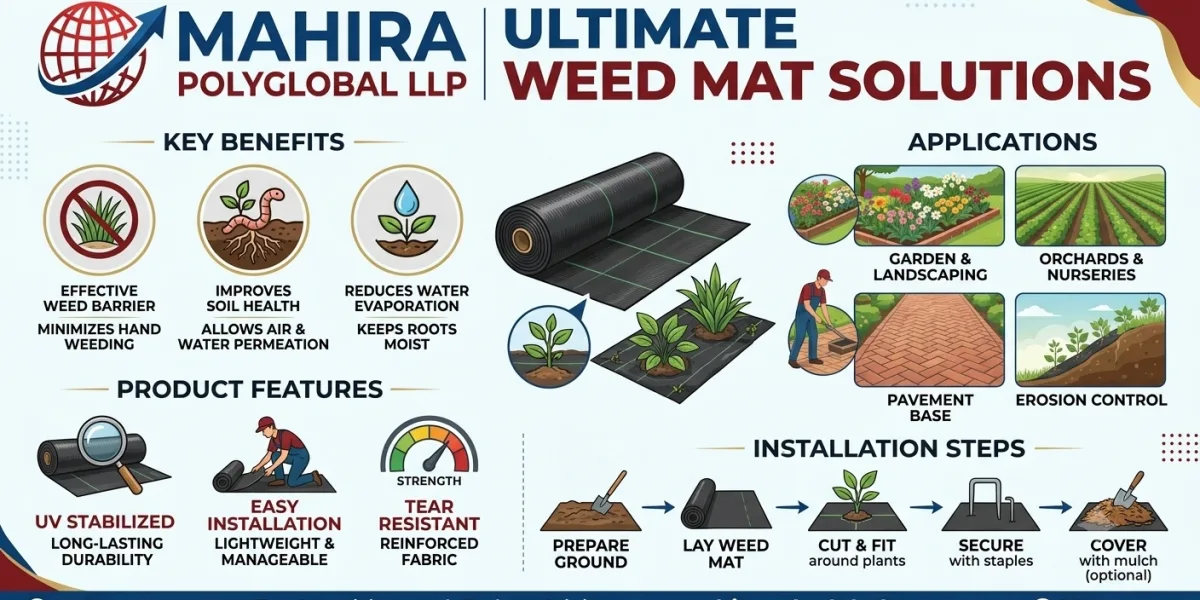
Weed Mats are increasingly used by Greenhouse Growers to maintain a clean growing environment and minimize weed issues. Weed mats (ground covers or weed control fabrics) are installed on the floor or soil, blocking out sunlight and preventing weeds from developing. They also permit water and air to penetrate to the root systems of plants.
What Is a Weed Mat?
A weed mat is a porous material that is used as a cover for the ground in order to help prevent weeds from growing. This type of product works by keeping the sunlight out of contact with the soil, so that the weed seeds will not be able to grow. Weed mats differ from other types of plastic mulch products because they allow air and water to penetrate them.shrijigreen
Is it simply a fabric material used to cover the soil? Yes, in some ways it is. However, a weed mat is so much more than that. It is designed to create a physical block against the growth of weeds, which will compete with your crops for water, nutrients, and sunlight.
Benefits for Greenhouse Growers
One of the best advantages of using weed mats is that you will no longer have to spend so much time hand-pulling weeds. You'll be saving both money and manpower, both of which are some of your largest expenses in running a greenhouse.
Weed mats also help conserve water by reducing evaporation from the soil. The weed mat covers the soil and keeps the root zone moist for a longer period of time. Therefore, growers can irrigate their plants less frequently than if they did not use weed mats.
Weed mats can enhance plant care by: 1. Reducing weed competition for water, nutrients and sunlight; 2. Regulating soil temperatures, providing a more consistent environment for root development; and 3. Minimizing the need for chemical herbicide use that can damage soil biology over an extended period. shrijigreen
But let's be real: weed mats don't solve everything. You must install the mat right and keep it up. When your mat gets damaged or loose, weeds can get through. Growers will need to look at their mats on a regular basis to fix any problems.
Applications in Greenhouses
Weed mats are common in many types of greenhouses. In vegetable greenhouses, weed mats are typically installed beneath pots and trays to provide a clean surface on the ground and inhibit the development of weeds. For example, weed mats can be used in flower greenhouses to support seedlings and immature plants. Additionally, in polyhouses, the entire floor may be covered with weed mats to establish a clean and weed-free growing environment.
They are also a great way to create a clean, weed free growing area when used for pathways and container beds. You can simply put the mat down on the floor and then set your pots or trays on top of it. This will provide you with a clean, weed-free area to grow your plants. In addition to being able to help maintain moisture in the soil, they are extremely beneficial in times of drought.
Choosing the Right Weed Mat
All weed mats are not created equal. Greenhouse owners should determine what kind of material, thickness, permeability and durability they want prior to making a purchase. If the mat is too thin it may tear easily, but if the mat is too thick it may prevent water and air from getting through. Finding the right balance will make all the difference.
Mahira Polyglobal LLP is a reliable Weed Mat Exporter India. They provide weed control mats that can be used in horticultural applications, agricultural applications, nurseries, greenhouses and for industrial use to protect the ground. Greenhouses owners also need to know what the warranty period is and what type of UV resistance the product has.
Installation and Maintenance
Installing a weed mat is a simple process. Growers need to remove all existing weeds from the area, make sure the surface is level, and place the mat down in a flat position. Secure each of the edges with either pins or staples to avoid shifting. Mat can be used directly on the floor for pots and trays or placed on top of a layer of gravel.
Maintenance is another key aspect. It is recommended that growers check their mats periodically to see if there are any rips, holes or weeds growing. If you notice any weeds, make sure to remove them immediately so that they do not have time to grow.
Cost and Return on Investment
Although weed mats can initially be more expensive than other methods, they will ultimately save you money. These mats will reduce your labor, water consumption, and chemical usage, therefore allowing you to increase the profitability of your greenhouse operation.
However, growers need to consider the cost according to their individual requirements. For example, a grower who has a smaller greenhouse might not require the same kind of mat that would be needed by a larger commercial growing operation. Growers will have to select the appropriate mat for the size of their greenhouse and the types of plants they grow.
Conclusion
Weed mats offer a simple, cost-effective way to control weeds in greenhouse environments. These products offer many benefits, including saving money on labor costs, reducing water consumption, improving plant care practices, and decreasing the use of chemical herbicides. As such, whether you have a small garden or a large commercial farm, selecting the proper weed mat will have a significant impact upon the health of your plants and ultimately, the quantity of produce you receive. Mahira Polyglobal LLP provides Weed Mat Manufacturer Gujarat that are specifically tailored for use within greenhouses, horticultural settings, agricultural operations, and nurseries.
Frequently Asked Questions
Q1. What is a weed mat used for in greenhouses?
The purpose of weed mats is to prevent weeds from growing by blocking out the sun's light. Not only do weed mats stop weeds from growing, but they can also aid in keeping water in the soil, protect the soil from eroding, and allow you to easily manage your plants.
Q2. Do weed mats allow water and air to pass through?
Yes. The difference between weed matting and plastic mulch film is that the weed matting allows for the movement of water, oxygen, and nutrients to and from the soil.
Q3. How long does a weed mat last?
How long a weed mat lasts depends on what kind of material it is made out of, as well as where it is being placed. If you take good care of your weed mat, it should last anywhere from three to five years.
Q4. Can weed mats be used in polyhouses?
Weed mats can be placed on the floor of a polyhouse to stop weeds from growing and keep the floor clean.
Q5. Who is the largest Manufacture of Weed mat?
As there is no universally accepted 'largest manufacturer' of weed mats because of differences in the way rankings are determined (e.g., country, types of products made, yearly production), no one company has established itself as the world-wide leader. In India, however, Mahira Polyglobal LLP is considered a significant manufacturer, distributor, and exporter of weed mats employed by agriculturalists, horticulturists, nursery owners, and those operating greenhouses.


