
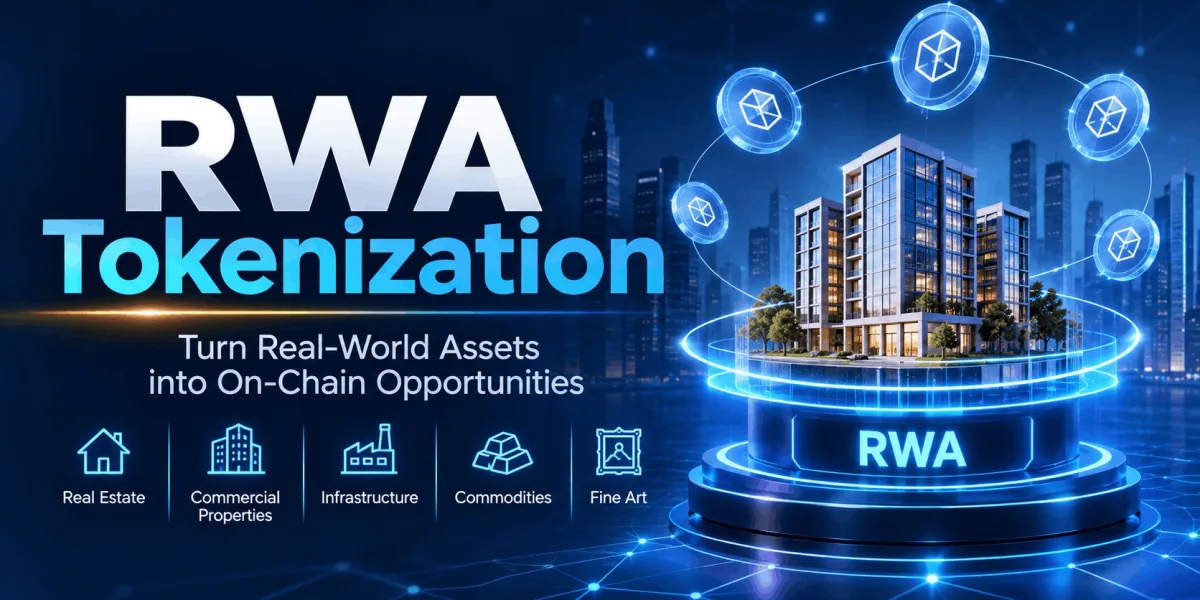
Businesses across industries hold valuable assets that contribute to their long-term growth and financial stability. These assets can include commercial properties, machinery, equipment, intellectual property, infrastructure, private company shares, receivables, and future revenue streams. However, many of these assets are difficult to convert into liquid capital because of traditional ownership structures, lengthy transaction processes, limited buyer access, and complex financial arrangements.
For businesses looking to unlock capital without selling their entire assets, traditional financing options may not always provide the flexibility they need. Selling physical assets can affect operations, while securing loans or attracting private investors may involve strict eligibility requirements and lengthy approval procedures.
Asset Tokenization is emerging as an alternative approach to addressing these challenges. By representing ownership rights, financial interests, or economic benefits associated with real-world assets as digital tokens on a blockchain, businesses can explore new ways to structure asset ownership and access potential investors.
Through RWA Tokenization, previously illiquid business assets can be represented digitally, divided into smaller investment units where legally permitted, and distributed through digital platforms. This approach could create new opportunities for businesses to unlock asset value, improve investment accessibility, and develop more flexible capital-raising models.
Let's explore how tokenization could transform access to previously illiquid business assets and what opportunities it may create for modern enterprises.
Understanding Illiquid Business Assets
Illiquid business assets are valuable resources that cannot be easily converted into cash without significant time, cost, or financial concessions. Unlike publicly traded stocks or readily marketable securities, these assets often require specialized buyers, detailed valuations, legal verification, and lengthy transaction procedures.
Many businesses own substantial assets but cannot immediately access their financial value.
Common examples include:
-
Commercial Real Estate: Office buildings, warehouses, retail spaces, hotels, and industrial properties.
-
Machinery and Equipment: Manufacturing equipment, industrial machinery, construction vehicles, and specialized production systems.
-
Intellectual Property: Patents, trademarks, copyrights, licensing rights, and proprietary technologies.
-
Private Company Equity: Shares and ownership interests in privately held businesses.
-
Accounts Receivable: Outstanding invoices and payments expected from customers.
-
Infrastructure Assets: Renewable energy facilities, transportation networks, telecommunications infrastructure, and utility systems.
-
Future Revenue Streams: Contractual income, royalty payments, and recurring business cash flows.
Although these assets can generate long-term economic value, accessing their financial potential through traditional methods can be complicated.
Tokenization offers another way to represent these assets and their associated economic rights digitally.
2. Why Traditional Business Assets Are Difficult to Liquidate
Traditional asset monetization methods often involve multiple intermediaries, extensive documentation, and limited transaction opportunities. These challenges can prevent businesses from accessing capital efficiently.
Some of the major limitations include:
Limited Buyer Access
Illiquid assets often appeal to a relatively small group of qualified buyers. For example, purchasing an industrial facility or a large commercial property requires considerable capital and specialized knowledge.
This reduces the number of potential participants and can make finding suitable buyers difficult.
High Transaction Costs
Traditional asset transfers may involve legal professionals, valuation experts, brokers, financial institutions, and administrative procedures. These expenses can increase the overall cost of selling or transferring assets.
Lengthy Settlement Processes
Transferring ownership of physical properties, private equity interests, or other complex assets can take weeks or months. Documentation, due diligence, regulatory approvals, and negotiations may extend transaction timelines.
High Investment Requirements
Many valuable business assets require substantial upfront capital. This makes it difficult for smaller investors to participate in opportunities involving commercial properties, infrastructure projects, or private businesses.
Complex Ownership Structures
Businesses may hold assets through subsidiaries, special purpose vehicles (SPVs), joint ventures, or other legal arrangements. These structures can make ownership transfers and investment participation more complicated.
These limitations highlight the need for more flexible approaches to asset representation, investment distribution, and ownership management.
3. How Tokenization Creates New Opportunities for Illiquid Assets
Tokenization uses blockchain technology to represent real-world assets or specific rights associated with them as digital tokens.
Instead of relying exclusively on traditional asset ownership and transfer processes, businesses can create digital representations of eligible assets and manage related transactions through blockchain-based infrastructure.
Each token can represent a specific economic or legal interest, depending on the asset structure and applicable regulations.
For example, a company owning a commercial property worth $10 million could establish a legally structured tokenization model representing eligible ownership or investment interests in that property.
Rather than requiring one investor to purchase the entire property, the business could structure smaller investment units, subject to applicable securities laws and ownership restrictions.
This creates several opportunities:
-
Fractional Investment Participation: Eligible investors can access smaller investment units instead of purchasing entire assets.
-
Digital Asset Representation: Ownership interests and contractual rights can be represented through blockchain-based tokens.
-
Broader Investor Distribution: Businesses can reach eligible investors through digital investment platforms.
-
Automated Transaction Management: Smart contracts can automate specific processes, including transfers and distributions.
-
Improved Recordkeeping: Blockchain records can provide a transparent transaction history.
-
Flexible Asset Structures: Businesses can explore equity, debt, revenue-sharing, and other legally supported tokenization models.
Tokenization does not automatically make an asset liquid. However, it can create infrastructure that makes certain assets easier to distribute, manage, and potentially trade within compliant markets.
4. Business Assets That Can Benefit From Tokenization
Tokenization is not limited to real estate or financial securities. Different industries can explore digital asset representation based on their ownership structures, contractual arrangements, and business models.
Here are some important asset categories that could benefit from tokenization.
Commercial Real Estate
Commercial real estate is one of the prominent asset classes for tokenization. Large properties such as office buildings, shopping centers, hotels, and warehouses often require substantial capital.
Through real estate tokenization, businesses can represent eligible property ownership interests, equity rights, or rental income interests as digital tokens.
This could help property owners structure investment opportunities for multiple eligible investors while maintaining the underlying legal ownership arrangements.
Industrial Machinery and Equipment
Manufacturing companies frequently own expensive machinery, production equipment, and industrial assets.
Tokenization could help businesses represent financial interests associated with these assets and develop alternative asset-backed financing structures.
For example, a manufacturing company could explore a tokenized financing model supported by eligible machinery assets to attract investors or support expansion plans.
Intellectual Property
Intellectual property can generate substantial revenue through licensing agreements, royalties, and commercial partnerships.
Patents, trademarks, copyrights, and technology licensing rights may provide opportunities for tokenization when their associated legal and economic rights can be clearly defined.
Businesses could structure tokens representing eligible royalty interests or contractual revenue rights, creating new ways to distribute economic benefits.
Accounts Receivable and Invoices
Businesses often experience cash flow challenges while waiting for customers to settle outstanding invoices.
Receivables tokenization could represent eligible payment claims as digital tokens. Depending on the legal structure, these interests could be distributed to financing providers or eligible investors.
This approach could support alternative working capital arrangements and improve access to financing.
Infrastructure Assets
Infrastructure projects frequently involve substantial upfront investment and long-term revenue generation.
Renewable energy facilities, logistics infrastructure, telecommunications networks, and transportation assets may be suitable for specific tokenization structures.
Businesses could represent eligible ownership interests, financing rights, or contractual revenue streams through blockchain-based platforms.
5. How Tokenization Can Improve Access to Business Capital
One of the biggest opportunities associated with tokenization is its potential to create alternative capital-raising structures.
Businesses often have valuable assets but may not want to sell them entirely or depend exclusively on conventional financing.
Tokenization introduces additional ways to structure asset-backed investment opportunities.
Fractional Ownership Opportunities
Fractionalization allows an eligible asset or financial interest to be divided into smaller units.
For example, consider a commercial property valued at $5 million. Instead of requiring one investor to acquire the entire investment interest, a business could structure 50,000 tokens representing eligible economic interests.
Each token would represent a defined portion of the legally established investment structure.
This could lower the capital threshold for participation and expand access to a wider group of eligible investors.
Access to a Broader Investor Network
Traditional private asset transactions often depend on established financial networks, brokers, and institutional relationships.
Tokenization platforms can provide digital infrastructure for investor onboarding, investment distribution, and transaction management.
Depending on regulatory requirements, businesses could connect with eligible investors across different markets and create more accessible investment distribution channels.
Alternative Financing Models
Tokenization allows businesses to explore different financing structures based on the assets they own.
These may include:
-
Equity-based tokenization.
-
Debt-backed tokenization.
-
Revenue-sharing arrangements.
-
Asset-backed financing.
-
Tokenized contractual payment rights.
-
Royalty-based investment structures.
Each model provides a different approach to raising capital and distributing economic benefits.
Potentially Improved Secondary Market Access
One challenge with traditional private assets is the difficulty of transferring investment interests after the initial transaction.
Tokenization can support digital transfer mechanisms and create the infrastructure for compliant secondary marketplaces.
Where permitted, investors may be able to transfer eligible tokens to other qualified participants, subject to applicable restrictions, platform rules, and liquidity conditions.
This could improve transferability, although an active buyer market is still necessary for actual liquidity.
6. The Role of Smart Contracts in Asset Tokenization
Smart contracts are an important component of blockchain-based asset tokenization platforms.
They are self-executing programs that carry out predefined instructions when specified conditions are met.
In a tokenization ecosystem, smart contracts can help automate several operational activities.
Automated Token Issuance
Smart contracts can manage token creation according to predefined issuance rules, including supply limits, allocation structures, and investor eligibility requirements.
Ownership and Transfer Management
Token transfer rules can be programmed to enforce specific restrictions. For example, transfers may be limited to verified investors or approved wallet addresses.
Automated Revenue Distribution
For assets generating recurring income, smart contracts can support the distribution of eligible payments to token holders according to predefined contractual arrangements.
Compliance Management
Smart contracts can incorporate certain compliance requirements, such as transfer restrictions, investor verification conditions, and transaction limits.
Transparent Transaction Records
Blockchain transactions create records that can help platforms track token issuance, transfers, and other activities.
However, smart contracts do not replace legal agreements, regulatory oversight, financial audits, or professional asset management. They operate within the legal and operational framework established for each tokenization project.
7. How Businesses Can Implement an RWA Tokenization Model
Implementing a successful tokenization strategy requires more than creating digital tokens. Businesses must establish a clear connection between the underlying asset, legal ownership structure, investor rights, and blockchain infrastructure.
The following steps can help businesses approach the process.
Step 1: Identify Suitable Assets
The first step is identifying assets that may be suitable for tokenization.
Businesses should evaluate their asset value, ownership documentation, revenue potential, transferability, and legal status.
Assets with clearly defined ownership or contractual rights may provide a stronger foundation for tokenization.
Step 2: Establish the Legal Structure
Before creating tokens, businesses must determine what each token represents.
This could involve direct ownership interests where legally permitted, shares in an SPV, debt instruments, revenue rights, or other contractual interests.
Legal professionals should assess securities regulations, investor eligibility, jurisdictional requirements, and ownership restrictions.
Step 3: Select the Blockchain Network
The blockchain network plays an important role in the development and operation of a tokenization platform.
Popular options include:
-
Ethereum
-
Polygon
-
BNB Chain
The selection depends on transaction costs, scalability, ecosystem compatibility, security requirements, and smart contract capabilities.
Step 4: Develop Smart Contracts
Smart contracts establish how tokens are issued, distributed, transferred, and managed.
They may include features such as investor eligibility checks, ownership tracking, transfer restrictions, and automated payment distribution.
Independent smart contract audits are important for identifying potential security vulnerabilities.
Step 5: Build the Tokenization Platform
A tokenization platform provides the infrastructure required to manage the complete investment lifecycle.
Essential features may include:
-
Investor registration and onboarding.
-
KYC and AML verification.
-
Digital wallet integration.
-
Token issuance and allocation.
-
Asset information management.
-
Investment dashboards.
-
Smart contract integration.
-
Transaction history and reporting.
-
Distribution management.
-
Compliance monitoring.
Step 6: Launch and Manage the Tokenized Asset
After legal, technical, and compliance preparations are completed, businesses can introduce their tokenized asset offering to eligible investors.
Ongoing responsibilities include investor communication, asset reporting, regulatory compliance, payment distributions, and platform security.
A well-designed platform should support the complete lifecycle of tokenized assets rather than focusing only on initial token issuance.
8. Challenges Businesses Should Consider Before Tokenizing Assets
Although tokenization offers new possibilities, businesses must address several challenges before adopting this model.
Regulatory Uncertainty
Tokenized assets may fall under securities, financial services, property, or other regulatory frameworks depending on their structure and jurisdiction.
Businesses must identify applicable regulations before launching token offerings.
Asset Valuation and Verification
The underlying asset must be properly valued and verified. Inaccurate valuations or incomplete documentation can affect investor confidence and create legal disputes.
Limited Secondary Market Liquidity
Creating tokens does not guarantee that investors will find buyers. A successful secondary market requires sufficient demand, regulatory approval, suitable infrastructure, and market participation.
Cybersecurity Risks
Blockchain platforms may face risks involving smart contract vulnerabilities, wallet security, unauthorized access, and data breaches.
Businesses should implement security audits, access controls, encryption, and ongoing monitoring.
Investor Trust and Transparency
Investors need reliable information about the underlying assets, ownership rights, associated risks, and financial performance.
Clear disclosures, independent audits, and transparent reporting are essential for building confidence.
9. The Future of Tokenized Business Assets
The adoption of tokenization could influence how businesses manage, finance, and distribute interests in valuable assets.
As blockchain infrastructure develops, more industries may explore digital representations of assets that have traditionally been difficult to transfer or finance.
Several developments could shape this growth.
Institutional RWA Tokenization
Financial institutions and large enterprises may increasingly explore tokenized private credit, real estate, infrastructure, and other asset-backed financial products.
Tokenized Business Revenue Streams
Businesses could explore representing eligible future cash flows, royalty payments, licensing income, and contractual revenue rights through digital tokens.
Cross-Border Asset Distribution
Compliant blockchain platforms could help businesses manage investor participation across different markets, subject to local regulations and cross-border restrictions.
Integration With Traditional Financial Systems
Connecting tokenization platforms with banking infrastructure, payment systems, custody providers, and existing financial institutions could support broader adoption.
Expansion of Private Market Tokenization
Private equity, private credit, corporate debt, and other traditionally restricted investment categories could become important areas for tokenization development.
These developments may create new opportunities for businesses seeking more flexible ways to manage their assets and access capital.
10. Why Businesses Are Exploring Custom Asset Tokenization Platforms
As tokenization use cases expand, businesses may require specialized platforms designed around their asset categories, investment structures, and operational requirements.
A custom asset tokenization platform can provide greater flexibility than a generic solution, particularly when businesses need specific compliance workflows or complex asset management features.
Some important capabilities include:
-
Multi-asset tokenization support.
-
Customizable token standards.
-
Investor onboarding and verification.
-
Smart contract development.
-
Automated distribution mechanisms.
-
Digital wallet integration.
-
Regulatory compliance features.
-
Real-time transaction monitoring.
-
Asset performance reporting.
-
Secondary marketplace integration.
Working with an experienced RWA tokenization development company can help businesses evaluate suitable blockchain networks, design token structures, develop smart contracts, and build platforms aligned with their business objectives.
The right technology infrastructure should support both the technical requirements and the legal framework of the tokenized asset.
Conclusion
Illiquid business assets represent significant economic value, but traditional financial structures can make accessing that value difficult. From commercial real estate and industrial machinery to intellectual property, receivables, and infrastructure, businesses often need more flexible ways to manage and monetize their assets.
Tokenization introduces an alternative approach by representing eligible asset ownership interests and contractual rights as digital tokens. Through fractional investment structures, blockchain-based ownership records, smart contract automation, and digital investor distribution, businesses can explore new opportunities to access capital and improve asset management.


