
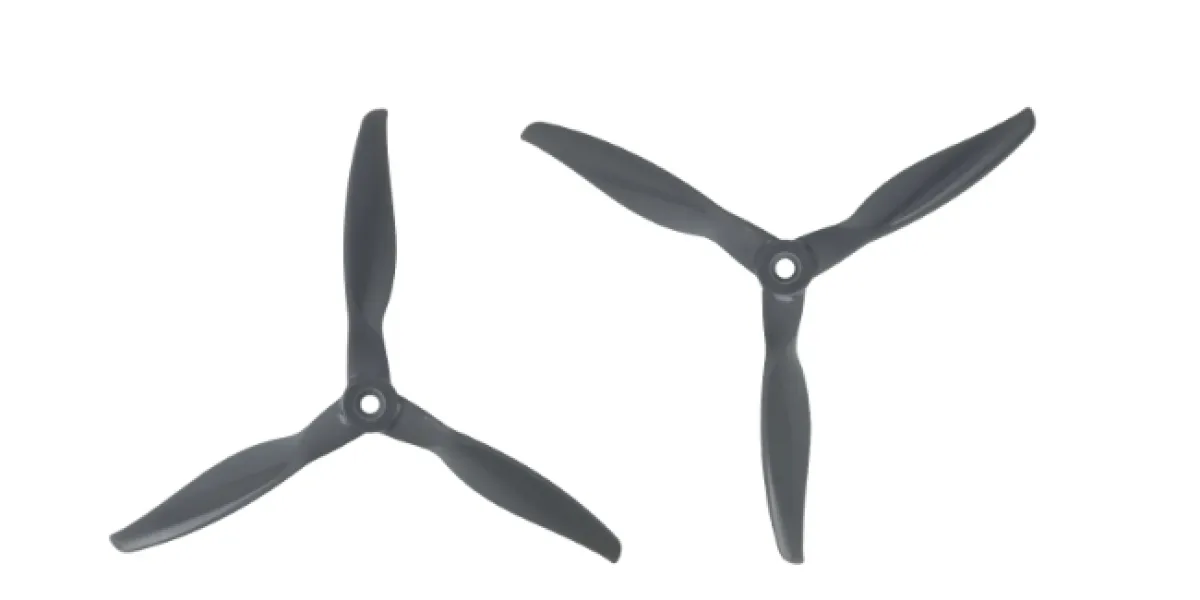
High-speed UAVs place demanding requirements on their propulsion systems. Whether an aircraft is designed for rapid interception, patrol, speed testing, or specialized fixed-wing flight, its propeller must operate within a carefully matched combination of motor RPM, aerodynamic load, structural strength, and aircraft stability. A propeller that performs well on a conventional fixed-wing aircraft may not be suitable for a high-speed platform operating under a different load and flight envelope.
The GEMFAN HOBBY VORTEX Series addresses these engineering requirements with streamlined fixed-wing electric propellers manufactured from high-strength nylon and glass fiber reinforced nylon, depending on the model. Designed around refined blade geometry, controlled manufacturing, and dynamic balancing, the series provides options for UAV developers who need to evaluate propulsion components for demanding applications.
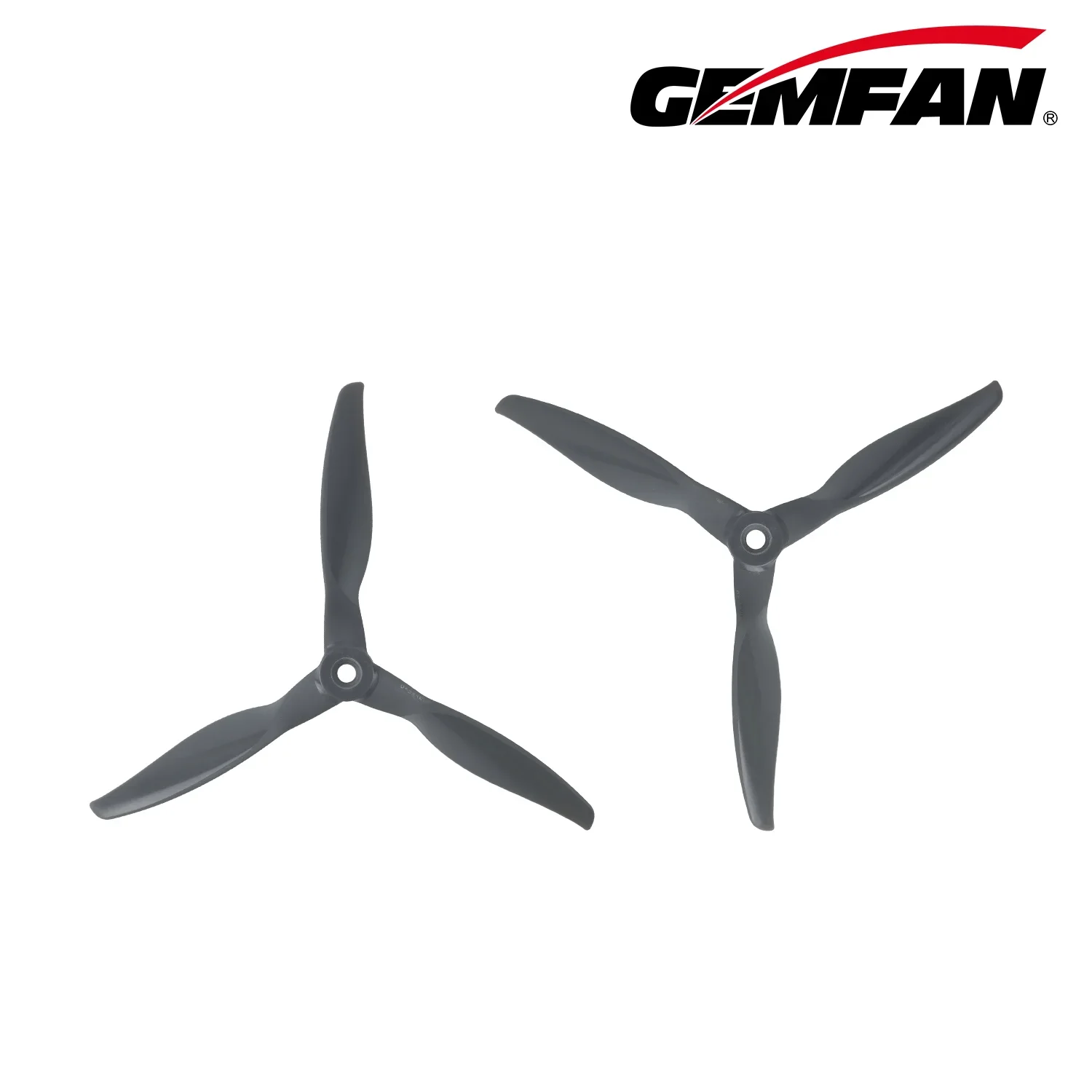
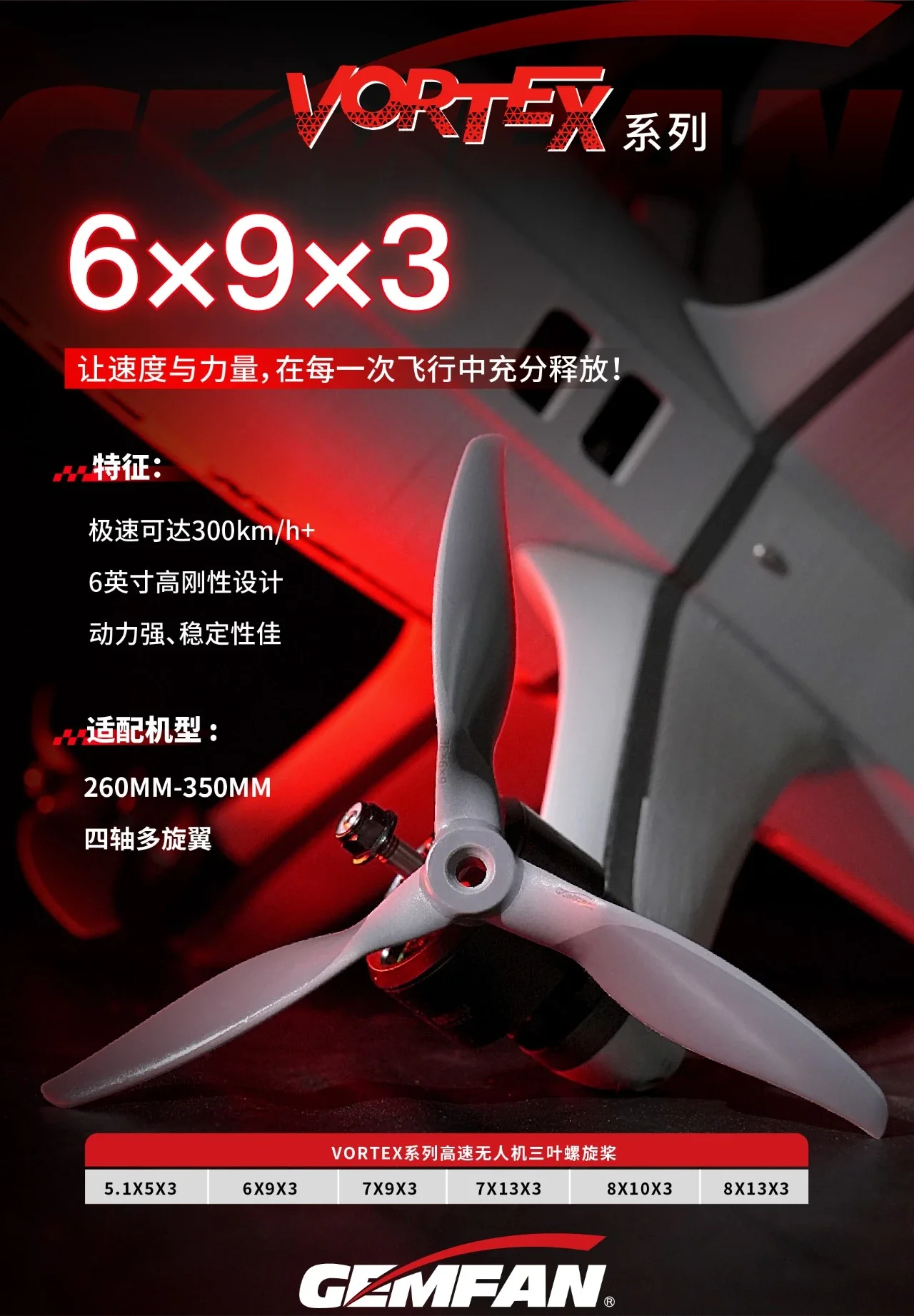
One model in this range is the GEMFAN VORTEX 6x9x3 Glass Fiber Nylon Electric Propeller. Its six-inch diameter, nine-inch pitch, and three-blade configuration make it a specialized option for compatible high-speed electric UAV platforms.
Why High-Speed UAVs Need a Different Propeller Selection Approach
Propeller selection for a high-speed UAV is not simply about choosing the highest possible pitch or the smallest available blade. The propeller must match the motor's operating range and produce useful thrust without exceeding the limits of the motor, battery, electronic speed controller, or airframe.
At high rotational speeds, blade geometry, material properties, balance, and mounting quality become particularly important. Small manufacturing inconsistencies or installation problems can contribute to vibration, uneven loading, and additional stress on the propulsion system.
High-speed aircraft also encounter substantial changes in airflow as forward speed increases. A propeller that provides strong static thrust may not deliver the same performance at cruise or high forward velocity. For this reason, UAV developers should evaluate both bench-test results and flight data when validating a propulsion configuration.
For high-speed UAV propellers, the objective is to find a workable balance between thrust, aerodynamic loading, structural durability, and the aircraft's intended speed range.
GEMFAN VORTEX 6x9x3: A Three-Blade Propeller for High-Speed Applications
The GEMFAN VORTEX 6x9x3 is designed for specialized electric fixed-wing aircraft and high-speed UAV applications. Its glass fiber nylon construction combines a reinforced polymer structure with the toughness and bending resistance required for demanding propeller operation.
The three-blade configuration provides a different aerodynamic and motor-loading profile from a conventional two-blade propeller. It can be considered when an aircraft design requires a compact six-inch diameter with a relatively high nine-inch pitch.
Key specifications include:
Model: GEMFAN VORTEX 6x9x3
Material: Glass fiber nylon
Propeller diameter: 6 inches / 152.4 mm
Pitch: 9 inches
Blade configuration: Three blades
Colour: Dark gray
Center thickness: 8.5 mm
Center hole: 5 mm
Maximum blade width: 20.5 mm
Weight: 10.2 g
Recommended motor: 2808
Listed takeoff weight: 1.5 kg
These specifications provide a starting point for propulsion-system evaluation, not a guarantee that the propeller will suit every aircraft using a 2808 motor. Actual compatibility depends on motor KV, battery voltage, current limits, airframe design, and the intended operating RPM.
GEMFAN product information describes this model as a high-rigidity propeller for interceptor-style UAV applications and reports a potential top speed exceeding 300 km/h with conventional power configurations. This figure should be treated as a reported application result rather than a universal performance guarantee. Achievable speed depends on the complete aircraft, motor and battery combination, propeller operating conditions, and flight-test validation.
How Blade Geometry Influences High-Speed Performance
Three principal factors deserve attention when assessing a high-speed electric propeller: diameter, pitch, and blade count.
Diameter describes the circle swept by the rotating propeller. A six-inch diameter defines the physical scale of the VORTEX 6x9x3 and determines important aspects of airframe clearance and motor loading.
Pitch describes the theoretical forward distance a propeller would advance during one revolution under ideal conditions. The nine-inch pitch is relatively high compared with the six-inch diameter, but it does not directly translate into a guaranteed aircraft speed. Propeller slip, RPM, airspeed, blade geometry, and aerodynamic loading all influence actual performance.
Blade count changes the propeller's total blade area and its interaction with the airflow. A three-blade design may provide a different thrust and motor-load profile from a two-blade design of similar diameter and pitch. Whether it is the right choice depends on the motor's operating point and the aircraft's requirements.
The VORTEX 6x9x3 should therefore be evaluated as a complete aerodynamic configuration rather than selected solely because its dimensions suggest a high-speed application.
Material Strength, Blade Shape, and Manufacturing Consistency
High-speed operation places greater importance on the relationship between blade material and geometry. The GEMFAN VORTEX Series uses refined blade profiles and precision molding, while the 6x9x3 model specifically uses glass fiber nylon.
Glass fiber reinforcement can improve stiffness compared with an unreinforced polymer formulation, while nylon contributes toughness and resistance to bending. The performance of the finished propeller still depends on material formulation, blade geometry, manufacturing quality, and operating conditions.
The VORTEX Series also incorporates several design features intended to support controlled propulsion performance.
CFD-optimized blade geometry is used in the series' aerodynamic development to refine the relationship between blade shape, thrust, and energy consumption. CFD analysis supports design evaluation, but it does not replace physical testing across the intended RPM and airspeed range.
A frosted leading edge is a specified series feature intended to improve airflow behavior at high RPM and help manage airflow separation. Its practical effect should be assessed in the context of the individual propeller design and operating conditions.
A slim blade-tip profile is intended to manage tip vortices and aerodynamic noise, while the smooth blade contours support the overall aerodynamic design.
Dynamic balancing is another important manufacturing control. An accurately balanced propeller helps limit imbalance-related vibration, although final vibration also depends on motor condition, mounting alignment, shaft quality, and the assembled aircraft.
The propeller's hub includes an anti-slip surface designed to help secure the mounting interface. Correct installation remains essential; the hub and mounting hardware must be compatible with the motor shaft and used according to the applicable installation instructions.
Applications: Interceptor UAVs, Patrol Aircraft, and Speed Testing
The VORTEX 6x9x3 is intended for specialized high-speed applications rather than general-purpose multirotor use.
High-speed UAVs: Fixed-wing platforms designed around rapid forward flight require propeller selection based on the motor's operating range and the aircraft's aerodynamic characteristics.
Interceptor-style UAVs: These platforms may require a compact propeller configuration that can be evaluated for acceleration, thrust, and operation at high forward speed. The complete aircraft must be validated within its designed flight envelope.
Patrol and monitoring aircraft: Electric fixed-wing UAVs used for patrol tasks may prioritize sustained propulsion performance and predictable power delivery. The appropriate propeller depends on mission duration, cruise speed, payload, and battery capacity.
Speed-testing platforms: Experimental aircraft can use controlled propeller testing to compare RPM, current draw, thrust, vibration, and motor temperature. Flight-speed claims should be supported by documented test conditions rather than inferred from propeller pitch alone.
For every application, the selected propeller must remain within the manufacturer's operating recommendations. A configuration intended for high-speed use should not be assumed suitable for every motor or airframe in the same general category.
How to Evaluate a High-Speed Electric Propeller
A structured test process helps UAV developers determine whether a propeller is appropriate for a specific aircraft.
1. Verify motor compatibility. Check the motor manufacturer's recommended propeller dimensions, operating RPM, voltage, current, and power limits. The 2808 recommendation for the VORTEX 6x9x3 is a useful reference, but the exact motor specification must still be confirmed.
2. Check the mounting interface. Confirm the five-millimetre center hole, shaft or adapter compatibility, hub alignment, and mounting security before operation.
3. Measure electrical loading. During controlled bench testing, record battery voltage, current, RPM, input power, and motor temperature. Stop testing if any component exceeds its specified operating limits.
4. Measure thrust and vibration. Static thrust measurements can help compare configurations under controlled conditions. Vibration monitoring can identify potential imbalance or installation issues.
5. Validate in flight. Static thrust alone cannot establish high-speed performance. Flight testing should assess acceleration, cruise behavior, stability, temperature, and power consumption under controlled conditions and within the aircraft's approved operating envelope.
A documented test process is more useful than relying on a single advertised speed figure because it allows engineers to evaluate repeatability and determine whether the complete propulsion system meets its requirements.
OEM/ODM Cooperation and Commercial Supply
For UAV manufacturers, integrators, and specialist aircraft developers, propeller procurement involves more than choosing a model from a catalogue. Projects may require consistent specifications, defined quality requirements, packaging coordination, and communication about production and delivery arrangements.
GEMFAN HOBBY supports OEM/ODM cooperation for customers developing UAV products and propulsion configurations. Project discussions can cover model suitability, application requirements, technical specifications, packaging, branding, and production coordination, subject to engineering feasibility and agreement.
For bulk procurement, customers should confirm the minimum order quantity (MOQ), order configuration, sample availability, lead time, shipping terms, and inspection requirements directly with GEMFAN HOBBY before placing an order.
A proposed MOQ of 300 units should be treated as a project-specific commercial requirement until confirmed by the supplier. Shipment arrangements should likewise be agreed in writing, including the destination, delivery method, export documentation, and applicable quality checks.
For OEM/ODM projects, providing the intended motor model, battery voltage, aircraft weight, target operating range, and expected order volume can help establish whether the VORTEX 6x9x3 or another propeller configuration is appropriate.
Safety and Maintenance for High-RPM Propellers
A high-speed propeller should be inspected before every flight. Check for cracks, deformation, edge damage, loose mounting hardware, and signs of impact. Do not operate a propeller that has visible structural damage or an unexplained change in vibration.
Testing should take place in a controlled area with appropriate protective equipment and a secure test fixture. Keep hands and other objects clear of the rotating blades, and follow the motor and propeller manufacturers' operating instructions.
After transportation, a hard landing, or any suspected impact, inspect the propeller and mounting interface again before returning the aircraft to service.


