
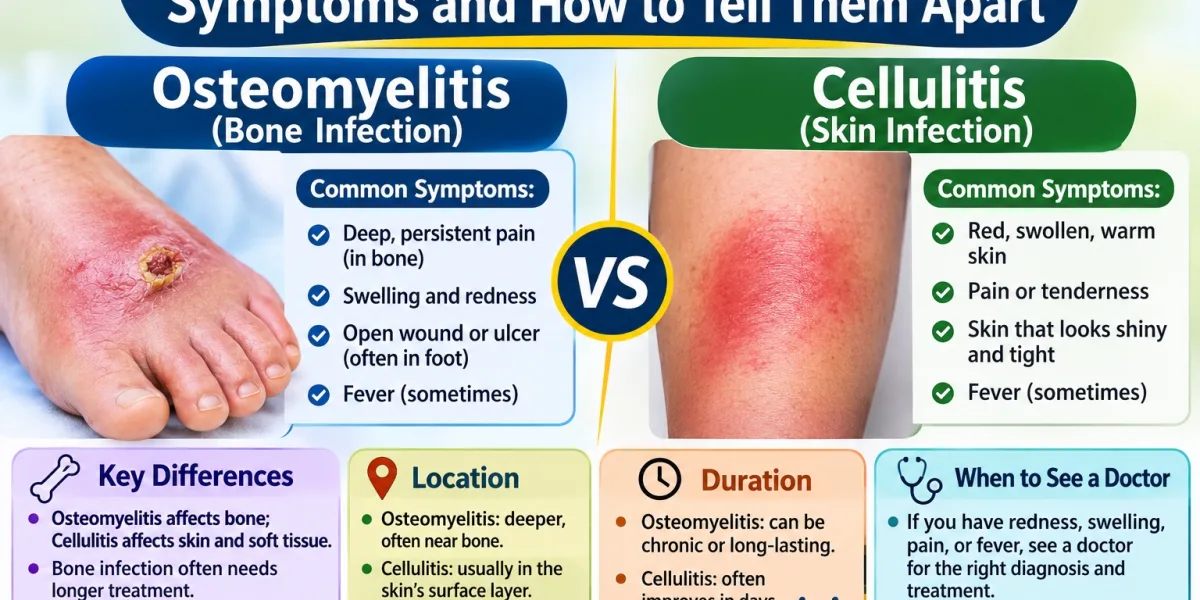
Osteomyelitis vs Cellulitis: Understanding the Main Differences
Osteomyelitis vs cellulitis is an important medical comparison because both conditions involve infection, inflammation, pain, and swelling, but they affect different body tissues. Cellulitis is a bacterial infection of the skin and underlying soft tissues, whereas osteomyelitis is an infection involving bone.
Although their symptoms can overlap, recognising the differences is essential for obtaining appropriate treatment. Both conditions can become serious when an infection spreads or remains untreated. However, osteomyelitis generally requires a more complex treatment approach because bacteria can enter and damage bone tissue.
Understanding where the infection develops, how symptoms progress, and which diagnostic tests doctors use can help patients recognise warning signs. This guide explains their causes, symptoms, risk factors, diagnosis, treatment options, and prevention strategies using straightforward medical information.
What Is Cellulitis and How Does It Develop?
Cellulitis is a bacterial infection affecting the deeper layers of the skin, particularly the dermis and subcutaneous tissue. It commonly develops when bacteria enter the body through a break in the skin.
The infection often affects the legs, feet, arms, and face. However, it can develop anywhere bacteria gain access to vulnerable tissue.
Common bacteria responsible include:
- Streptococcus species.
- Staphylococcus aureus.
- Methicillin-resistant Staphylococcus aureus (MRSA) in some cases.
Small cuts, insect bites, surgical wounds, cracked skin, ulcers, and fungal infections between the toes can provide entry points for bacteria.
Once bacteria enter the skin, they multiply and trigger inflammation. The affected area may become red, warm, swollen, and painful. Without appropriate treatment, the infection can spread into surrounding tissues and, occasionally, the bloodstream.
Cellulitis is not usually contagious through ordinary skin-to-skin contact. However, the bacteria responsible can sometimes spread through direct contact with infected wounds or drainage.
What Is Osteomyelitis and Why Does Bone Become Infected?
Osteomyelitis is an infection of bone tissue that can develop when bacteria or, less commonly, fungi reach the bone. The infection causes inflammation inside the bone and may interfere with its normal blood supply.
Bacteria can reach bone through several pathways:
- Through the bloodstream from an infection elsewhere.
- Through an open fracture or penetrating injury.
- By spreading from nearby infected skin or soft tissue.
- Following certain surgical procedures or implanted medical devices.
Staphylococcus aureus is a common cause of bacterial osteomyelitis. People with diabetes, poor circulation, weakened immune systems, or chronic wounds have an increased risk.
The condition may be acute, developing relatively quickly, or chronic, persisting for months or recurring over time. Chronic infections can cause bone damage, tissue death, and persistent drainage.
A particularly important example occurs in people with diabetes. A foot ulcer may become infected and extend into deeper tissues, eventually reaching the underlying bone.
Osteomyelitis vs Cellulitis: What Symptoms Help Tell Them Apart?
The most useful distinction is the location and character of the symptoms. Cellulitis primarily produces visible skin inflammation, while osteomyelitis often causes deeper, persistent pain associated with an infected bone.
However, both conditions can cause fever, warmth, tenderness, redness, and swelling. Symptoms alone cannot always establish which infection is present.
1. Differences in Pain and Tenderness
Pain provides an important diagnostic clue.
With cellulitis, discomfort is generally concentrated in the affected skin. The area may hurt when touched, stretched, or pressed. Patients often describe burning, soreness, or tenderness around the swollen patch.
With osteomyelitis, pain may feel deeper and more persistent. It is usually localised around the infected bone and can become worse with movement, pressure, or weight-bearing.
For example, someone with a foot infection may experience tenderness around the skin initially. If the infection reaches the underlying bone, deeper pain may continue even when the visible redness becomes less noticeable.
2. Differences in Skin Appearance
Visible skin changes are particularly helpful when evaluating cellulitis.
Common signs include:
- Redness or darker discolouration.
- Warm skin.
- Swelling and tenderness.
- Blisters in some cases.
- Skin that feels tight or firm.
- Occasionally, red streaks extending from the infected area.
On darker skin tones, redness may be less noticeable. Swelling, warmth, tenderness, and changes in skin texture may provide more useful clues.
Osteomyelitis can also cause redness and swelling above the affected bone. However, these changes may be less prominent, especially when the infection develops deep inside the bone.
3. Fever and Other General Symptoms
Both infections can cause fever, chills, fatigue, and a general feeling of illness.
Acute osteomyelitis may produce fever alongside significant localised bone pain. Chronic osteomyelitis, however, sometimes develops without an obvious fever.
Cellulitis can also cause fever, particularly when the infection spreads or becomes more severe.
Therefore, the presence or absence of fever cannot reliably distinguish these conditions.
4. How Symptoms Progress
Cellulitis commonly develops over a relatively short period. The affected skin becomes increasingly swollen, painful, and warm.
Osteomyelitis may develop gradually or suddenly, depending on how bacteria reach the bone. Persistent pain, recurring drainage, and a wound that does not heal may suggest a deeper infection.
In some patients, cellulitis can spread into deeper structures and eventually involve nearby bone. This is one reason persistent or worsening symptoms require medical assessment.
Osteomyelitis vs Cellulitis: A Side-by-Side Comparison
The following table summarises the major clinical differences.
|
Feature |
Osteomyelitis |
Cellulitis |
|
Affected tissue |
Bone |
Skin and soft tissue |
|
Main discomfort |
Deep bone pain |
Skin tenderness |
|
Redness |
May occur |
Common |
|
Warmth |
Around affected bone |
Over infected skin |
|
Swelling |
Around bone and surrounding tissue |
Infected skin area |
|
Fever |
Possible |
Possible |
|
Diagnosis |
Imaging and sometimes bone biopsy |
Usually clinical examination |
|
Main treatment |
Antibiotics, sometimes surgery |
Antibiotics |
|
Typical concern |
Bone damage |
Infection spreading |
This comparison helps explain osteomyelitis vs cellulitis, but it should not replace a professional examination. A person may have both conditions simultaneously, particularly when a deep wound allows bacteria to spread from the skin into the bone.
What Causes These Two Infections?
Understanding the causes can help explain why some people develop superficial infections while others experience deeper complications.
Common Causes of Cellulitis
Cellulitis usually develops after bacteria enter damaged skin.
Potential causes include:
- Cuts, scratches, and abrasions.
- Insect bites and animal bites.
- Surgical wounds.
- Diabetic foot ulcers.
- Eczema and cracked skin.
- Athlete's foot.
- Poor circulation and chronic swelling.
Even a tiny break in the skin can provide an entry point for bacteria.
Common Causes of Osteomyelitis
Osteomyelitis develops when infectious organisms reach bone tissue.
Common contributing factors include:
- Open fractures and severe injuries.
- Recent bone or joint surgery.
- Infected diabetic ulcers.
- Bloodstream infections.
- Deep pressure sores.
- Infected artificial joints or implanted devices.
People with diabetes, vascular disease, and weakened immune systems require particular attention because infections may progress without obvious early symptoms.
How Do Doctors Diagnose Osteomyelitis and Cellulitis?
An accurate diagnosis is essential because the treatments and potential complications differ.
Physical Examination
Doctors examine the affected area and ask about the duration of symptoms, previous injuries, wounds, operations, and underlying medical conditions.
For suspected cellulitis, the clinician usually looks for spreading skin inflammation, warmth, swelling, and tenderness.
When osteomyelitis is suspected, the examination also focuses on deeper tenderness over bone, restricted movement, persistent wounds, and possible sources of infection.
Blood Tests
Blood tests can help identify inflammation and assess the body's response to infection.
Common investigations include:
- Complete blood count (CBC).
- C-reactive protein (CRP).
- Erythrocyte sedimentation rate (ESR).
- Blood cultures when bloodstream infection is suspected.
These results support clinical assessment but cannot independently confirm or exclude osteomyelitis.
Imaging Tests
Imaging becomes particularly important when doctors suspect bone involvement.
- X-rays: May reveal bone changes, although early infection can be missed.
- MRI: Helps identify bone inflammation, surrounding soft-tissue infection, and abscesses.
- CT scans: Provide detailed images of bone structure and certain complications.
- Ultrasound: May help identify superficial fluid collections but cannot reliably exclude bone infection.
In selected cases, doctors obtain a bone sample for laboratory testing. This can help identify the responsible organism and guide antibiotic selection.
Medical assessment of osteomyelitis vs cellulitis may therefore involve different investigations depending on the severity, location, and suspected depth of infection.
What Are the Treatment Options for Each Infection?
Treatment depends on the location, severity, responsible bacteria, and the patient's overall health. Both infections generally require prescription antibiotics when caused by bacteria.
Cellulitis Treatment
Most uncomplicated cases of cellulitis are treated with oral antibiotics prescribed by a healthcare professional.
Treatment may include:
- Antibiotics targeting the likely bacteria.
- Elevating the affected arm or leg to reduce swelling.
- Appropriate pain relief.
- Keeping wounds clean and protected.
- Monitoring the affected area for improvement.
More serious infections may require hospital admission and intravenous antibiotics. If an abscess is present, drainage may also be necessary.
Patients should complete their prescribed antibiotic course and seek reassessment if symptoms worsen or fail to improve within approximately two to three days.
Osteomyelitis Treatment
Osteomyelitis generally requires longer treatment because antibiotics must reach the infected bone and eliminate the responsible organisms.
Treatment commonly involves:
- Antibiotic therapy: Doctors prescribe antibiotics based on the suspected or confirmed organism. Treatment may begin intravenously before switching to oral medication when appropriate.
- Surgical drainage: An abscess or collection of infected fluid may require drainage.
- Debridement: Damaged or dead bone tissue may need surgical removal.
- Wound management: Associated ulcers and soft-tissue infections require appropriate care.
- Monitoring: Blood tests, clinical examinations, and sometimes repeat imaging help assess recovery.
Treatment duration varies. Many patients need several weeks of antibiotics, depending on the infection and response to therapy.
Understanding osteomyelitis vs cellulitis is particularly important when an apparently minor skin infection continues to cause deep pain or fails to respond to appropriate treatment.
Can Natural Approaches Support Recovery From Bone and Skin Infections?
Natural approaches may support general health and recovery, but they cannot independently eliminate bacterial infections affecting the skin or bone.
Supportive Measures for Bone Health
People researching Natural Remedies for Osteomyelitis should understand the difference between supportive care and infection treatment.
No herbal preparation, supplement, essential oil, or home remedy has been established as a reliable cure for osteomyelitis. Delaying prescribed antibiotics while experimenting with alternative treatments can allow infection to progress and damage bone.
Supportive measures may include:
- Eating balanced meals containing sufficient protein.
- Maintaining adequate hydration.
- Getting appropriate sleep and rest.
- Managing blood glucose levels when living with diabetes.
- Following medical advice about wound care and physical activity.
Some nutritional deficiencies can affect general healing, so a clinician may recommend testing or supplementation when appropriate. Supplements should be discussed with a healthcare professional because they can interact with prescription medicines.
Is Home Care Enough to Treat a Bone Infection?
No. A suspected bone infection requires prompt medical assessment. A person should never rely on home treatments to replace diagnostic investigations or prescribed antimicrobial therapy.
Natural Treatment for Bone Infection is sometimes discussed online as an alternative approach, but there is insufficient clinical evidence that natural treatments can eradicate bacteria inside infected bone.
Warm compresses, massage, or applying unverified substances to wounds may also be inappropriate. They can irritate damaged tissue or delay effective treatment.
The safest approach is to follow the treatment plan provided by an infectious disease specialist, orthopaedic surgeon, or other qualified clinician.
When Should You Seek Urgent Medical Attention?
Recognising warning signs can prevent potentially serious complications.
Seek urgent medical assessment if you experience:
- Increasing pain over a bone.
- New or worsening swelling and warmth.
- Fever, chills, or unexplained weakness.
- A wound that produces persistent pus.
- A diabetic foot ulcer with increasing pain or discharge.
- Redness spreading beyond the original infected area.
- Difficulty walking or using the affected limb.
Medical emergency
Seek emergency assistance if an infection is accompanied by confusion, fainting, rapid breathing, a very fast heartbeat, cold or clammy skin, or other signs of sepsis.
People with diabetes, poor circulation, or weakened immunity should not wait for symptoms to become severe before seeking care.
How Can You Reduce the Risk of These Infections?
Prevention focuses on protecting the skin, treating wounds promptly, and managing medical conditions that increase infection risk.
Practical prevention strategies include:
- Wash minor cuts and scratches with clean water.
- Cover open wounds with appropriate dressings.
- Keep skin moisturised to prevent cracking.
- Treat athlete's foot and other skin infections promptly.
- Wear comfortable shoes that protect the feet.
- Inspect feet regularly, particularly if you have diabetes.
- Maintain good blood glucose control.
- Seek medical attention for wounds that become painful, swollen, or infected.
People with recurring cellulitis should discuss underlying causes, such as chronic swelling, eczema, or poor circulation, with their healthcare provider.
Good wound care is also important for preventing bacteria from reaching deeper tissues. Although these measures cannot prevent every infection, they can reduce avoidable risks.
Can Supplements or Herbal Products Replace Medical Treatment?
Some people explore Herbal Care Products and nutritional supplements when looking for additional ways to support general wellness. However, these products should never be presented as substitutes for antibiotics, surgical drainage, or professional wound management.
There is currently no convincing clinical evidence that herbal supplements can cure cellulitis or osteomyelitis. Patients should check supplement ingredients with their healthcare professional, particularly when taking antibiotics, blood-thinning medicines, or medication for diabetes.
The distinction between osteomyelitis vs cellulitis remains important when considering complementary approaches because a bone infection can cause lasting structural damage if treatment is delayed.
Frequently Asked Questions
1. Can cellulitis turn into osteomyelitis?
Yes. In some cases, bacteria causing cellulitis can spread into nearby deeper tissues and reach the underlying bone. This is more likely when an infection occurs near a chronic ulcer, deep wound, or infected surgical site.
2. Which condition causes more severe pain?
Osteomyelitis often causes persistent, deep pain localised around an infected bone. Cellulitis usually produces tenderness and discomfort in the affected skin. However, severe cellulitis can also be extremely painful.
3. Can you have both infections simultaneously?
Yes. A person can develop cellulitis and osteomyelitis together, particularly when bacteria spread from an infected wound into nearby bone. Doctors may need imaging and laboratory investigations to identify both conditions.
4. Does osteomyelitis always cause fever?
No. Acute infections may cause fever and chills, but chronic osteomyelitis can develop without noticeable fever. Persistent bone pain, swelling, or a non-healing wound still requires medical assessment.
5. Can an MRI distinguish between these infections?
MRI is particularly useful for detecting bone infection and identifying surrounding soft-tissue abnormalities. However, doctors interpret imaging alongside symptoms, examination findings, and laboratory results.
6. How long does recovery take?
Cellulitis often improves within a few days of appropriate antibiotic treatment, although complete recovery may take longer. Osteomyelitis usually requires several weeks of treatment, and recovery depends on the extent of bone damage and the patient's health.
7. Can osteomyelitis return after treatment?
Yes. Chronic infection, inadequate drainage, damaged bone, and underlying health conditions can increase recurrence risk. Follow-up appointments help identify persistent infection and complications.
Conclusion
Understanding osteomyelitis vs cellulitis helps patients recognise why similar-looking infections may require different investigations and treatment approaches. Cellulitis affects the deeper layers of skin and soft tissue, while osteomyelitis involves the bone itself.
Both conditions can cause pain, swelling, warmth, and fever, but persistent deep pain, non-healing wounds, and suspected bone involvement deserve particular attention.
Early diagnosis, appropriate antibiotics, proper wound care, and management of underlying conditions are essential for recovery. Natural approaches may support general wellbeing, but they cannot replace evidence-based medical treatment.


