
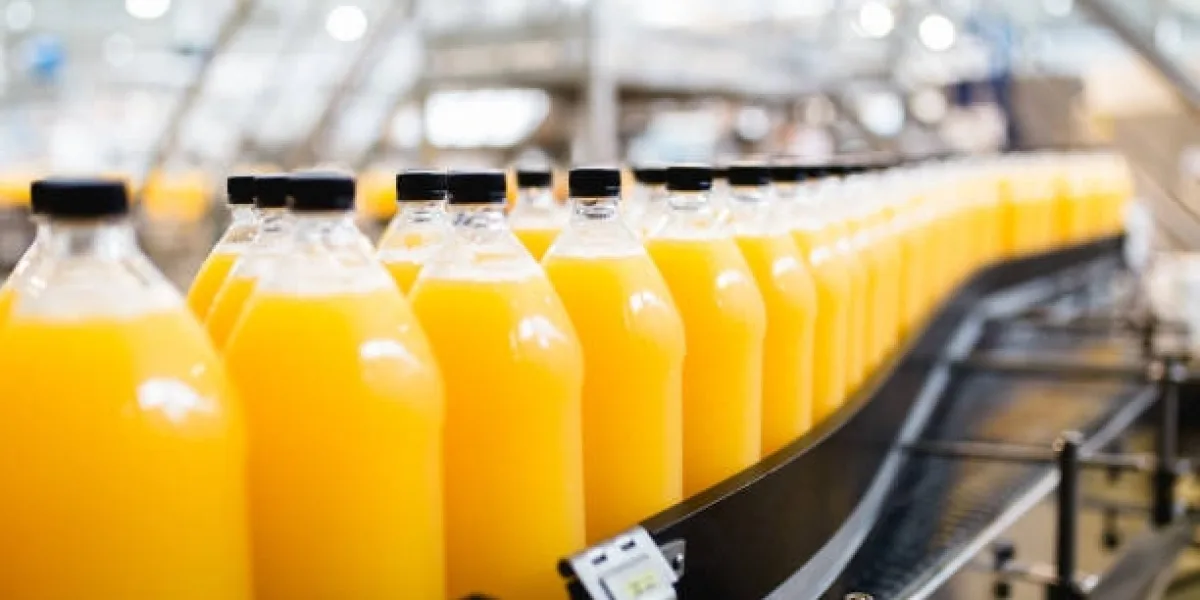
According to the supplied analysis from Vyansa Intelligence, the Spain juice industry was valued at USD 1.15 billion in 2025 and is projected to reach USD 1.24 billion by 2032, representing a CAGR of 1.08% between 2026 and 2032.
Domestic Food Consumption Provides an Important Foundation
Juice demand is connected to broader changes in Spanish food and beverage consumption. The Spanish Ministry of Agriculture maintains a national food-consumption panel covering household consumption, out-of-home consumption, purchasing channels, and demographic characteristics. The database provides historical and current information that can help contextualize changes in beverage purchasing patterns.
The latest national consumption report also indicates that total food consumption in Spain increased slightly in 2025, while consumers showed greater attention to convenience, spending control, and healthier eating patterns. These broader developments are relevant to packaged beverage manufacturers as they adapt products to changing household routines.
Fruit-Based Beverages Offer Product Diversity
The juice category encompasses several distinct product types, including direct fruit juices, juices produced from concentrate, and fruit nectars. Differences in fruit content, processing, formulation, and permitted ingredients can create distinct positioning opportunities.
Spain's food-safety authority, AESAN, recognizes fruit juice, fruit juice from concentrate, and fruit nectar as separate categories within its guidance concerning fruit and vegetable beverages.
This differentiation is important because consumers may have different expectations depending on the product they purchase. Manufacturers therefore need to communicate product characteristics clearly while maintaining compliance with applicable food regulations.
Health and Nutrition Influence Product Positioning
Nutrition is increasingly relevant to beverage choices, although juice products vary considerably in composition. Consumers may consider fruit content, sugar levels, serving size, and overall nutritional information when selecting beverages.
AESAN's scientific guidance on dietary recommendations distinguishes between whole fruit and fruit juice and provides broader recommendations for the Spanish population.
For manufacturers, this environment creates an incentive to provide transparent nutritional information and develop formulations that respond to consumer expectations without relying on unsupported health claims.
Regulatory Compliance Shapes Product Development
Juice manufacturers operating in Spain must consider food-information and nutrition-claim requirements when developing and marketing products.
The Spanish Agency for Food Safety provides information on nutrition and health claims, including the European Union framework governing which claims can be used and the conditions under which authorized claims may appear on food products.
This makes regulatory compliance an important component of product development. Ingredient selection, formulation, packaging, and promotional statements need to remain consistent with applicable requirements.
Packaging Supports Convenience and Shelf Stability
Packaging is a significant part of the juice value chain because it must protect products during transportation, retail storage, and household use.
Different packaging formats can serve different consumption occasions. Smaller containers can support individual consumption and portability, while larger formats may be more suitable for household use.
Packaging also needs to provide appropriate protection from environmental factors that could affect product quality. Manufacturers therefore have to balance convenience, product protection, material efficiency, and consumer expectations.
Retail Channels Influence Product Availability
The way consumers purchase food and beverages can influence product development and distribution.
MAPA's food-consumption panel tracks household consumption as well as purchasing channels, while its out-of-home panel separately monitors food and beverage consumption outside the household.
This distinction is relevant to juice producers because products sold through supermarkets, convenience channels, food-service establishments, and other outlets can have different packaging, portion, and distribution requirements.
Understanding these channels can help manufacturers align product formats with specific consumption occasions.
Out-of-Home Consumption Creates Additional Opportunities
Juice products can also be consumed outside the home through restaurants, cafés, hotels, workplaces, and other food-service locations.
MAPA's out-of-home consumption panel specifically tracks food and beverage habits among consumers outside their homes and includes data by establishment and consumption occasion.
This creates a distinct demand environment from household consumption. Food-service operators may require different package sizes, delivery formats, or product configurations compared with retail consumers.
Product Differentiation Becomes More Important
With the Spain juice industry projected to grow at a relatively moderate pace, manufacturers may need to focus on differentiation rather than relying solely on overall category expansion.
Differentiation can involve fruit combinations, product formats, packaging, portion sizes, formulation characteristics, and clear nutritional communication.
Products can also be designed around particular consumption occasions, such as breakfast, meals, exercise, travel, or on-the-go consumption. The ability to address these different occasions can help manufacturers serve a wider range of consumer needs.
Fruit Sourcing Remains Central to Production
Juice manufacturing depends on reliable access to suitable fruit ingredients. Variations in agricultural production can affect raw-material availability, quality, and cost.
Spain's broader agricultural and food-processing infrastructure provides an established foundation for handling fruit and converting agricultural products into processed foods and beverages.
For juice producers, maintaining consistent sourcing can therefore be important for achieving stable flavor, color, acidity, and other product characteristics.
Seasonality also needs to be considered because fruit characteristics can vary between harvest periods and sourcing regions.
Convenience and Health Need to Be Balanced
Consumers can simultaneously seek convenience and greater awareness of nutrition. This creates a challenge for juice manufacturers because convenient packaged beverages must also meet expectations around formulation, portion size, and transparent labeling.
The latest Spanish food-consumption reporting identifies convenience and time-saving as factors influencing food choices, alongside increasing attention to healthier eating.
For juice producers, these factors can translate into opportunities for appropriately portioned, easy-to-store products with clear nutritional information.
Innovation Extends Beyond New Flavors
Product innovation does not necessarily require entirely new beverage categories. Manufacturers can also innovate through packaging, portion formats, processing approaches, fruit combinations, and product positioning.
Packaging designed for portability or resealing can address convenience needs, while differentiated fruit combinations can provide sensory variety.
At the same time, transparent labeling can help consumers distinguish among juice, juice-from-concentrate, nectar, and other fruit-based beverage categories.
Outlook for Spain's Juice Industry
The relatively measured growth outlook suggests that future opportunities are likely to depend on product differentiation, consumer preferences, convenient formats, transparent nutritional communication, efficient distribution, and reliable fruit sourcing rather than rapid expansion in overall consumption.
Official Spanish food-consumption data provide useful context for understanding these developments. MAPA maintains household and out-of-home consumption datasets covering beverages, purchasing channels, and consumer characteristics, while its 2025 report highlights convenience and healthier eating as factors influencing food choices.
Regulation will remain another important consideration. AESAN provides guidance concerning fruit-juice categories and nutrition and health claims, reinforcing the need for manufacturers to align formulations, labeling, and product communication with applicable requirements.
Overall, Spain's juice industry is positioned for steady development rather than rapid expansion. Manufacturers that respond to changing consumption habits while maintaining product quality, clear labeling, appropriate packaging, and reliable sourcing can continue to participate in the country's established beverage sector through 2032.


