
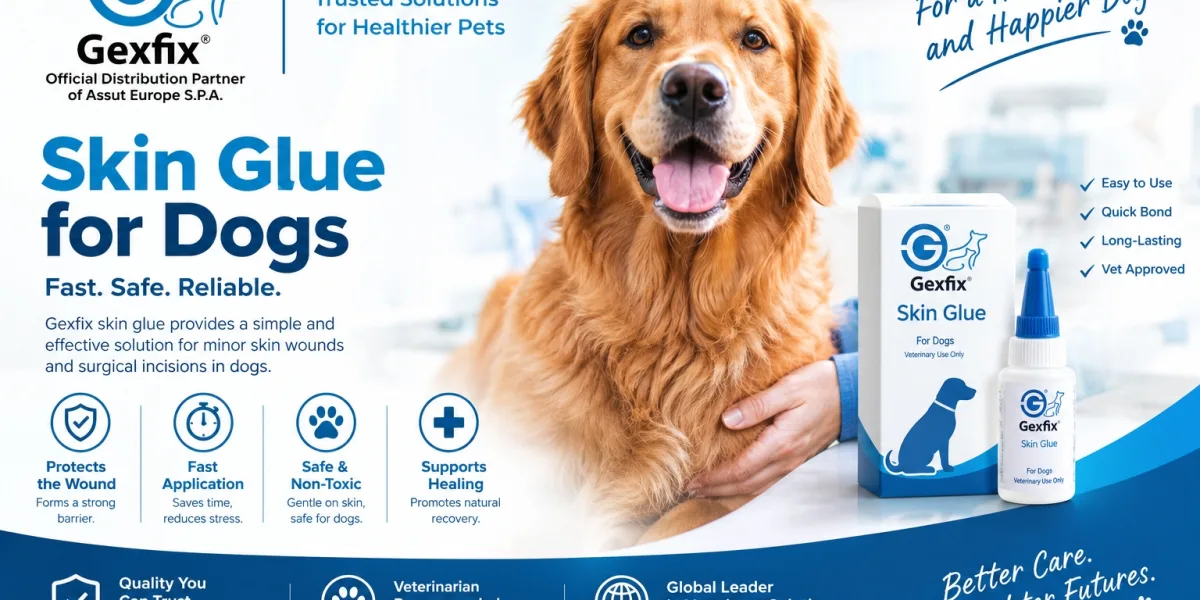
When a dog comes in with a cut or needs a small surgical incision closed, the owner often hears a veterinarian mention glue or stitches and wonders how that choice was made. Skin glue for dogs is a medical adhesive used to hold the edges of certain wounds together while the skin heals. Stitches are a longer established method that can handle a much wider range of wounds. Neither option is better in every case. The right choice depends on the wound itself and on the dog that has to wear it. This guide explains the factors veterinarians weigh and what each method means for recovery at home.
What Skin Glue Is
Veterinary skin glue is a liquid adhesive that is brushed or dropped along the outside of a closed wound. Most products use a cyanoacrylate compound. This type of chemical hardens when it meets the moisture on the skin and forms a thin flexible film within seconds. The film holds the wound edges in position while the body builds new tissue underneath.
The film also works as a light protective cover over the skin surface. It does not fix a wound that is open or gaping. The edges need to meet naturally or be held together by the veterinarian before the adhesive is applied. Over several days the film loosens and flakes off as the skin below finishes healing.
Medical Adhesive Versus Household Glue
Household super glue and veterinary adhesive are not the same product. Veterinary formulations are made to stay flexible once set and are tested for use on living tissue. Household glues can become brittle and may irritate the skin or cause heat as they cure. Owners should never use household glue on a wound at home. A cut that looks like it needs closing should be seen by a veterinarian first.
What Stitches Are
Stitches, also called sutures, use a needle and thread to pull tissue edges together. The veterinarian chooses a thread material and a size to suit the tissue being closed. Some threads are absorbable and break down inside the body over weeks or months. Others are non absorbable and are removed after healing or left in place for specific reasons.
Stitches can be placed in several layers. Deep layers close the space beneath the skin while the top layer closes the skin itself. A veterinarian can adjust the tension of each stitch and place them in curved or irregular wounds. This control is the main reason stitches remain the standard approach for so many surgical closures.
Common Stitch Patterns
- Simple interrupted stitches are placed one at a time and tied separately
- Continuous patterns run along the wound in a single length of thread
- Buried patterns sit under the skin surface and avoid visible marks on the outside
Each pattern has a purpose. Separate stitches offer security because one failed stitch does not loosen the whole line. Continuous patterns are faster to place. Buried patterns reduce irritation and often remove the need for a removal visit.
The Questions Veterinarians Ask
Veterinarians rarely decide based on preference alone. They look at the wound and the patient and work through a short list of questions.
How Deep Is the Wound?
Glue holds the surface of the skin. It cannot support deeper layers of tissue. A shallow cut through the skin only is a better candidate than one that reaches fat or muscle. When a wound is deep the underlying layers usually need stitches first to close the dead space where fluid could collect. Glue may then be used on the top layer in some cases.
How Much Tension Is on the Wound?
Tension is one of the most important factors. Skin on a dog's back may sit loosely and edges can meet with little effort. Skin over an elbow or hock stretches every time the dog moves. Glue has very little strength to resist pulling. A wound under tension is likely to split open if adhesive is the only support. Stitches or staples hold up better in those locations.
Where Is the Wound Located?
Location affects both tension and exposure. Flat areas that do not bend much suit glue well. Joints, paw pads and skin folds are harder. Moisture trapped in a fold can weaken adhesive and a moving joint can crack it. The face and ears have their own challenges because dogs scratch and shake in those areas.
How Clean Is the Wound?
A wound with dirt or bacteria inside should not be sealed with adhesive. Sealing contamination under a film can trap bacteria against the tissue and encourage infection. Veterinarians usually clean and flush a wound and remove damaged tissue before deciding how to close it. Heavily contaminated wounds like some bite injuries may be left open for a time or drained before any closure is attempted.
How Fresh Is the Wound?
Fresh wounds are generally easier to close than older ones. After several hours bacteria multiply and tissue begins to swell and dry. An older wound may need cleaning and observation before closure. The veterinarian will look at the age of the injury as well as its appearance.
What Is the Dog Like?
Temperament matters. A calm dog that leaves a wound alone gives glue a better chance of holding. An energetic dog that licks and scratches at everything may pull glue off in a day. In that case the veterinarian may choose stitches or staples and recommend a protective collar. Size and activity level matter as well. A large athletic dog puts more stress on a closure than a small quiet one.
When Veterinarians Often Choose Skin Glue
Adhesive tends to be selected in specific situations.
- Short and shallow cuts with clean edges that meet easily
- Small surgical incisions where deeper layers are already closed
- Minor skin tears in areas with little movement
- Patients that do not tolerate needle placement well
- Cases where the veterinarian wants to avoid a removal visit
Many clinics also use glue as an added surface layer over buried stitches. This protects the incision from dirt and moisture and can discourage a dog from picking at it. In these cases the structural closure is still done with sutures and the adhesive plays a supporting role.
A thin application is important. Thick layers cure more slowly and are more likely to crack. Veterinarians also keep adhesive on the outside of the wound line. Glue that seeps between the edges can interfere with normal healing. Technique matters as much as the product, and a list of common mistakes with veterinary tissue adhesive shows how easily a closure can fail when application is rushed.
When Veterinarians Often Choose Stitches
Stitches remain the preferred method in many cases.
- Deep wounds that need layered closure
- Wounds under tension or over joints
- Long incisions after major surgery
- Irregular or jagged lacerations
- Wounds that need drainage or close monitoring
- Active dogs that are hard to restrict
Stitches also allow a veterinarian to fine tune the closure. If one area is under more tension the stitches there can be placed closer together. Tissue can be lined up precisely. For wounds where cosmetic outcome matters a fine buried stitch pattern can produce a very neat scar.
Where a Skin Stapler Fits
Some veterinarians use a third option for skin closure. A skin stapler places small stainless steel staples across the wound edges quickly and with even spacing. It is often chosen for longer straight incisions where speed matters and where glue would not have enough strength. Staples are removed about ten to fourteen days after surgery, depending on healing.
Glue suits short shallow wounds under low tension. Staples suit longer incisions with more tension. Stitches cover nearly everything in between and beyond. Understanding where each tool belongs helps explain why different dogs leave the clinic with different closures even when the injuries look similar to an owner.
The Role of Instruments and Preparation
A closure method depends on the work that comes before it. Clean tissue and accurate edge placement help every method succeed. Well maintained veterinary surgical instruments allow the surgeon to trim damaged tissue and line up the skin cleanly. Sterile equipment lowers the chance of infection.
For adhesive this preparation matters even more. The skin must be clean and reasonably dry for the product to bond. Blood and moisture weaken the hold. Trimming hair around the wound helps keep fur from becoming stuck in the glue. This preparation is part of the reason a professional application usually lasts longer than any attempt made at home.
Caring for a Glued Wound at Home
Aftercare for a glued wound is usually simple but still important.
- Keep the area dry for the first several days
- Do not pick at the glue or try to peel it off
- Prevent licking and chewing with a protective collar if advised
- Limit rough play and running while the skin heals
- Do not apply creams or ointments unless the veterinarian says so since they can dissolve the adhesive
The glue should flake off by itself within about five to ten days. A little redness at the edges is normal early on. Owners should check the area daily and compare it to how it looked on the first day.
Caring for a Stitched Wound at Home
Stitched wounds need similar attention. Keep the incision clean and dry. Prevent licking and chewing. Restrict exercise as advised. If the stitches are not absorbable a return visit is scheduled for removal, often ten to fourteen days after surgery. Buried absorbable stitches usually need no removal. Check the incision every day and note any changes.
Signs That Need a Veterinary Call
Regardless of the closure method some signs call for prompt attention.
- Redness that spreads or skin that feels hot
- Swelling that grows
- Discharge or a bad smell
- A wound that opens or looks gappy
- Glue that falls off within a day or two
- Missing stitches or staples
- Loss of appetite or unusual tiredness
Early attention often means a small problem stays small. Reopened wounds are easier to deal with when they are caught quickly.
Common Myths About Skin Glue
Several beliefs about adhesive cause confusion for owners.
Myth: Glue is just a modern shortcut. Surgical glue is a tool with defined limits. It is used where it works well and avoided where it does not.
Myth: Glue is always less painful. Glue avoids needle placement but the wound itself may still need cleaning or sedation depending on the injury.
Myth: A glued wound needs no monitoring. Any wound needs daily checks. The lack of a removal visit does not mean the lack of follow through.
Myth: Any strong glue works. Only products made for medical or veterinary use should be applied to living tissue.
Questions to Ask Your Veterinarian
Owners can ask a few simple questions that make recovery easier. Why was this closure chosen for my dog's wound? How long should it stay in place? What should it look like each day? When does my dog need to return? What signs should make me call right away? Clear answers help owners follow instructions and notice changes early.
Summary
Veterinarians decide between glue and stitches by looking at wound depth and tension and location and cleanliness. They also consider how fresh the wound is and how the dog is likely to behave. Skin glue for dogs works well for short shallow low tension wounds and as an added surface layer. Stitches handle deeper and tenser wounds and give the surgeon more control. Staples add a quick option for longer incisions. The best choice is the one that matches the wound and the dog, and following aftercare instructions closely is what keeps any closure working as intended.
Gexfix International Corp. supplies veterinary sutures, skin staplers and skin adhesive in partnership with Assut Europe S.P.A.
FAQs
Q: Is skin glue as strong as stitches for dogs?
A: No. Glue holds the skin surface and works for shallow low tension wounds. Stitches provide far more strength and are used for deeper wounds or areas under tension such as joints.
Q: How long does skin glue stay on a dog?
A: Skin glue usually flakes off within about five to ten days as the skin heals. Owners should not pick at it. If it falls off after a day or two, call the veterinarian.
Q: Can I use household super glue on my dog's cut?
A: No. Household glue is not made for living tissue and can irritate skin or become brittle. A cut should be seen by a veterinarian who can clean it and choose a safe closure.
Q: Why did my vet choose stitches instead of glue?
A: Stitches are chosen for deeper wounds and areas under tension or movement. They can also be adjusted to fit irregular wounds. Your veterinarian picks the method that will hold securely until healing is complete.
Q: Does a glued wound still need an Elizabethan collar?
A: Often yes. Licking and chewing can loosen the adhesive early or irritate the wound. A collar protects the area until the glue naturally falls off and the skin has finished healing.


