
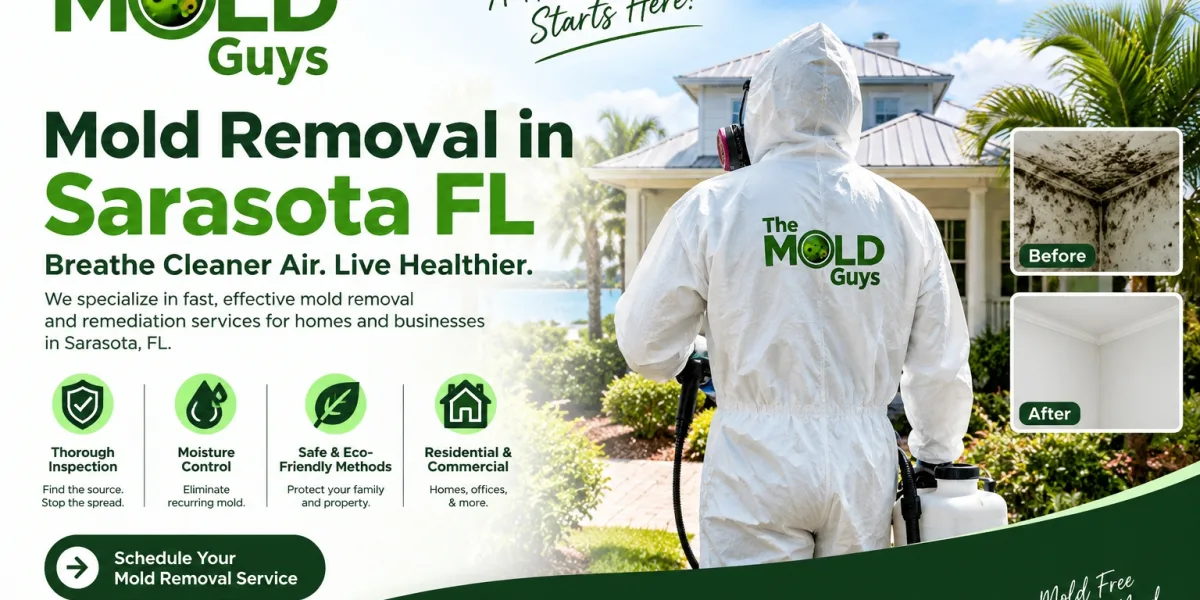
Living on Florida's Gulf Coast comes with warm weather and plenty of sunshine. It also comes with heat and humidity that stay high for most of the year. These conditions suit mold very well and many local homeowners deal with it at some point. Knowing the basics of mold removal in Sarasota FL before a problem appears helps you respond quickly and avoid larger repair costs. This guide explains why mold is so common in the area and how to recognize it. It also covers what a proper removal process includes and how to choose a team you can trust.
Why Sarasota Homes Are Prone to Mold
Mold needs three things to grow. It needs moisture and a food source along with a moderate temperature. Sarasota provides these almost every day. Outdoor humidity stays high even outside the rainy season and summer brings frequent storms and heavy rain. Warm air carries a lot of moisture. When that air enters a cooled home it can condense on cooler surfaces such as ductwork, windows, and exterior walls.
Building style also plays a role. Many local homes are built with concrete block and stucco on slab foundations. These materials can absorb water and release it slowly. Older homes may have aging roofs and worn window seals along with original plumbing. Newer homes are often built tighter to save energy and that can trap moisture when ventilation is limited.
Air conditioning adds another factor. Systems in this area run for most of the year. A clogged drain line or a coil that stays wet can turn the system into a hidden source of growth that spreads spores to every room.
Common Places Mold Appears in Local Homes
Mold can appear almost anywhere but some locations come up again and again.
Bathrooms and laundry rooms are at the top of the list. Steam from showers settles on walls and ceilings and grout lines. Without a strong exhaust fan the moisture stays in the materials for hours.
Air conditioning systems are another frequent source. Growth can form on the evaporator coil and in the drain pan or inside ducts. A musty smell when the system starts is often the first sign.
Attics can develop mold when roof leaks or poor ventilation allow humid air to collect under the roof deck. Because few people go into the attic the growth can spread for months before anyone sees it.
Walls and ceilings often develop mold after a slow plumbing leak or a roof leak. The water stays inside the wall cavity and the surface may look normal until staining appears.
Garages and lanais are also at risk. They are often open to outdoor humidity and have little air movement. Stored boxes and fabric give mold plenty to feed on.
Signs You May Have a Mold Problem
Some signs are easy to spot while others take closer attention. Watch for the following:
- A musty or earthy smell that does not go away
- Dark or fuzzy spots on walls and ceilings or around windows
- Paint that bubbles or peels without a clear reason
- Drywall that feels soft or looks stained
- A recent leak or flood that was not dried quickly
- Allergy like symptoms that improve when you leave the house
One or two of these signs does not always mean mold is present. Several signs together are a good reason to look deeper.
Health Concerns Worth Knowing
Mold releases tiny spores into the air and people react to them in different ways. Some feel nothing at all. Others notice sneezing and coughing or a stuffy nose and irritated eyes. People with asthma or allergies and anyone with a weakened immune system may be affected more strongly. Children and older adults are also more sensitive.
Because indoor air moves through the whole house a problem in one room can affect the entire home. This is one reason it is better to address mold early instead of waiting to see whether it grows.
Why an Inspection Should Come First
Many homeowners want to start cleaning as soon as they see a spot. A better first step is to find out how large the problem really is. A mold inspection uses visual checks and moisture meters along with air sampling to show where mold is growing and what is feeding it. Thermal imaging can also reveal wet areas behind walls that cannot be seen from the surface.
This matters because the visible patch is often only part of the story. Growth can extend behind paint and into drywall or along the back of a wall. If only the visible area is treated the rest keeps growing and the problem returns.
An inspection also identifies the moisture source. Without that information even a thorough cleanup will not last. The written findings give the removal team a clear scope of work and give you a baseline to compare against once the project is finished.
What a Proper Removal Process Includes
Professional mold removal services follow a set process from start to finish. Each stage has a purpose and skipping any of them weakens the result.
The first stage is containment. The work area is sealed with heavy plastic sheeting so spores cannot drift into clean rooms. Negative air machines pull air out of the work zone through HEPA filters and send it outside. This prevents the cleanup itself from spreading the problem.
The second stage is removal and cleaning. Materials that are badly affected such as soft drywall or wet insulation are cut out and bagged. Surfaces that can be saved are cleaned with HEPA vacuums and approved antimicrobial products. Porous materials that hold deep growth are removed instead of scrubbed because cleaning cannot reach the roots.
The third stage is drying. Industrial dehumidifiers and air movers bring the structure back to normal moisture levels. Technicians confirm progress with moisture meters instead of relying on touch.
The final stage is verification. Air samples taken after the work show whether spore levels have returned to normal. A second mold inspection at this point gives you data that confirms the job is complete. Only after that are walls rebuilt and finished.
Storm Season and Water Damage
Hurricane season runs from June through November. Heavy rain and wind can damage roofs and push water through windows. Flooding can soak walls and flooring in a matter of hours. Mold can begin to grow within one to two days when materials stay wet.
If your home takes on water the first priority is safety. Once it is safe to work remove standing water and start drying right away. Open windows when outdoor humidity allows and run fans and dehumidifiers. Remove soaked carpet and padding. Materials that cannot be dried within about 48 hours often need to be replaced.
Large water events are best handled by trained mold removal experts who can dry the structure properly and check for hidden moisture. Drying a home on the surface while water remains inside the walls is one of the most common reasons mold appears weeks after a storm.
DIY or Professional Help
Small problems can sometimes be handled by a homeowner. A patch smaller than about ten square feet on a hard surface such as tile or sealed wood is usually manageable when the moisture source is already fixed. Wear an N95 respirator and gloves and eye protection. Keep the area ventilated and keep children and pets away. Clean the surface and dry it fully.
Professional help is the better choice in several situations:
- The growth covers a larger area
- Mold is inside walls or under flooring or in the attic
- The air conditioning system may be involved
- The mold has returned after cleaning
- Someone in the home has asthma or a weak immune system
- The problem started with a flood or a long term leak
In these cases trained mold removal experts have the equipment to contain the area and locate hidden growth. A homeowner without that equipment can easily spread spores to new rooms while trying to help.
How to Choose the Right Company
The company you hire has a large effect on the result. When researching mold removal in Sarasota FL it helps to compare more than price. Ask the following questions before you sign anything:
- Do the technicians hold current IICRC certification?
- Does the company perform an inspection before it gives a quote?
- Will the estimate be in writing and explain the full scope of work?
- How will the work area be contained?
- Will the company identify the moisture source?
- Is air testing done after the work to confirm results?
- Does the company stand behind its work with a guarantee?
Many people begin by searching for mold removal services near me and then compare the first few results. A local company has the advantage of knowing the climate and the common building styles in the area. Look at reviews and ask how long the business has served the community. A company that has worked in Florida for many years will have seen the patterns that local humidity creates.
Be careful with any company that promises to solve the problem with a single spray or offers a quote without looking at the property. Vague answers about containment and testing are a sign that the process may not be thorough.
What to Expect on Cost and Timeline
Costs vary because every home and every problem is different. The main factors include the size of the affected area and the type of material involved. Hard to reach locations such as attics and crawl spaces take more time. The extent of drying needed and the amount of rebuilding afterward also change the total. A clear written estimate helps you understand what is included.
Timelines vary as well. A small contained project may take a day or two. Larger projects that involve removing drywall and drying the structure can take several days. Rebuilding and painting come after clearance. Ask for a realistic schedule before the work begins so you can plan around it.
A Note on Insurance
Coverage for mold depends on your policy and the cause of the problem. Mold that follows a sudden covered event such as a burst pipe may be included. Mold that results from long term moisture or poor maintenance is often excluded. Read your policy and contact your insurer early. Take photos and keep written reports from inspections and repairs because documentation helps if you file a claim.
Preventing Mold After Removal
Removal only lasts when the conditions that caused the growth are controlled. A few steady habits make a large difference in this climate.
Keep indoor humidity below 50 percent. A small humidity meter shows conditions in real time and a dehumidifier helps in rooms that air conditioning does not cool well. Have your air conditioning system serviced each year and keep the drain line clear. Replace filters on schedule.
Run bathroom exhaust fans during showers and for at least 20 minutes afterward. Use the kitchen vent when cooking. Check under sinks and around appliances for slow drips and repair leaks as soon as you find them.
Keep gutters clean and make sure downspouts carry water away from the foundation. Have the roof checked after major storms. Dry wet materials within 24 to 48 hours and avoid storing boxes or fabric directly on garage floors or against exterior walls.
Conclusion
Mold is a common challenge for homeowners on the Gulf Coast because the climate supports it for most of the year. The best response is an informed one. Start with an inspection to learn the full scope and find the moisture source. Choose a team that uses containment and proper drying and confirms results with testing. Then keep humidity under control so the problem does not return. Understanding mold removal in Sarasota FL helps you ask better questions and avoid repeat repairs. The Mold Guys have served homeowners across Southwest and Central Florida for over 25 years and they offer inspection and removal along with water damage restoration. Their team is available 24/7 at (941) 416-4113 for questions or emergencies. Working with trained mold removal experts gives you a clear plan and a result you can verify.
FAQs
Q: How quickly does mold grow in Sarasota homes after water damage?
A: Mold can begin growing within 24 to 48 hours when materials stay wet. Warm and humid Florida conditions can speed this up. Drying affected areas quickly and checking for hidden moisture inside walls is the best way to prevent growth.
Q: Do I need a mold inspection before removal?
A: Yes. A mold inspection shows how far the growth has spread and what is causing it. Without that information some areas may be missed. The findings also help the team plan containment and give you a baseline for confirming results.
Q: Can I remove mold myself?
A: Small patches on hard surfaces can often be cleaned safely with proper protection. Larger areas or growth inside walls or in air conditioning systems should be handled by professionals. Improper cleanup can spread spores and make the problem larger.
Q: How long does professional mold removal take?
A: Small projects may be finished in one or two days. Larger jobs that involve removing drywall and drying the structure can take several days. Your technician should explain the schedule after assessing the property and before any work starts.
Q: How do I find a reliable company in my area?
A: Search for mold removal services near me and compare certifications and written estimates. Ask about containment and moisture source repair and air testing. Reliable professional mold removal services explain each step clearly and stand behind their work with a guarantee.


