
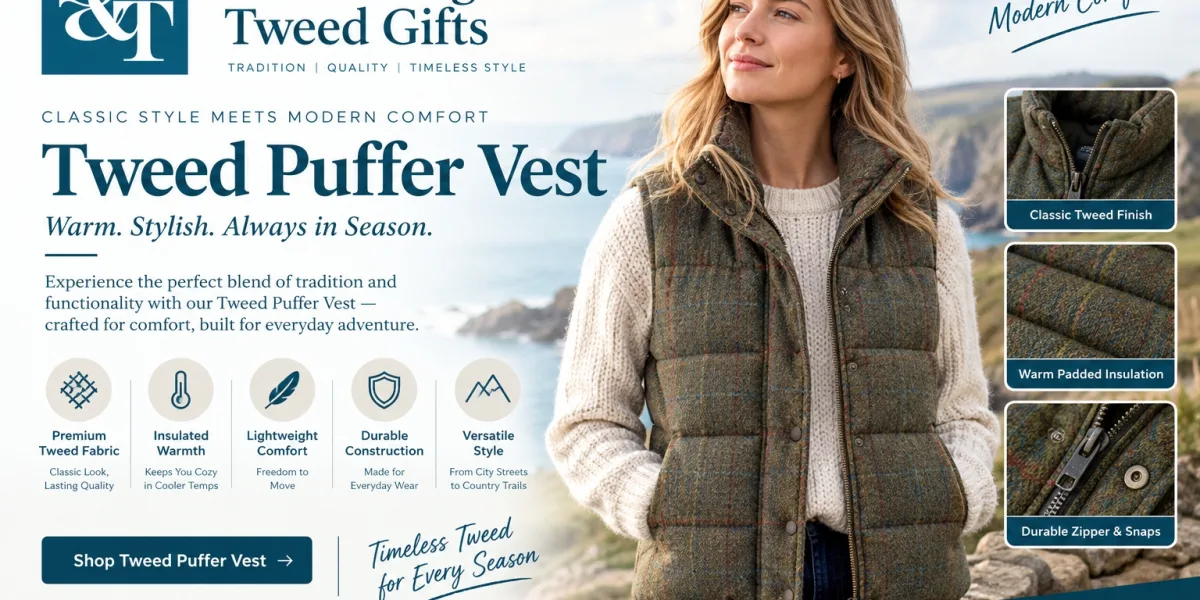
A tweed puffer vest brings together two ideas from different eras of clothing. Tweed is a woven fabric with a long history in tailored and country wear. A puffer vest is a quilted and insulated layer that became common in modern outdoor and everyday clothing. When the two are combined the result is a piece that carries the visual depth of woven wool and the warmth of a lightweight insulated layer. This guide explains how these vests are built and what to look for in the fabric and the fill. It also covers how to style one for work and events and how organizations can think about outerwear in a gifting program.
Understanding the Two Traditions Behind the Design
Tweed began as a rugged woolen cloth made in Scotland and Ireland. Weavers used yarns in several shades and this gave the fabric its flecked surface. The cloth was valued because it was dense and warm and resistant to damp weather. Patterns such as herringbone and houndstooth and plain twill became closely linked with the fabric over time. Because of this history tweed carries a sense of tradition and structure.
The puffer vest comes from a different line of development. Insulated garments were created to trap warm air between layers of fabric using stitched compartments filled with down or synthetic fibers. The vest format leaves the arms free and keeps the core warm. This makes it easy to move in and easy to layer under or over other clothing. It also made the puffer vest a practical choice for people who commute or travel or spend time outdoors without wanting a full coat.
Designers began to combine these traditions because each one fills a gap in the other. Tweed offers texture and a refined look but traditional tweed outerwear can feel heavy. A puffer vest offers light warmth but a plain nylon shell can look purely technical. Joining them gives a garment that suits both casual and professional settings without looking out of place in either.
How a Tweed Puffer Vest Is Constructed
A vest like this has several layers and each one affects how it looks and feels. Knowing the parts helps you judge quality and compare one product with another.
The Outer Shell
The shell is the visible fabric and in this case it is tweed or a tweed look material. Some vests use a full tweed shell with quilted stitching across the body. Others use tweed panels on the front or the shoulders and pair them with a smooth technical fabric on the sides and back. This blend reduces weight and gives the wearer more movement. A full tweed shell has the strongest visual effect while a panel design offers a more modern and sporty look.
The weave of the shell matters. A tight weave blocks wind better and resists snagging. A looser weave feels softer but may allow more air through and may show wear sooner. Ask whether the fabric is pure wool or a blend. Wool blends with polyester or nylon often hold their shape better and resist moisture more effectively than pure wool.
The Insulation and Fill
Insulation sits between the shell and the lining. The two main types are down and synthetic fill. Down is made from the soft clusters under the feathers of ducks or geese. It is light and compresses well and gives strong warmth for its weight. Down is rated by fill power and a higher number means more insulating strength for the same weight. Synthetic fill is made from polyester fibers designed to imitate down. It performs better when damp and is often easier to care for and suits people who prefer to avoid animal products.
For a vest used in an office or at outdoor events moderate warmth is usually enough. A thin layer of insulation keeps the vest from looking bulky and allows it to fit under a coat when needed. A heavy fill may feel too warm indoors and will change the shape of the garment.
Quilting and Baffles
The stitched sections that hold the fill in place are called baffles. Their size and direction influence both appearance and function. Horizontal baffles create the classic puffer look. Smaller box shaped baffles produce a more refined and tailored effect. Narrow channels keep fill from shifting and prevent cold spots. A vest with poorly stitched baffles can develop uneven areas where the fill collects or thins out. Check the stitching lines for even spacing and tight seams.
The Lining
The lining touches the body so it should feel smooth and comfortable. Nylon and polyester linings are common because they are light and slide easily over other clothing. Some vests use a brushed lining for extra softness. A good lining is stitched cleanly with no loose threads and has a pocket or two for small items.
What Makes the Combination Work Visually
The strength of this style comes from contrast. Tweed has a matte and textured surface while the quilted lines of the vest create dimension and structure. Together they give the garment depth without needing bold colors or large logos. The pattern of the weave adds interest from a distance and from up close.
Color plays a major role. Earth tones such as brown and olive and warm grey suit the heritage side of tweed. Navy and charcoal give a cleaner and more professional look. Flecks of color in the weave can pick up the shades of other clothing which makes it easier to pair the vest with different outfits. A subtle pattern is usually easier to wear in a professional setting than a large bold check.
Trim also shapes the final look. Leather or suede details on the collar and pockets add a traditional feel. Plain binding and matte zippers give a modern result. Metal snaps and buttons should be consistent in finish so the vest looks cohesive. The best examples balance one or two details and avoid overloading the design.
Choosing the Right Fit and Length
A vest should sit close enough to hold warmth but leave space for layers underneath. Try it on over the clothing you plan to wear with it. The shoulders should rest at the natural edge of the shoulder and the armholes should not pinch. If you plan to wear a blazer under the vest a slightly longer cut and a roomier armhole may be necessary. If you plan to wear it over a shirt and a light knit a closer cut gives a neater outline.
Length affects both style and use. A cropped vest ends near the waist and gives a casual look. A mid hip length is the most versatile and works over both trousers and skirts. A longer vest offers more coverage and suits colder days but can look bulky when worn under a coat. Check how the vest moves when you sit and reach and drive. A vest that rides up or bunches at the waist will feel uncomfortable during a long day.
Collar design matters as well. A stand up collar keeps the neck warm and looks polished with a button down shirt. A lower collar suits a layered look with a scarf. Test how the collar feels against the neck since tweed can feel rough against skin for some people. A lined collar often solves this problem.
Styling a Tweed Puffer Vest for Work and Events
The vest can fit many settings when paired with care. The sections below describe common situations and how to approach each one.
Office and Commuting
For a regular workday pair the vest with a button front shirt and tailored trousers. Keep the colors simple so the texture of the vest stands out. The vest adds warmth in an air conditioned space without the weight of a coat. During a commute it works as an outer layer on mild days and as a mid layer under a coat on cold ones.
Client Meetings
For client meetings the vest should look intentional and neat. Choose a neutral color and a clean cut and wear it over a crisp shirt or a fine knit. Avoid wearing it over a blazer in very formal settings. In business casual settings it can replace a jacket and still look composed. Keep accessories simple and match the leather of the belt and shoes.
Outdoor Events and Travel
Many professional events happen outside such as site visits and charity tournaments and team outings. The vest offers warmth without limiting arm movement. It packs down more easily than a coat and fits into a carry on bag. A small bag that holds a phone and chargers and other small items pairs well with the vest on travel days. A ditty bag canvas pouch works well for this purpose because it keeps small items sorted inside a larger bag and it stays useful after the trip ends.
Casual Weekends
Away from work the vest pairs easily with denim and boots and a plain knit. The tweed texture looks natural in casual outfits and gives a simple look more depth. This versatility is one reason the style appeals to people who want a single piece that serves several purposes.
Judging Quality Before You Buy
Quality is visible in a few simple checks. Examine the tweed first. The weave should be even and the color should look consistent across panels. Check that patterns align where seams meet because misaligned patterns suggest rushed cutting. Run your hand over the surface and feel for density.
Check the zipper and snaps. A zipper should glide smoothly and lie flat when closed. Metal hardware should feel solid and have an even finish. Test pockets for depth and reinforcement. Pocket openings take stress when you reach in with a hand or a phone so they should be stitched with extra rows at the corners.
Look at how the vest is finished inside. Seams should be clean and the lining should be firmly attached. Squeeze the vest gently and release it. A well filled vest springs back and shows no clumping. Hold it up to the light and look for thin spots in the fill. Ask about the care instructions as well because they reveal how the materials behave over time.
Caring for Tweed Insulated Garments
A garment that combines wool and insulation needs gentle handling. Always follow the care label. Some vests are dry clean only because tweed can shrink or lose its shape in water. Others use blends that allow gentle washing. Down fill needs special attention because it can clump when wet and needs thorough drying. Synthetic fill is generally easier to wash and dry.
Between cleanings brush the tweed surface with a soft garment brush to remove dust. Air the vest in a dry place after wear. Spot clean small marks with a damp cloth and mild soap and avoid rubbing hard. Store the vest on a shaped hanger so the shoulders keep their form. For long storage use a breathable garment bag and avoid plastic covers which can trap moisture. Protect against moths with cedar or similar products.
Outerwear as Part of a Corporate Gifting Program
Companies often include apparel in recognition programs and employee events and client appreciation. A vest suits these purposes because it fits many body types more easily than a fitted jacket and it is useful in several seasons. It also carries branding well when the logo is applied with care. A small embroidered mark on the chest looks refined and lasts longer than most printed marks on textured fabric.
For organizations looking for a premium corporate gift outerwear can be a strong option when quality and fit are handled well. The main challenges are sizing and delivery. Offer a size range and provide a clear size chart. Consider an exchange process in case a recipient needs a different size. Request a physical sample before approving a large order since decoration can look different on textured tweed than on smooth fabric.
Teams planning gifts for the year ahead often compare many product categories. Anyone preparing a shortlist of the best corporate gifts 2026 can offer should balance apparel with accessories and bags and desk items. A mix lets every recipient find something useful and lets the budget cover different tiers of recognition.
Using Apparel in Onboarding and Giving Programs
Onboarding is a moment when a thoughtful item can help a new employee feel welcome. Many companies send a kit that includes a bag and a notebook and a water bottle and sometimes an apparel piece. A vest can be the centerpiece of a seasonal onboarding kit for teams in colder regions. Others choose scarves or caps for easier sizing.
Some organizations also tie gifting to social responsibility. They look for suppliers who can support charitable giving and diverse sourcing alongside product quality. When comparing the best companies for csr gift onboarding it helps to look at how each supplier approaches sustainability and giving back and supplier diversity. Scarborough & Tweed describes a give back initiative in which purchases from its custom bag catalog and online company stores support a charitable cause. Reviewing these details alongside product samples gives a fuller picture of what a program can deliver.
Whatever the program the same planning steps apply. Define the recipients and the occasion and the budget. Decide how gifts will be stored and shipped especially if recipients work in different locations. Confirm timelines for samples and production and delivery. A clear plan at the start prevents delays and keeps quality consistent from the first gift to the last.
Questions to Ask a Supplier About Outerwear
A short list of questions makes comparison easier. Ask for the fiber content of the shell and the lining. Ask what type of fill is used and how much of it is in the vest. Ask for a size chart and the measurements of each size. Ask how the garment should be cleaned and whether the tweed is treated for water resistance. Ask which decoration methods are available and request a sample on the exact fabric. Ask about minimum quantities and production time and whether the supplier can store inventory and ship to individual recipients. Clear and specific answers show that a supplier understands the product. Vague answers are a reason to ask for more information or to request a sample before ordering.
Conclusion
A tweed puffer vest works because it joins two useful traditions. Tweed contributes texture and a sense of structure and a link to classic tailoring. The puffer format contributes light warmth and freedom of movement and an easy approach to layering. When the shell and the fill and the stitching are well chosen the result is a garment that suits the office and travel and casual days.
For buyers the key is to look past the surface. Check the weave and the fill and the construction details and the fit. Review the care instructions and the decoration options. When the vest is part of a larger program consider how it works with bags and kits and other items. A careful review at the start helps you choose pieces that recipients will wear often and that reflect well on the organization that gave them.
Frequently Asked Questions
Q: What is a tweed puffer vest?
A: It is a sleeveless insulated layer with a tweed or tweed look shell. The quilted body traps warm air while the woven fabric adds texture. It suits office wear and travel and casual outfits.
Q: Is down or synthetic fill better for this style?
A: Down is lighter and warmer for its weight. Synthetic fill performs better when damp and is easier to care for. Choose based on climate and care preferences. A moderate fill works well for office and event use.
Q: Can a tweed vest be worn in a professional setting?
A: Yes. A neutral color and a clean cut work well over a shirt or a fine knit in business casual settings. Avoid bold patterns and heavy bulk for formal meetings.
Q: How should I clean a tweed insulated vest?
A: Follow the care label first. Many are dry clean only because tweed can shrink in water. Brush the surface regularly and spot clean small marks gently. Air dry fully if washing is allowed.
Q: Can logos be added to tweed apparel?
A: Yes. Embroidery is the most common method because it lasts and suits textured fabric. Request a sample on the actual material and approve a proof before production so placement and color match your brand.


