
Every veterinary professional reaches for a different closure method depending on the wound in front of them, and knowing exactly where each option belongs is part of practicing good surgical judgment. Tissue adhesive has become a routine part of that decision making, valued for its speed and the minimal aftercare it requires, but it is often misunderstood or misapplied by teams that have not had formal training in its proper use. This article covers what every veterinary professional should understand about tissue adhesive, from its chemistry and limitations to the technique that determines whether a given application succeeds or fails.
The Chemistry Behind Tissue Adhesive
Most tissue adhesive used in veterinary practice is based on a cyanoacrylate compound, a type of monomer that polymerizes almost instantly when it contacts moisture. On the skin, that moisture is typically present naturally, which is why the adhesive cures within seconds of application without needing an external activator.
Veterinary formulations are engineered differently than the cyanoacrylate adhesives sold for industrial or household use. They are designed to remain flexible once cured rather than becoming brittle, and they are tested for biocompatibility, meaning they are formulated to minimize inflammatory response when in direct contact with living tissue. A professional reaching for adhesive should always confirm the product is labeled specifically for medical or veterinary use, since substituting a general purpose adhesive can introduce unnecessary risk to the patient.
Where Tissue Adhesive Fits in a Professional Toolkit
Veterinary professionals typically have several closure options available for any given wound, and understanding where adhesive fits among them is central to good case management.
Speed and Patient Tolerance
Adhesive application takes only seconds and involves no needle penetration, which makes it a practical choice for short, low tension wounds, particularly in patients that tolerate handling poorly or in high volume clinical settings where time per case matters. This speed advantage becomes especially relevant in triage or emergency settings, where stabilizing and closing a wound quickly can reduce overall patient stress.
Barrier Function During Early Healing
Once cured, the adhesive film functions as a protective barrier, limiting exposure to external contaminants during the period when a wound is most vulnerable to infection. This barrier effect is one reason professionals often choose adhesive for clean, superficial wounds even in the absence of an additional bandage.
Recognizing the Limits of Adhesive
Professionals who rely on adhesive too broadly, applying it to wounds under tension or in high movement areas, tend to see early bond failure and reopened wounds. Recognizing these limits early in a case, rather than after a failed closure, is part of what separates confident clinical judgment from routine habit.
Matching Adhesive to Wound Characteristics
A professional evaluating whether adhesive is appropriate should weigh several specific factors before reaching for it.
Depth and Tension
Adhesive holds skin edges together but carries no real load bearing strength. Any wound with tension across the closure line, whether from muscle movement, body position, or simply a gap that resists staying closed, calls for a suture line or a stapler instead. Attempting to compensate for tension with additional adhesive rarely produces a durable result.
Contamination Level
A wound that has not been properly debrided should not be sealed with adhesive. Doing so traps bacteria against the tissue rather than keeping it out, which can lead to a worse outcome than leaving the wound open for staged closure. Adhesive is appropriate only once the wound bed is confirmed clean.
Anatomical Location
Joints, skin folds, and other areas of frequent movement or moisture exposure tend to shorten the effective hold of adhesive considerably compared to a flatter, more stationary area. A professional should factor location into the decision as seriously as wound depth itself.
Patient Behavior
A calm, cooperative patient gives adhesive its best chance of holding through the healing window. A patient prone to licking or chewing at a surgical site may require a different closure method, or at minimum a protective barrier such as an Elizabethan collar, regardless of how well the adhesive was applied.
Comparing Tissue Adhesive With a Skin Stapler
A skin stapler remains the preferred option for longer incisions where tension needs to be distributed evenly across the full length of the closure, such as an abdominal or orthopedic surgical site. Staples close quickly and provide more mechanical strength than adhesive, though they require a follow up visit for removal and can occasionally catch on bedding or a collar in the interim.
Adhesive performs better on short, irregular, or curved wounds where placing a row of staples evenly would be impractical. It also avoids the need for a removal appointment entirely, since the film naturally flakes away as the underlying skin finishes healing. Professionals typically choose between the two based on incision length, tension, and how much aftercare the owner or facility can reasonably manage.
Comparing Tissue Adhesive With Other Surgical Glue Formulations
Not all products marketed as surgical glue behave identically. Viscosity, cure speed, and final flexibility can vary meaningfully between formulations, and professionals benefit from understanding these differences rather than treating every adhesive product as interchangeable. A lower viscosity formulation spreads more easily across broader wound areas but offers less control along a precise seam, while a higher viscosity product allows more precise placement at the cost of slightly longer cure time. Clinics managing a wide variety of case types often stock more than one formulation to match viscosity to the wound in front of them.
Proper Application Technique
Technique accounts for much of the variability in adhesive outcomes, and professionals should treat application as a skill that improves with deliberate practice rather than something that requires no particular care.
Wound Preparation
The wound edges must be clean, dry, and free of debris before any adhesive is applied. Moisture beyond the small amount needed to trigger curing can actually slow the reaction and weaken the resulting bond, so drying the surrounding skin immediately before application is a necessary step.
Manual Approximation
The professional brings the wound edges together by hand and holds them in the correct position while adhesive is applied along the external seam. Letting adhesive seep down between the edges rather than sitting across the top of them can interfere with the body's own healing process beneath the surface.
Thin, Layered Application
Applying adhesive in thin layers, with a brief pause between each pass, produces a more even and more reliable bond than a single thick application. Thick layers take longer to cure fully and are more prone to cracking once set.
Maintaining Stillness During Cure
The wound must remain still for several seconds after the final layer is applied, since movement during this window can disrupt the polymerization process before the bond has fully set.
The Role of Veterinary Surgical Instruments
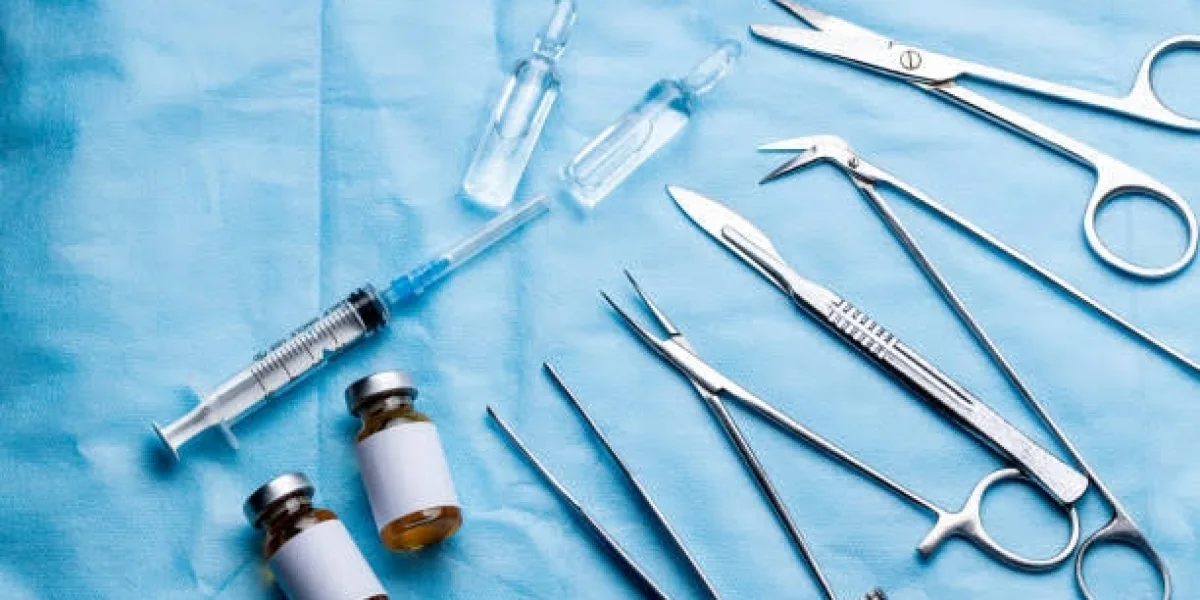
Adhesive application does not happen in isolation. Proper use of veterinary surgical instruments during wound preparation directly affects whether adhesive succeeds. Forceps and fine scissors allow a professional to debride damaged tissue and align wound edges cleanly, which gives the adhesive a proper surface to bond to in the first place.
Instrument condition matters as much as technique. A dull or poorly maintained instrument tends to leave a ragged wound edge that adhesive struggles to seal evenly, while a well kept set supports a consistent, clean result across repeated procedures. Clinics that treat instrument maintenance and adhesive application as connected parts of the same workflow tend to produce more predictable outcomes over time.
Common Errors Professionals Should Avoid
A handful of recurring mistakes account for the majority of adhesive failures seen in clinical practice. Applying adhesive to a wound under genuine tension is the most frequent, since no formulation can compensate for edges that want to pull apart. Overapplying adhesive in thick layers is another common error, since excess product cures unevenly and is prone to premature cracking.
Allowing adhesive to seep into the wound itself, rather than keeping it confined to the external seam, can interfere with the deeper healing process. Skipping proper wound preparation remains the most consequential mistake of all, since a poorly debrided wound bed undermines even a technically correct adhesive application.
Educating Clients on Aftercare
Part of a professional's responsibility extends beyond the procedure itself to how well the pet owner understands aftercare. Keeping the area dry for the first several days supports the adhesive bond and reduces the chance of premature failure. Owners should be advised to monitor for redness, swelling, or discharge, any of which may indicate infection regardless of closure method.
Most adhesive naturally sheds within five to ten days as healing completes underneath, meaning no removal appointment is typically required. Recommending an Elizabethan collar during this window helps prevent licking, which remains one of the more common reasons an otherwise well applied adhesive bond fails early.
Building Clinical Confidence With Tissue Adhesive
Professionals who understand both the capabilities and the limits of tissue adhesive are better positioned to use it appropriately, rather than defaulting to it out of convenience or avoiding it out of unfamiliarity. Matching the right formulation, technique, and patient profile to each wound is what separates a reliable, repeatable result from an occasional failure.
Gexfix International Corp., in partnership with Assut Europe S.P.A., supplies veterinary grade adhesive alongside a full range of sutures and disposable staplers, giving professionals the flexibility to choose the right closure method for each case. Explore the full range at medicaldevicevet.com.
FAQs
Q: Is tissue adhesive considered a professional grade closure method?
A: Yes, when the formulation is specifically manufactured for veterinary use. It is widely used by veterinary professionals for shallow, low tension wounds where speed and minimal aftercare are priorities.
Q: What training is needed to apply tissue adhesive correctly?
A: Application itself is straightforward, but proper wound assessment, edge preparation, and technique benefit from hands on experience. Professionals typically develop consistency through supervised practice before using adhesive independently.
Q: When should a professional choose a skin stapler instead of adhesive?
A: A stapler is better suited to longer incisions or wounds under more tension, since it distributes tension evenly across the closure line. Adhesive performs best on shorter, lower tension wounds.
Q: Can tissue adhesive be combined with other closure methods?
A: Yes. Some professionals use adhesive over a subcuticular suture line for additional surface protection, particularly in patients prone to licking. The adhesive should never replace structural closure in a tensioned wound.
Q: How should professionals store surgical glue products?
A: Most formulations should be stored at room temperature, away from direct light and moisture, and used before the labeled expiration date. Degraded adhesive cures unevenly and produces a less reliable bond.


