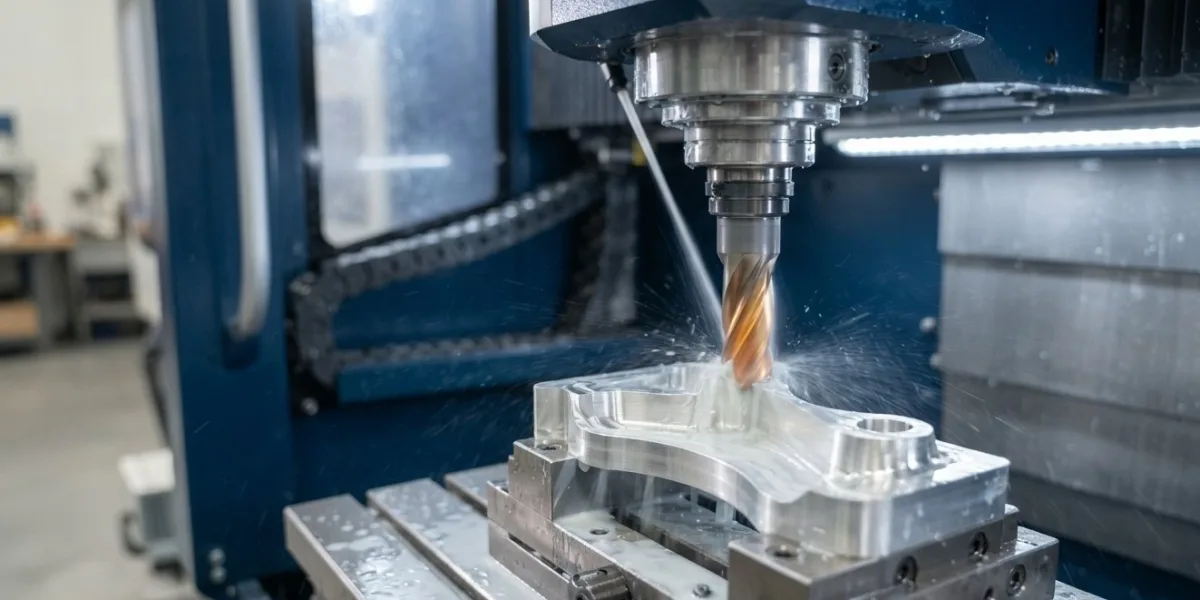
Vibration and chatter are common challenges in CNC machining and can significantly affect surface finish, dimensional accuracy, tool life, and machining productivity. A CNC machine may be highly precise, but excessive vibration can prevent it from delivering consistent results.
Understanding how to control these problems is essential for manufacturers, machine shops, and engineering workshops. Khokhawala Trading LLC, an Industrial Tools Supplier in Dubai, understands the importance of selecting suitable industrial tooling and equipment for stable and efficient machining operations.
But what causes CNC vibration and chatter, and how can you reduce them?
Table of Contents
-
What Is Vibration and Chatter in CNC Machining?
-
What Causes CNC Machining Chatter?
-
Signs of Excessive Vibration and Chatter
-
How to Reduce Vibration and Chatter
-
Choose the Right Cutting Tool
-
Reduce Tool Overhang
-
Improve Workholding and Part Stability
-
Optimize Spindle Speed and Feed Rate
-
Control Depth and Width of Cut
-
Check Tool Holder and Runout
-
Maintain the CNC Machine
-
Use the Right Toolpath Strategy
-
Best Practices for Preventing CNC Chatter
-
Frequently Asked Questions
-
Conclusion and CTA
What Is Vibration and Chatter in CNC Machining?
Vibration is unwanted movement that occurs between the cutting tool, tool holder, spindle, workpiece, and machine structure during machining.
Some vibration is normal in a cutting process, but excessive vibration can become a serious machining problem.
Chatter is a more severe form of machining vibration. It can become self-amplifying when the cutting process interacts with the natural dynamic characteristics of the machine, tool, holder, workpiece, and fixture.
Chatter often produces:
-
High-pitched cutting noise
-
Visible vibration
-
Wavy marks on the workpiece
-
Poor surface finish
-
Dimensional inaccuracies
-
Uneven tool wear
-
Reduced tool life
-
Increased machining time
Because chatter is influenced by the entire machining system, simply changing the cutting tool may not always solve the problem.
What Causes CNC Machining Chatter?
Several factors can contribute to vibration and chatter.
1. Excessive Tool Overhang
One of the most common causes is excessive tool stick-out.
When too much of the cutting tool extends from the holder, the tool becomes less rigid and more likely to deflect under cutting forces.
Using the shortest practical tool that can reach the required feature can significantly improve stability.
2. Weak Workholding
If the workpiece is not firmly secured, cutting forces can cause it to move or vibrate.
This is particularly common when machining:
-
Thin walls
-
Long components
-
Small sections
-
Deep pockets
-
Flexible parts
A rigid and properly designed workholding setup is essential for stable machining.
3. Incorrect Spindle Speed
Certain spindle speeds can interact with the natural frequency of the machining system and increase vibration.
This means simply lowering the spindle speed does not always solve chatter. In some cases, increasing or changing the speed can move the operation into a more stable cutting range.
4. Incorrect Feed Rate
An unsuitable feed rate can increase cutting forces or cause the tool to rub rather than cut efficiently.
Feed rate should be selected according to the tool, workpiece material, tool geometry, spindle speed, and machining operation.
5. Excessive Cutting Depth
Taking an excessively deep cut can increase cutting forces and make an otherwise stable setup vibrate.
Reducing the depth of cut can help lower the force acting on the tool and workpiece.
6. Tool Wear
A worn cutting edge may require greater cutting force and can generate additional vibration.
Dull tools can also produce rubbing instead of clean cutting, which may worsen surface quality and chatter.
7. Tool Holder Problems
Poor tool holding, contamination, incorrect clamping, or excessive runout can create uneven cutting conditions.
A high-quality tool holder and clean, properly maintained interfaces are important for machining stability.
Signs of Excessive Vibration and Chatter
Recognizing chatter early can prevent damage to the tool and workpiece.
Common signs include:
-
Loud squealing or unusual machining sounds
-
Repeated wave patterns on the workpiece
-
Poor surface finish
-
Unexpected tool wear
-
Broken or chipped cutting edges
-
Inconsistent dimensions
-
Excessive spindle load fluctuations
-
Visible movement of the workpiece or tool
If these symptoms appear, continuing the same cutting conditions may result in further tool or workpiece damage.
How to Reduce Vibration and Chatter
The best way to reduce chatter is to identify the weakest part of the machining setup and improve its stability.
1. Reduce Tool Overhang
Start by checking how far the tool extends from the holder.
Use the shortest practical tool for the machining operation. If a long-reach tool is necessary, select a suitable rigid tool design and minimize unnecessary extension.
Reducing unsupported tool length can have a major effect on rigidity because tool deflection increases significantly as unsupported length increases.
2. Use a Rigid Tool Holder
The connection between the machine spindle, tool holder, and cutting tool plays an important role in machining stability.
Choose a suitable holder for the application and make sure:
-
The holder is clean.
-
The tool is properly seated.
-
Clamping is secure.
-
The holder is not damaged.
-
Runout is within acceptable limits.
For demanding machining operations, specialized high-precision or vibration-resistant holding systems may provide better stability.
3. Improve Workholding
The workpiece should be securely clamped with adequate support close to the cutting area whenever practical.
For flexible components, consider:
-
Additional supports
-
Improved fixture design
-
Larger contact areas
-
Shorter unsupported sections
-
Multiple clamping points
Thin-wall components require particular attention because their rigidity can decrease as material is removed.
4. Optimize Spindle Speed
If the tooling and workholding are already rigid, the next step is to evaluate spindle speed.
Changing spindle speed can move the cutting process away from an unstable vibration range.
Make controlled changes rather than changing multiple parameters simultaneously. This makes it easier to determine which adjustment improved the machining process.
5. Optimize Feed Rate
Do not automatically reduce feed rate whenever chatter appears.
A feed rate that is too low can sometimes cause the cutting edge to rub instead of producing an effective chip. This can increase heat, cutting forces, and tool wear.
Select feed according to the cutting tool manufacturer's recommendations and the specific machining conditions.
6. Reduce Cutting Engagement
Large radial or axial engagement can increase cutting forces.
If chatter occurs, consider reducing the cutting engagement and using multiple machining passes instead of removing too much material in one operation.
This can be particularly useful for deep pockets, thin walls, and difficult-to-machine materials.
7. Select the Right Tool Geometry
Cutting tool geometry has a major influence on cutting forces and vibration.
The appropriate tool geometry depends on:
-
Workpiece material
-
Cutting operation
-
Machine capability
-
Required surface finish
-
Cutting depth
-
Tool diameter
-
Machining strategy
A tool that works well for aluminum may not provide the same performance in stainless steel or other difficult materials.
Check Tool Holder and Runout
Runout occurs when the cutting tool does not rotate perfectly around its intended center.
Excessive runout can cause uneven flute loading. One cutting edge may remove more material than another, increasing cutting forces and accelerating tool wear.
Regularly inspect the:
-
Tool holder
-
Collet
-
Cutting tool
-
Spindle interface
-
Clamping surfaces
Keep these components clean and replace damaged components when necessary.
Maintain the CNC Machine
Machine condition can also influence vibration.
Important maintenance areas include:
-
Spindle condition
-
Bearings
-
Tool-changing system
-
Machine slides
-
Worktable
-
Clamping components
-
Lubrication systems
-
Tool holders
A machine with mechanical looseness or worn components may be more susceptible to vibration.
Regular inspection and preventive maintenance can help identify mechanical problems before they affect machining quality.
Use the Right Toolpath Strategy
Toolpath design can influence cutting-force variation.
Sudden changes in engagement, sharp corners, aggressive entries, and full-width cutting can create force spikes that encourage vibration.
Depending on the application, strategies such as lighter radial engagement, smoother tool entry, adaptive-style toolpaths, and multiple finishing passes can help create more consistent cutting conditions.
The objective is to maintain a more stable cutting load instead of repeatedly shocking the tool and workpiece.
Best Practices for Preventing CNC Chatter
A few practical habits can help prevent vibration before it becomes a production problem.
Before Machining
-
Select the correct cutting tool.
-
Minimize tool overhang.
-
Check the tool holder.
-
Verify workholding rigidity.
-
Inspect the workpiece setup.
-
Confirm recommended cutting parameters.
During Machining
-
Monitor cutting sounds.
-
Watch for unusual vibration.
-
Check surface finish.
-
Monitor tool wear.
-
Avoid unnecessarily aggressive engagement.
-
Make controlled parameter adjustments.
After Machining
-
Inspect the finished surface.
-
Check critical dimensions.
-
Examine the cutting edge.
-
Record successful cutting parameters.
-
Identify recurring vibration patterns.
Keeping records of successful machining conditions can help workshops build reliable setup procedures for similar jobs.
A Practical Troubleshooting Sequence
When chatter appears, avoid changing everything at once.
A useful troubleshooting sequence is:
Step 1: Check tool overhang.
Step 2: Check the tool holder and runout.
Step 3: Verify workholding and part rigidity.
Step 4: Inspect the cutting tool for wear or damage.
Step 5: Review cutting depth and engagement.
Step 6: Adjust spindle speed in controlled increments.
Step 7: Review feed rate and tool geometry.
Step 8: Check the CNC machine for mechanical or spindle-related issues.
This systematic approach makes it easier to identify the actual cause instead of simply treating the symptom.
Frequently Asked Questions
What is the main cause of chatter in CNC machining?
There is no single cause. Excessive tool overhang, poor workholding, unsuitable spindle speed, tool runout, tool wear, excessive cutting engagement, and machine flexibility can all contribute to chatter.
Does reducing spindle speed always stop chatter?
No. Chatter depends on the dynamic behavior of the complete machining system. Changing spindle speed can sometimes move the operation away from an unstable range, but reducing speed is not a universal solution.
How does tool overhang affect vibration?
Longer tool overhang reduces rigidity and increases the tool's tendency to deflect under cutting forces. Using the shortest practical tool setup is therefore one of the first checks when troubleshooting chatter.
Can a worn cutting tool cause vibration?
Yes. A worn or damaged cutting edge can increase cutting forces and create uneven cutting conditions, which may increase vibration and chatter.
Can workholding cause CNC chatter?
Yes. If the workpiece or fixture is flexible, cutting forces can cause movement and vibration. Improving clamping and supporting the workpiece can significantly improve machining stability.
Should feed rate be reduced when chatter occurs?
Not automatically. Excessively reducing feed can sometimes cause rubbing instead of efficient cutting. Feed rate should be evaluated together with spindle speed, tool geometry, material, and cutting engagement.
Can coolant eliminate CNC chatter?
Coolant can help with heat management, lubrication, and chip evacuation, but it does not normally solve a fundamental rigidity or resonance problem. The tooling, workholding, cutting parameters, and machine condition should also be evaluated.
Conclusion
Reducing vibration and chatter during CNC machining requires more than simply changing spindle speed or replacing a cutting tool. Stable machining depends on the complete system, including the machine, spindle, tool holder, cutting tool, workpiece, workholding, and cutting parameters.
The most effective approach is to begin with basic factors such as tool overhang, workpiece support, tool condition, holder runout, and machine rigidity. Once these areas are under control, spindle speed, feed rate, cutting engagement, tool geometry, and toolpath strategy can be optimized for better stability.
For workshops looking for reliable industrial tooling and machining solutions, Khokhawala Trading LLC can support a wide range of workshop requirements. As an Industrial Tools Supplier in Dubai, the company provides access to industrial tools and equipment suitable for machining and engineering applications.
Choosing the right tools and using them correctly can help workshops achieve better surface finishes, longer tool life, improved dimensional consistency, and more productive CNC machining operations.
Call to Action
Looking for reliable tools and equipment for your CNC machining or industrial workshop?
Contact Khokhawala Trading LLC, your Industrial Tools Supplier in Dubai, for suitable industrial tooling and workshop solutions designed around your machining requirements.