
Introduction
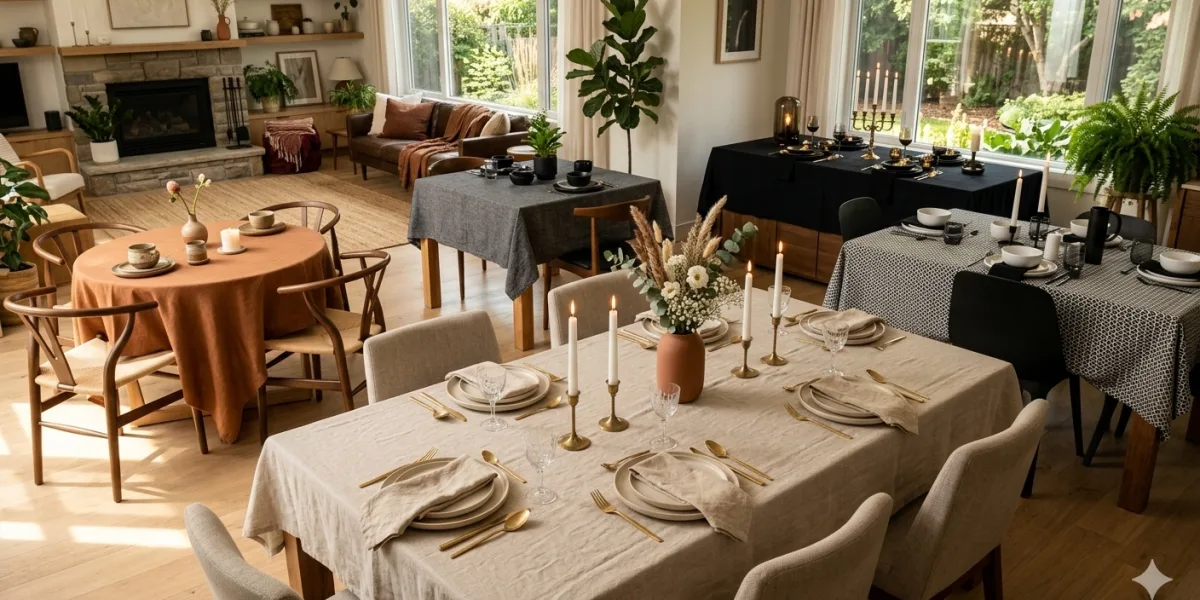
Open-plan homes often combine the kitchen, dining area, and living room into one connected space. This layout creates a sense of openness and makes it easier for family members and guests to interact, but it can sometimes be difficult to visually separate each area.
A Tablecloth can be a simple way to give the dining area its own identity without adding walls or bulky furniture. The right color, texture, and shape can make the dining table feel like a clear focal point while still keeping the entire room connected.
Whether you have a round dining table or a long rectangular table, a thoughtfully selected cotton table cloth can help establish a comfortable dining zone while adding warmth to the larger space.
Why Define a Dining Area in an Open Room?
An open room can sometimes feel visually disconnected because several activities happen in the same space.
The dining table can act as a natural transition between different areas. A well-chosen Tablecloth helps emphasize that role by giving the table a distinct visual identity.
It can:
- Highlight the dining table
- Create a sense of separation
- Add color and texture
- Connect the dining area with nearby décor
- Make the space feel more organized
You do not need a completely separate dining room to create a defined dining experience.
Choose a Tablecloth Color That Creates Connection
In an open-plan space, the tablecloth should complement the surrounding areas rather than look completely unrelated.
Look at the colors already present in your:
- Kitchen cabinets
- Living room furniture
- Flooring
- Curtains
- Rugs
- Decorative accessories
Choose a cotton table cloth that shares one or two visual qualities with the rest of the room.
For example, a neutral tablecloth can connect a wooden dining table with a neutral kitchen, while a muted color can pick up an accent shade from nearby furniture.
Use Texture to Separate the Dining Area
Color is not the only way to define a space.
Texture can create a subtle visual boundary without making the open room feel divided.
A textured Tablecloth can contrast with:
- Smooth kitchen countertops
- Leather seating
- Polished flooring
- Metal furniture
- Glass surfaces
Cotton provides a natural texture that can make the dining area feel softer and more comfortable.
Choose the Right Shape for Your Dining Table
The tablecloth should follow the shape of the table.
Round Dining Tables
Round table cloths work well when a circular table sits between larger areas of an open room.
The symmetrical shape can create a visual focal point without adding strong lines to the space.
Round tables are particularly useful for:
- Breakfast areas
- Small open-plan dining zones
- Casual family spaces
- Apartment layouts
Rectangle Dining Tables
A rectangle table cloth works well with longer dining tables and can help emphasize the direction of the dining zone.
Rectangular tables are often ideal for:
- Large families
- Entertaining
- Open kitchens
- Long connected spaces
The extended shape naturally creates a boundary between the dining and surrounding areas.
Coordinate the Tablecloth with Nearby Rugs
A rug beneath the dining table is another effective way to define a dining zone.
If you use both a rug and Tablecloth, they do not need to match exactly. Instead, coordinate their general color or style.
For example:
- A neutral rug with a soft-colored tablecloth
- A patterned rug with a simple cotton table cloth
- A natural rug with an earthy tablecloth
- A solid rug with a subtle tablecloth pattern
The goal is to create visual connection without making the area look overly coordinated.
Consider the Size of the Open Space
A large room can handle stronger visual elements than a small dining area.
If the room is spacious, a slightly more noticeable tablecloth can help prevent the dining table from getting lost among larger furniture pieces.
In a smaller open-plan area, a simple cotton table cloth may be more appropriate because it provides definition without making the space feel crowded.
Always consider the scale of the table in relation to the entire room.
Use the Table as a Visual Focal Point
The dining table can become a natural centerpiece of an open room.
A well-selected Tablecloth helps draw attention to the table without requiring dramatic decoration.
Keep the rest of the table simple with:
- Neutral dinnerware
- Cloth napkins
- A small centerpiece
- Natural greenery
- Simple serving pieces
This creates interest while preserving the open feeling of the room.
Balance the Dining Area with the Living Space
An open-plan dining area should feel connected to the living room rather than completely separate.
If the living room contains warm natural colors, consider using similar tones on the dining table.
If the surrounding décor is modern and neutral, a simple tablecloth can maintain that aesthetic.
The dining table should feel like part of the overall design while still having its own visual presence.
Choose a Practical Fabric for Everyday Use
Because open-plan dining areas are often used frequently, practicality matters.
A cotton table cloth can be suitable for regular meals because of its comfortable texture and versatile appearance.
Before choosing a fabric, consider:
- How often the table is used
- How frequently the tablecloth will be washed
- Whether children use the dining area
- How easily the fabric fits your routine
- The care instructions provided by the manufacturer
A practical fabric makes it easier to maintain a consistent dining area.
Change the Tablecloth to Refresh the Space
One benefit of using a tablecloth to define a dining area is that you can change the look without redesigning the room.
Try lighter colors during warmer months and warmer tones during fall and winter.
You can also switch between:
- Plain fabrics
- Subtle patterns
- Seasonal colors
- Natural textures
This creates variety while keeping the same furniture arrangement.
Common Mistakes to Avoid
When using a Tablecloth to define an open dining area, avoid:
- Choosing a color that clashes with nearby rooms
- Using too many competing patterns
- Selecting an incorrect size
- Covering the table with excessive accessories
- Ignoring the surrounding flooring and furniture
- Making the dining zone look completely disconnected
The best results come from creating distinction while maintaining visual flow.
Create a Complete Dining Zone
A tablecloth works best when combined with a few carefully selected elements.
Consider coordinating your:
- Dining chairs
- Tablecloth
- Rug
- Lighting
- Napkins
- Centerpiece
You do not need everything to match. Similar colors, textures, or materials are usually enough to make the area feel intentional.
Conclusion
An open-plan room can benefit from a clearly defined dining area, and a thoughtfully chosen Tablecloth can help achieve that without adding walls or unnecessary furniture. Color, texture, table shape, and surrounding décor all contribute to creating a dining space that feels distinct while remaining connected to the rest of the room.
Whether you choose round table cloths for a circular table or a rectangle table cloth for a long dining table, the right cotton table cloth can add warmth, texture, and visual structure to an open room.
For cotton and linen table coverings that work across different dining styles and home interiors, All Cotton and Linen offers a variety of options for creating a comfortable and coordinated dining space.


