
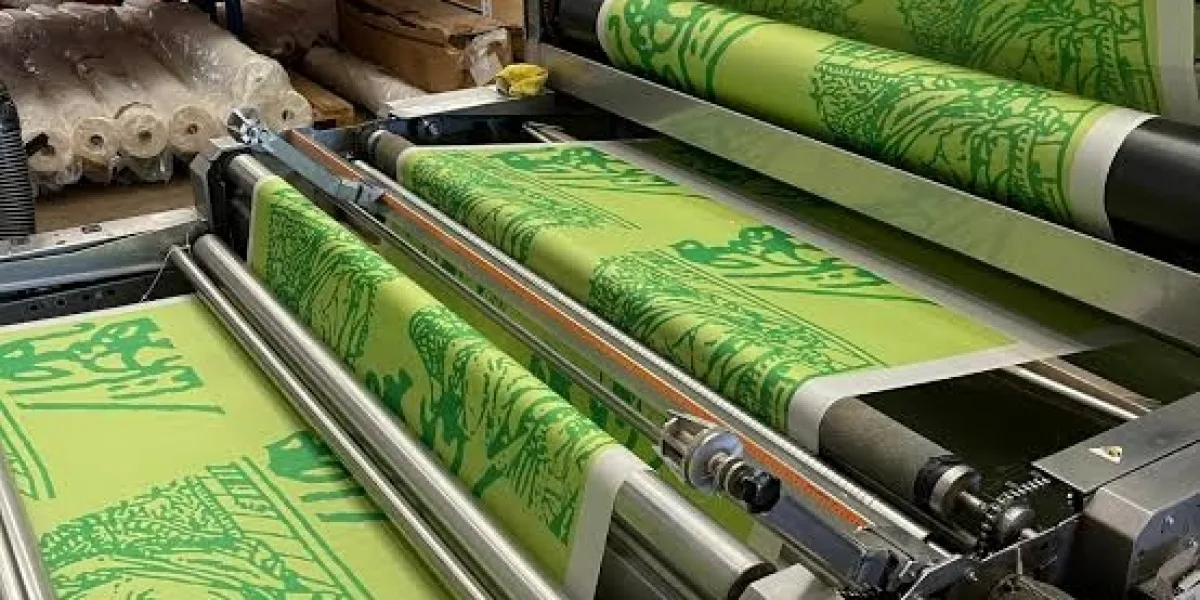
Digital printing on fabric is a modern textile printing technique that transfers digitally created artwork directly onto fabric using specialized inkjet printing equipment. Instead of relying on traditional screens or engraved rollers, the process uses digital files to control the placement of ink. This allows manufacturers and designers to produce detailed patterns, photographs, gradients, logos, and customized artwork with considerable flexibility.
The growing use of Digital printing on fabric has changed the way textile businesses approach sampling and production. Designers can develop a pattern, print a small quantity, inspect the result, and make adjustments before moving to larger production. This makes digital technology particularly useful for fashion, home furnishings, promotional textiles, custom products, and limited-edition collections.
How Does Digital Fabric Printing Work?
Digital textile printing involves several technical stages. The exact procedure depends on the fabric, ink technology, and equipment being used.
1. Preparing the Digital Design
The process begins with artwork created or edited using graphic design software. The file may contain photographs, illustrations, repeating patterns, typography, or other visual elements.
Before printing, the design is checked for dimensions, resolution, color settings, and repeat requirements. A high-quality source file is important because enlarging a low-resolution image can produce blurred edges and visible pixelation.
2. Preparing the Fabric
The fabric must be clean, stable, and compatible with the selected ink. Some textiles require chemical pretreatment before printing. Pretreatment helps control how ink interacts with the fibers and can improve color development, sharpness, and print consistency.
The preparation method differs according to fiber type and printing technology.
3. Applying the Ink
A digital textile printer deposits very small droplets of ink onto the fabric according to instructions from the digital file. The printhead controls the position and quantity of each droplet.
Unlike screen printing, changing from one design to another generally does not require creating a new physical screen. This is one reason digital printing is useful for customized and frequently changing artwork.
4. Fixing the Print
After printing, many fabrics require a fixation stage. Depending on the ink system, this may involve heat, steam, or another controlled treatment.
Fixation helps the color become properly established in the textile. Some dye-based processes also require washing to remove unfixed material and improve the final fabric properties.
Major Types of Digital Fabric Printing
Different fibers require different ink technologies. Choosing the wrong combination can lead to poor color, weak durability, or an unsuitable finished product.
Reactive Printing
Reactive inks are widely used with cellulose-based fabrics such as cotton, linen, and viscose. During fixation, the dye forms a chemical bond with suitable fiber molecules.
This method can produce strong colors and good wash performance when the fabric is correctly prepared and processed. It is commonly used for clothing, bed linens, scarves, and other cotton-based products.
Pigment Printing
Pigment printing uses colored particles that are held on the fabric with a binder. Pigment systems can work with a broad selection of textile materials, depending on the specific ink and printer.
One advantage is that certain pigment workflows can require fewer wet-processing steps than some dye-based methods. However, print quality and durability depend heavily on the binder, curing conditions, fabric surface, and ink formulation.
Dye-Sublimation Printing
Dye-sublimation is mainly used for polyester and other suitable synthetic textiles. Heat causes the dye to move into the polyester fibers, where it becomes part of the material rather than remaining primarily on the surface.
This technique is widely used for sportswear, flags, banners, promotional fabrics, soft signage, and customized polyester products.
Acid Printing
Acid inks are suitable for materials such as silk, wool, and some polyamide fabrics. They can produce detailed and vibrant results when the fabric, ink, pretreatment, and fixation process are correctly matched.
Acid printing is particularly relevant to fashion fabrics, scarves, and decorative textiles where detailed designs are required.
Benefits of Digital Printing on Fabric
Greater Design Freedom
Digital printing supports intricate artwork that can include multiple colors, photographic details, smooth gradients, and fine lines. Designers are not limited to a small number of colors in the same way that some conventional printing methods may be.
This makes the technology useful for artistic patterns and highly customized textile designs.
Efficient Sampling
Creating physical samples is an important part of textile development. Digital printing allows a business to print a small amount of fabric for testing before committing to a larger order.
For example, a fashion brand can test several color variations of the same pattern and select the version that best meets its production requirements.
Suitable for Short Production Runs
Traditional processes can involve setup costs that make very small orders less economical. Digital printing reduces some of these setup requirements, making it practical for customized products, prototypes, small collections, and limited editions.
Easy Design Modification
A digital design can be edited without physically rebuilding screens or rollers. Colors, graphics, dimensions, and pattern arrangements can be changed in the design file before another sample is produced.
This flexibility is useful for businesses that regularly update their collections.
Detailed Personalization
Digital printing can be used to produce personalized names, graphics, photographs, logos, and other variable artwork. This makes it suitable for custom apparel, interior decoration, promotional products, and specialized textile orders.
Practical Considerations Before Printing
Choosing a printer is only one part of achieving a successful result. The fabric and production process also need careful consideration.
Match the Ink to the Fiber
The fiber composition should be identified before selecting the ink system. Cotton and polyester, for example, generally require different approaches for achieving durable, high-quality prints.
Blended fabrics can require additional testing because different fibers may respond differently to the same ink.
Consider the Fabric Surface
Smooth fabrics may produce a different visual result from textured or heavily woven materials. The structure of the textile affects how ink spreads and how sharp the printed image appears.
A sample test is therefore useful before starting full production.
Check Color Accuracy
Colors displayed on a computer screen are produced using light, while printed colors are produced using ink or dye. As a result, the appearance on screen may not exactly match the finished textile.
Color management, printer profiles, ink characteristics, fabric properties, and lighting conditions all influence the final result.
Common Challenges and Limitations
Digital textile printing has many advantages, but it also has limitations.
Production speed can vary significantly between machines. Some industrial systems are designed for high-volume production, while smaller printers are better suited to sampling and customized work.
Print durability depends on the complete process rather than the printer alone. Ink selection, pretreatment, fixation, fabric quality, washing, and finishing can all influence how a print performs over time.
Cost also varies according to the application. Digital printing can be attractive for short runs, but large-volume textile production may require a detailed comparison of ink, fabric, machine speed, labor, pretreatment, finishing, and other operating costs.
Fabric compatibility is another consideration. A printing method designed for polyester should not automatically be assumed to work effectively on cotton, silk, or other materials.
Applications of Digital Fabric Printing
Digital textile printing is used across many industries.
In fashion, it can produce customized dresses, shirts, scarves, skirts, and other garments. Designers can use complex patterns without creating separate physical screens for every design.
In home textiles, digitally printed artwork can be applied to curtains, cushions, bedding, table textiles, and decorative fabrics.
In sportswear, dye-sublimation printing is commonly used with polyester garments because it can produce detailed graphics across large areas.
The technology is also used for flags, banners, exhibition graphics, promotional materials, and personalized textile products.
Frequently Asked Questions
1. What is digital printing on fabric?
It is a textile printing method that uses digital inkjet technology to apply designs directly to suitable fabrics. The artwork is supplied as a digital file that controls where ink is deposited.
2. Which fabrics are suitable for digital printing?
Many fabrics can be digitally printed, including cotton, polyester, silk, viscose, linen, wool, nylon, and selected blends. The appropriate printing technology depends on the fiber composition.
3. Is digitally printed fabric washable?
Many digitally printed textiles can be washed successfully when the correct ink, fixation, pretreatment, and finishing processes are used. Washing instructions should follow the requirements of the specific textile.
4. Can digital printing reproduce photographs?
Yes. Digital textile printers can reproduce photographs, gradients, detailed illustrations, and complex patterns when the artwork and fabric are suitable for the selected printing system.
5. Is digital printing suitable for small businesses?
It can be particularly useful for small businesses producing customized products, samples, short collections, or limited quantities. The economics depend on equipment, materials, order size, and production requirements.
Conclusion
Digital printing on fabric provides a flexible approach to textile decoration by allowing digital artwork to be transferred onto suitable fabrics with specialized inkjet equipment. It supports detailed patterns, customization, efficient sampling, and short production runs, making it useful across fashion, home furnishings, sportswear, advertising, and other textile applications.
Successful results require more than selecting a digital printer. Fabric composition, ink technology, pretreatment, color management, fixation, and finishing all influence print quality and durability. Businesses that test their materials and match the printing process to the intended application can make better decisions about quality, cost, and production efficiency.


