
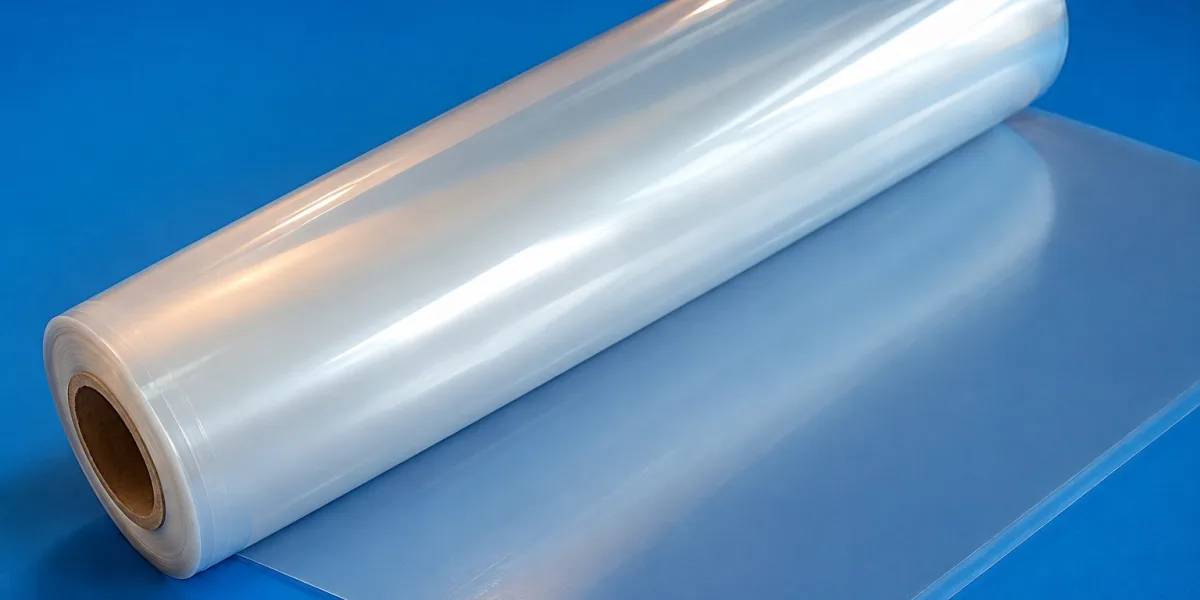
Nafion 117 is a widely studied perfluorosulfonic acid membrane used in electrochemical and ion-exchange applications. It belongs to the family of proton-conducting polymer membranes and is valued for its chemical stability, mechanical strength, and ability to transport protons when properly hydrated. Nafion membranes are based on a perfluorosulfonic acid polymer structure containing a fluorinated backbone and sulfonic acid functional groups. Nafion 117 is commonly discussed in fuel cells, electrochemical research, microbial fuel cells, hydrogen-related technologies, and membrane separation studies because its combination of proton transport and chemical resistance makes it useful in demanding environments.
What Is Nafion 117?
Nafion 117 is a proton-conducting ion-exchange membrane belonging to the perfluorosulfonic acid membrane family. It contains a fluorinated polymer backbone with side chains that terminate in sulfonic acid groups, creating hydrophilic regions inside an otherwise strongly fluorinated material. These sulfonic acid groups attract and retain water, allowing protons to move through hydrated channels within the membrane. The membrane is generally supplied in proton form for many electrochemical applications, although its ionic form can be changed through appropriate ion-exchange treatments. Its relatively thick construction makes it different from thinner Nafion grades and can provide advantages when reduced crossover and greater mechanical robustness are important.
Chemical Structure of Nafion 117
The chemical structure of Nafion 117 combines a hydrophobic fluorinated backbone with hydrophilic side-chain regions containing sulfonic acid groups. The fluorinated portion contributes to the material's chemical resistance and structural durability, while the sulfonic acid groups provide ion-exchange functionality and support proton transport. When the membrane absorbs water, the hydrophilic groups organize into hydrated regions that create pathways through which protons can move. This unique combination of hydrophobic and hydrophilic domains is one of the main reasons Nafion has become an important material in proton exchange membrane research and electrochemical technology.
How Does Nafion 117 Work?
Nafion 117 works primarily as a proton-conducting membrane that allows protons to move through hydrated ionic pathways while limiting the movement of many other species. In a proton exchange membrane system, the membrane separates different chemical environments while supporting proton transport between electrodes or reaction zones. Its sulfonic acid groups remain attached to the polymer structure, while mobile protons can move through water-rich regions associated with those groups. The efficiency of proton transport depends strongly on hydration, temperature, membrane condition, and the surrounding chemical environment. This makes water management an important consideration when Nafion 117 is used in electrochemical systems.
Important Properties of Nafion 117
Nafion 117 is known for a combination of proton conductivity, chemical stability, ion-exchange capability, water uptake, and mechanical durability. Its commonly reported dry thickness is around the high-hundreds of micrometers, making it substantially thicker than several other Nafion membrane grades. Research literature reports proton conductivity values that vary with temperature, hydration, measurement method, and experimental conditions, so conductivity should not be treated as a single fixed value for every application. Its ion-exchange behavior comes from the sulfonic acid groups distributed along the polymer structure, while water absorption helps create the pathways required for proton movement.
Proton Conductivity of Nafion 117
Proton conductivity is one of the most important characteristics of Nafion 117 because its usefulness in many electrochemical applications depends on efficient proton transport. Hydration has a strong influence on conductivity because water helps form continuous pathways through the membrane. When the membrane becomes too dry, proton movement can decrease significantly, while suitable hydration can improve ionic transport. Temperature and chemical environment also affect conductivity, meaning that reported values from different studies can vary. For this reason, researchers normally evaluate Nafion 117 under conditions that closely match the intended application rather than relying on a single published conductivity value.
Water Uptake and Hydration
Water uptake is an important characteristic of Nafion 117 because its proton-conducting mechanism is closely connected to hydration. The sulfonic acid groups attract water and form hydrated ionic domains inside the polymer. These water-rich regions support proton movement and contribute to the membrane's electrochemical performance. At the same time, excessive swelling can influence mechanical behavior, dimensional stability, and transport properties. The relationship between water content and membrane performance is therefore an important consideration when Nafion 117 is used in fuel cells, electrochemical experiments, or membrane separation systems.
Nafion 117 in Fuel Cells
Nafion 117 has been widely used in proton exchange membrane fuel cell research because it can conduct protons while acting as a separator between different reaction environments. Within a fuel cell, the membrane helps transport protons from one electrode region toward the other while limiting unwanted mixing of reactant gases. Its relatively thick structure can provide useful resistance to crossover compared with thinner membranes, although greater thickness can also increase transport resistance. The choice of membrane therefore involves balancing proton transport, crossover control, mechanical properties, hydration, and the operating conditions of the fuel cell.
Nafion 117 in Microbial Fuel Cells
Nafion 117 has also been used extensively in microbial fuel cell research. In these systems, the membrane can serve as a proton exchange separator between different chambers while allowing proton transport and helping separate other components of the electrochemical environment. Its chemical characteristics and established research history make it a common reference material for experimental studies. However, membrane performance in microbial fuel cells can depend on fouling, ion transport, oxygen crossover, hydration, and interactions with the biological environment. Researchers therefore need to evaluate the membrane under the actual conditions of their system rather than assuming laboratory performance will remain unchanged in every application.
Nafion 117 in Hydrogen Technology
Nafion membranes are also used in hydrogen-related electrochemical technologies because proton-conducting membranes can separate reaction environments while supporting proton transport. Nafion membrane grades are used in hydrogen generation and various electrolytic processes, and the manufacturer identifies N117 among its extrusion-cast membranes for these types of applications. The suitability of Nafion 117 depends on the operating environment, including temperature, chemical exposure, hydration, pressure, and electrical conditions. Its established proton-conducting behavior makes it an important material for research and development involving hydrogen and electrochemical energy systems.
Advantages of Nafion 117
Nafion 117 offers several useful characteristics for electrochemical applications. Its fluorinated polymer structure provides strong chemical resistance, while its sulfonic acid groups provide ion-exchange functionality and proton transport. Its comparatively thick membrane structure can help reduce crossover and provide mechanical stability in applications where a thinner membrane may be less suitable. Nafion 117 is also extensively studied, which means researchers can compare new experiments with a large body of existing membrane research. These characteristics have contributed to its continued use as a benchmark material in electrochemical studies.
Limitations of Nafion 117
Although Nafion 117 has many useful properties, it is not suitable for every membrane application. Its relatively high thickness can increase resistance to ion transport compared with thinner membrane grades, which may affect system performance in applications where low membrane resistance is especially important. Proton transport also depends strongly on hydration, so poor water management can reduce conductivity. The membrane can also allow some unwanted species to cross through it, meaning that selectivity is application-dependent. Researchers must therefore consider membrane thickness, hydration, crossover, operating temperature, chemical environment, and mechanical requirements before choosing Nafion 117.
Nafion 117 Compared With Other Nafion Membranes
Nafion membranes are available in different grades with different thicknesses and characteristics. N117 is a relatively thick unreinforced membrane, while other grades can be substantially thinner or designed for different performance requirements. A thicker membrane can provide stronger resistance to crossover and may offer useful mechanical characteristics, but it can also increase ionic resistance. Thinner membranes may reduce transport resistance but can introduce greater crossover or different mechanical considerations. Therefore, selecting between Nafion grades should be based on the specific requirements of the electrochemical system rather than simply choosing the thickest or thinnest option.
Preparing Nafion 117 for Laboratory Use
Preparation procedures for Nafion 117 depend on the intended experiment and the condition of the supplied membrane. Researchers may clean or condition the membrane to remove contaminants and place it into the desired ionic form before use. Published experimental procedures have used treatments involving hydrogen peroxide, sulfuric acid, and purified water, but the appropriate procedure depends on the research objective and laboratory safety requirements. Because chemical treatment can change membrane condition and performance, users should follow an established validated procedure suitable for their application rather than applying a treatment without considering membrane compatibility.
Storage and Handling of Nafion 117
Proper storage and handling can help preserve the condition of Nafion 117 before it is used in an experiment or device. The membrane should be protected from unnecessary contamination, mechanical damage, and unsuitable chemical exposure. If the membrane is stored in a dry condition, it may need appropriate hydration or conditioning before certain applications. Researchers should also avoid folding, scratching, tearing, or stretching the membrane unnecessarily because physical damage can affect its sealing and transport behavior. The preferred storage approach depends on the intended application and the membrane's current chemical and hydration state.
Factors That Affect Nafion 117 Performance
Several factors can influence the performance of Nafion 117, including hydration, temperature, pressure, ionic form, chemical environment, membrane thickness, and the presence of contaminants. Water content is especially important because proton conductivity depends strongly on hydrated ionic pathways. Temperature can alter water retention, polymer mobility, and proton transport, while exposure to certain chemicals can affect membrane structure or performance. Mechanical stress can also change membrane dimensions and influence sealing. Considering these factors together is essential when evaluating Nafion 117 in a real electrochemical system.
Applications of Nafion 117
Nafion 117 can be found in a wide range of research and technology areas involving ion transport and electrochemical processes. Common areas include proton exchange membrane fuel cells, microbial fuel cells, electrochemical sensors, hydrogen generation research, electrolytic systems, membrane separation studies, and laboratory investigations of proton-conducting materials. It is particularly valuable as a research membrane because its properties have been extensively characterized. Its application should still be evaluated according to the specific chemical and physical conditions of the system because membrane performance can vary significantly between different environments.
Safety Considerations for Nafion 117
Nafion 117 is generally handled as a laboratory polymer membrane, but safety considerations become important when it is cleaned, conditioned, modified, or incorporated into an electrochemical experiment. Chemical treatments can involve acids, oxidizing agents, solvents, or other substances that require appropriate laboratory precautions. Users should consult the safety information for all chemicals used during membrane preparation and should work with suitable protective equipment and ventilation. The membrane should also be handled according to the safety requirements of the complete experimental system rather than being considered in isolation.
Frequently Asked Questions About Nafion 117
What is Nafion 117?
Nafion 117 is a perfluorosulfonic acid proton exchange membrane used in electrochemical and ion-exchange applications. It contains a fluorinated polymer structure with sulfonic acid groups that support proton transport when the membrane is adequately hydrated.
What is Nafion 117 used for?
Nafion 117 is used in applications such as proton exchange membrane fuel cells, microbial fuel cells, hydrogen-related electrochemical systems, electrolytic processes, sensors, and membrane research. Its exact suitability depends on the operating environment and performance requirements.
Why does Nafion 117 conduct protons?
Nafion 117 contains sulfonic acid groups that create hydrophilic regions capable of absorbing water. When hydrated, these regions form pathways that allow protons to move through the membrane, giving it proton-conducting properties.
Is Nafion 117 waterproof?
Nafion 117 is not simply a waterproof plastic because it is designed to interact with water and absorb it. Hydration is an important part of its proton-conducting behavior, and its water uptake can influence both transport and physical properties.
Why is Nafion 117 popular in research?
Nafion 117 is popular in research because it combines proton conductivity, chemical stability, ion-exchange functionality, and mechanical durability, while also having a substantial history of scientific characterization. This makes it useful as a reference or benchmark membrane in many studies.
Can Nafion 117 be used in fuel cells?
Nafion 117 has been widely used in fuel cell research as a proton exchange membrane. Its relatively thick structure can help reduce reactant crossover, although its thickness can also increase resistance compared with thinner membrane grades.
Does Nafion 117 need water to work properly?
Hydration is very important for proton transport in Nafion 117 because water helps create pathways through which protons can move. Changes in hydration can therefore cause significant changes in conductivity and overall membrane behavior.
What makes Nafion 117 different from thinner Nafion membranes?
Nafion 117 is a relatively thick unreinforced membrane compared with several other Nafion grades. Its greater thickness can provide advantages such as reduced crossover and useful mechanical strength, while thinner membranes can offer lower transport resistance.
Conclusion
Nafion 117 is an important proton-conducting membrane with a combination of chemical stability, ion-exchange functionality, mechanical durability, and proton transport capability. Its fluorinated polymer backbone and sulfonic acid groups create a structure that can absorb water and support proton movement through hydrated ionic regions. These properties have made Nafion 117 valuable in fuel cell research, microbial fuel cells, hydrogen technologies, electrochemical studies, and membrane research. Its performance depends on factors such as hydration, temperature, chemical environment, membrane thickness, and operating conditions, so proper selection and preparation are essential. When its characteristics match the requirements of an electrochemical application, Nafion 117 can provide a reliable and well-established membrane platform for research and technology development.


