
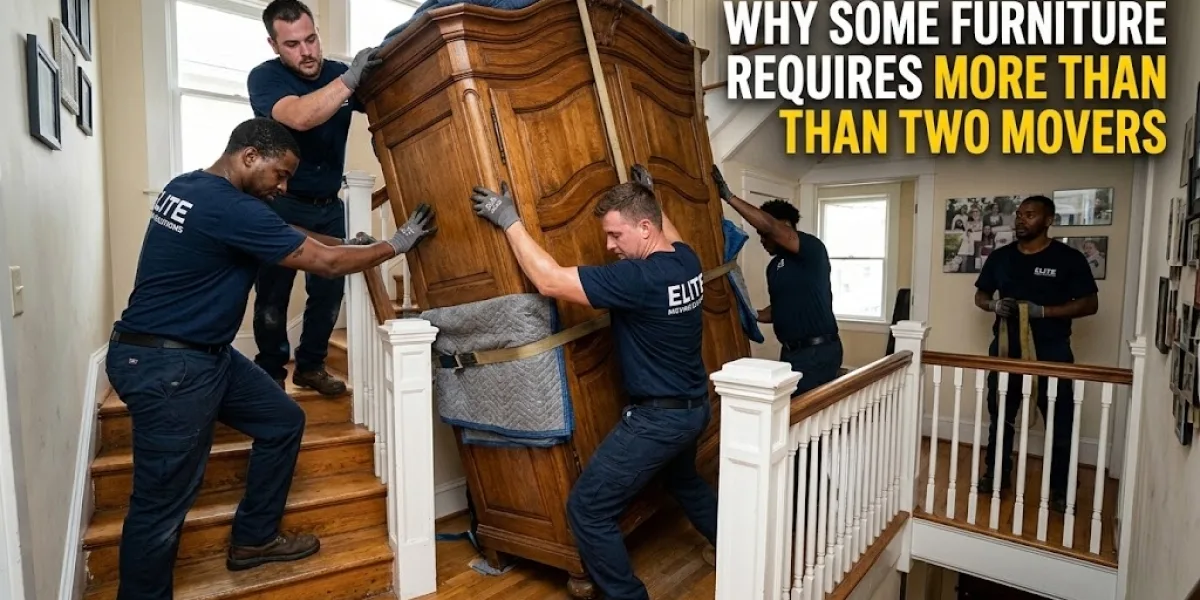
Moving furniture may seem like a simple matter of lifting, carrying, and loading. In reality, some pieces require much more planning and manpower than others. A large sectional sofa, solid-wood dining table, oversized wardrobe, antique cabinet, or bulky safe can quickly become difficult for two people to handle safely. The challenge is not always the weight alone it can also involve the furniture’s shape, size, balance, and the layout of the property.
For anyone planning a move, understanding when additional help may be necessary can make the process safer and more efficient. Professional movers in san jose often assess furniture based on several factors before deciding how many people are needed. This helps reduce the risk of injuries, damaged walls, scratched floors, and furniture that gets stuck halfway through a doorway or staircase.
Weight Is Only One Part of the Problem
It is easy to assume that heavy furniture automatically requires more movers. Weight certainly matters, but it is only one consideration.
A compact piece weighing 250 pounds may be easier for two people to handle than a long, awkward sofa weighing significantly less. Movers need to control the furniture while maintaining balance, visibility, and a safe walking path. If a piece is difficult to grip or has an uneven weight distribution, additional people may be needed to keep it stable.
Uneven Weight Distribution
Some furniture is heavier on one side than the other. For example, a large wooden cabinet may have thick doors, drawers, or internal shelving that shifts its center of gravity.
When two movers lift an unbalanced item, one person may end up carrying considerably more of the load. Adding another mover can help distribute the weight and maintain control.
Awkward Shapes
Furniture with unusual shapes can also be difficult to carry. Recliners, L-shaped sofas, large entertainment centers, and oversized desks can extend well beyond the movers' natural carrying positions.
Additional movers can help guide these pieces through tight spaces while others concentrate on lifting and supporting the weight.
Large Furniture Can Be Difficult to Maneuver
Size creates another major challenge. A piece does not have to be exceptionally heavy to require three or more movers.
Consider a long dining table. Two people might be able to lift it, but carrying it through a narrow hallway can be difficult because both ends need to be controlled. One additional mover can help stabilize the center or guide the piece around corners.
Large furniture also creates visibility problems. A mover carrying one end may not be able to see obstacles ahead. Additional assistance can provide better communication and control.
Staircases Often Require Extra Help
Stairs are among the biggest reasons furniture may need more than two movers.
Carrying an item upstairs or downstairs changes how its weight is distributed. Movers must work against gravity while keeping the furniture balanced. A large sofa or dresser can become particularly challenging when the staircase has a landing or sharp turn.
Narrow Staircases
A narrow staircase leaves little room for repositioning. If the furniture is longer than the width of the stairs, movers may need to tilt it at specific angles.
Having an additional person available can make it easier to guide the piece while the primary movers support its weight.
Multiple Levels
Furniture being moved across several floors may also require additional manpower. Repeated lifting and repositioning can increase fatigue, which can affect control.
More movers can allow the team to rotate responsibilities and reduce unnecessary strain.
Tight Doorways and Hallways Change the Equation
A piece of furniture can be easy to carry in an open room but extremely difficult to move through a doorway.
Door frames, corners, stairwell entrances, and narrow hallways all limit the angles available to movers. Sometimes furniture needs to be rotated vertically, tilted, or carefully pivoted.
With two movers, both people may already be occupied supporting the furniture. A third mover can help open doors, guide corners, protect walls, or communicate what is happening on the other side.
This is especially useful when moving furniture out of older homes or buildings with unusual layouts.
Some Furniture Needs More Than Lifting
Certain pieces require movers to perform several tasks simultaneously.
For example, moving a large sectional may involve:
- Separating sections before carrying them
- Removing cushions
- Protecting upholstery
- Navigating corners
- Holding doors open
- Supporting different sections
- Reassembling the furniture at the destination
The more complicated the process, the more valuable additional manpower can become.
Modular Furniture
Some furniture can be broken into smaller pieces, which may reduce the number of movers required. A sectional sofa, modular shelving unit, or large bed frame may become significantly easier to transport after disassembly.
However, not every item should be taken apart. Certain antiques, delicate pieces, or complex furniture may be safer to move intact when possible.
Delicate Furniture May Need Extra Hands
Fragile furniture presents a different challenge. The objective is not simply to move it from one location to another but to prevent damage during every stage.
Antique cabinets, glass display cases, marble tables, mirrors, and furniture with delicate finishes may require additional movers because the team needs to move more slowly and maintain precise control.
Extra manpower can help prevent sudden movements and allow movers to stabilize the item while navigating difficult areas.
Protecting Valuable Finishes
Furniture may be wrapped with moving blankets, stretch wrap, corner protection, or other suitable materials. Once protected, the item can become slightly larger and more difficult to grip.
This is another situation where additional assistance may make maneuvering easier.
Furniture That Cannot Be Easily Gripped
Handles are not available on every piece of furniture. A smooth-sided wardrobe or large wooden table can be challenging to grip securely.
Movers may need to use specialized moving equipment such as lifting straps, dollies, furniture sliders, or other tools. Even with equipment, additional people may be necessary to stabilize the item.
The safest approach depends on the furniture, the route, the flooring, and the equipment available.
Heavy Furniture Can Create Safety Risks
Trying to move a large piece with too few people can create unnecessary safety risks.
When movers struggle with an item, they may be tempted to lift beyond a comfortable capacity, twist their bodies, or make sudden movements. These actions can increase the chance of strains or other injuries.
Furniture can also be damaged when it slips or becomes difficult to control. Walls, floors, doors, and railings can suffer damage as well.
Using the appropriate number of movers helps the team maintain better posture, communication, and control.
How Movers Determine the Right Number of People
Professional moving teams generally consider several factors before deciding how many movers are appropriate.
1. Furniture Weight
The approximate weight gives movers an initial idea of how much manpower may be required.
2. Furniture Dimensions
Length, width, height, and overall shape affect how easily the item can be carried.
3. Center of Gravity
An item with uneven weight distribution may require more people than its total weight suggests.
4. Moving Route
The team should consider doorways, elevators, hallways, stairs, corners, and outdoor paths.
5. Distance From the Truck
Carrying a heavy piece a few feet is different from moving it across a long driveway or down a sidewalk.
6. Property Conditions
Wet surfaces, uneven flooring, steep steps, low ceilings, or limited access can make furniture more challenging to move.
7. Disassembly Options
If furniture can safely be separated into smaller components, fewer movers may sometimes be necessary.
How Homeowners Can Prepare Large Furniture
Homeowners can make difficult furniture moves easier by preparing in advance.
Measure the furniture and compare its dimensions with doorways, hallways, staircases, and elevators. Remove obstacles from the planned route and secure doors so they do not unexpectedly close.
If possible, remove removable cushions, shelves, legs, or other components. However, avoid taking apart complicated furniture unless you know it can be safely reassembled.
It is also helpful to tell the moving team about unusually heavy or oversized items before moving day. Photos and measurements can provide useful information during the planning process.
When Three or More Movers May Be Practical
There is no universal rule saying that a particular weight or size always requires three movers. Every move is different.
However, three or more movers may be practical when an item is:
- Extremely long or bulky
- Difficult to grip
- Unevenly balanced
- Being moved through narrow spaces
- Going up or down stairs
- Particularly fragile
- Too large for two people to maneuver comfortably
- Located far from the moving truck
- Difficult to disassemble
The goal is not to use as many people as possible. It is to use enough manpower to keep the move controlled and safe.
Conclusion
Some furniture requires more than two movers because moving is about much more than lifting weight. Size, shape, balance, fragility, stairs, narrow spaces, and the overall route can all determine how much manpower is appropriate. Planning for these factors before moving day can help reduce physical strain, property damage, and unexpected complications. Whether you're preparing for a large household relocation or have one particularly difficult piece to move, discussing the furniture and access conditions with Brother Movers LLC can help you plan the job more effectively and determine what level of moving assistance is appropriate.


