
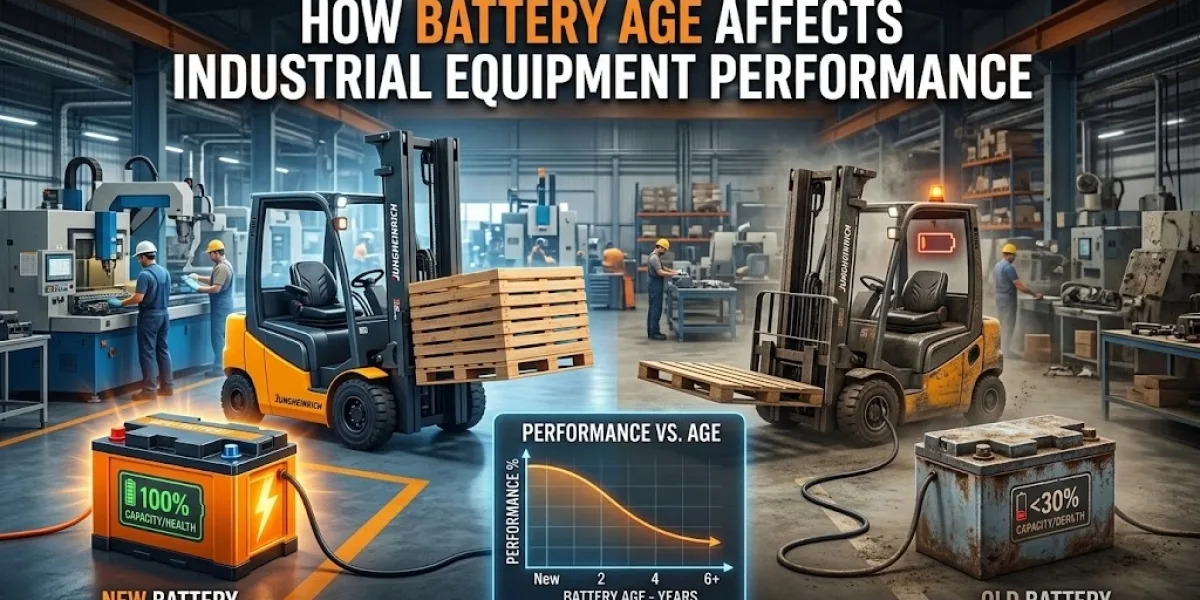
Industrial equipment depends on reliable power to operate safely, efficiently, and consistently. Whether it is a forklift moving materials through a warehouse, an electric pallet jack handling deliveries, or a backup power system supporting critical operations, the battery plays a major role in keeping daily work moving. As a battery gets older, however, its ability to deliver dependable power gradually changes.
For businesses that rely heavily on battery-powered machinery, understanding these changes can help prevent unexpected downtime and unnecessary expenses. If you are comparing replacement options, maintenance services, or looking for a reliable Battery Store Plano, it is useful to understand what battery age can mean for equipment performance before making a decision.
Why Battery Age Matters
Industrial batteries are designed to provide dependable energy over a certain service life. They do not usually stop working suddenly when they reach a particular age. Instead, their performance tends to decline gradually as internal components wear and their ability to store and deliver energy decreases.
The exact rate of aging depends on several factors, including:
- How frequently the battery is used
- The type and quality of the battery
- Charging habits
- Operating temperatures
- Maintenance practices
- Depth of discharge
- Storage conditions
- The equipment in which the battery is installed
Two batteries of the same age can therefore perform very differently. One may still provide reliable service because it has been properly maintained, while another may have experienced heavy use and poor charging practices and show significant performance loss.
Signs That an Industrial Battery Is Getting Older
Battery aging does not always require specialized equipment to notice. Operators and maintenance teams can often identify several warning signs during normal operations.
Shorter Operating Times
One of the most common signs of battery aging is reduced runtime. Equipment that once operated for an entire shift may begin requiring a recharge much earlier.
For example, a forklift that previously completed eight hours of typical work might begin struggling after five or six hours. This does not necessarily mean the equipment itself has a problem. The battery may simply have lost part of its usable capacity.
Shorter runtime can affect scheduling, especially in facilities where equipment needs to operate continuously.
Slower Equipment Performance
An aging battery may struggle to provide the same level of power as it did when new. Operators may notice that equipment accelerates more slowly, lifting functions feel weaker, or electrical systems behave inconsistently.
Heavy industrial equipment often needs substantial power during demanding tasks. If the battery cannot provide the required current efficiently, performance may become noticeably less responsive.
Longer Charging Times
Another warning sign is a change in charging behavior. An older battery may take longer to reach a full charge or may appear to charge normally but deliver significantly less operating time afterward.
Long charging periods can create operational problems when equipment needs to return to service quickly. Businesses may also find themselves relying more heavily on spare batteries or charging stations.
Increased Voltage Drops
Battery voltage can drop under load as batteries age. This means the battery may show an acceptable voltage when the equipment is idle but experience a substantial decline when the machinery performs demanding work.
These voltage drops can result in reduced equipment performance and, in some applications, unexpected shutdowns.
How Battery Aging Affects Equipment Efficiency
Battery age does not only affect how long equipment can run. It can influence overall operating efficiency.
When a battery becomes less efficient, equipment may consume energy less effectively. Operators might need to recharge more frequently, while maintenance teams spend additional time managing battery-related issues.
This can increase the indirect cost of operating the equipment.
Consider a warehouse that uses several electric forklifts. If older batteries provide significantly less runtime, workers may need to interrupt their normal schedules to exchange batteries or wait for equipment to recharge. Over weeks and months, these small interruptions can add up to substantial lost productivity.
The Impact on Different Types of Industrial Equipment
Battery aging can affect almost any battery-powered industrial application, but the consequences can vary depending on the equipment.
Forklifts
Forklifts are particularly sensitive to battery condition because they require substantial power for both movement and lifting.
An aging battery can reduce travel speed, lifting performance, and available runtime. In busy warehouses, these changes may slow material handling and increase the number of charging or battery-change cycles required during a shift.
Pallet Jacks
Electric pallet jacks also rely on consistent battery power. Reduced capacity can mean fewer operating hours between charges.
Because pallet jacks are often used repeatedly throughout the day, even moderate battery degradation can become noticeable over time.
Floor Cleaning Equipment
Industrial floor scrubbers and sweepers depend on batteries for extended periods of operation. A declining battery may force operators to recharge before completing a scheduled cleaning area.
This can be especially inconvenient in large warehouses, manufacturing facilities, and commercial buildings.
Backup Power Systems
For backup systems, battery age can present a different concern. A battery may appear functional during routine checks but fail to provide sufficient power during an actual outage.
This is why age, testing, and maintenance are particularly important for batteries used in critical backup applications.
What Causes Industrial Batteries to Age Faster?
Age alone is not the only factor responsible for declining performance. Certain operating conditions can accelerate battery degradation.
Frequent Deep Discharges
Repeatedly draining a battery to very low levels can put additional stress on its internal components. Depending on the battery chemistry and manufacturer specifications, consistently deep discharges may shorten its useful service life.
Following the appropriate charging and operating guidelines can help minimize unnecessary wear.
Incorrect Charging
Charging practices have a significant effect on battery health. Using the wrong charger, charging at inappropriate times, or failing to follow recommended charging procedures can contribute to premature degradation.
Charging systems should be matched correctly to the battery and equipment.
Excessive Heat
High temperatures can accelerate chemical reactions inside batteries and contribute to faster deterioration. Industrial environments can sometimes expose batteries to significant heat, particularly when equipment operates for long periods.
Keeping batteries within their recommended temperature range can help support longer service life.
Poor Maintenance
Some industrial battery types require regular maintenance. Neglecting tasks such as inspections, cleaning, fluid checks where applicable, and connection inspections can contribute to performance problems.
Maintenance requirements vary considerably by battery type, so businesses should follow the manufacturer's recommendations.
Does an Older Battery Always Need to Be Replaced?
Not necessarily.
Battery age is an important consideration, but it should not be the only reason for replacement. A battery that is several years old may still perform adequately if it has been properly maintained and retains sufficient capacity for the application.
On the other hand, a relatively newer battery may require attention if it has experienced severe operating conditions or poor maintenance.
The better approach is to evaluate the battery's actual condition.
Look at Performance, Not Just Age
Maintenance teams should consider:
- Current operating runtime
- Voltage under load
- Charging performance
- Physical condition
- Maintenance history
- Frequency of unexpected shutdowns
- Equipment performance
- Replacement and repair costs
This information provides a much clearer picture of whether continued use is practical.
Battery Testing Can Help Identify Problems
Regular testing can help businesses detect battery deterioration before it creates a major operational problem.
Depending on the battery type and application, testing may include voltage measurements, capacity testing, load testing, visual inspections, and other diagnostic procedures.
Testing can reveal whether reduced equipment performance is actually caused by the battery or whether another component needs attention.
For businesses managing a large equipment fleet, keeping records of battery performance can also make maintenance planning easier. Instead of waiting until a battery fails during a busy shift, managers can identify declining performance trends and plan service or replacement around their operational schedules.
When Should You Consider Battery Rebuilding?
Replacement is not always the only option for an aging industrial battery. In some situations, rebuilding or servicing may be worth considering.
Battery rebuilding can involve replacing worn components and restoring the battery so it can continue serving its intended application. Whether rebuilding makes sense depends on the battery's design, condition, age, application, and overall economics.
A professional assessment can help determine whether rebuilding is technically and financially appropriate.
This approach may be particularly useful for businesses that operate specialized equipment where finding an exact replacement battery is difficult or expensive.
How to Extend the Useful Life of Industrial Batteries
Although batteries naturally deteriorate, good operating practices can help slow unnecessary wear.
Follow the Correct Charging Routine
Use the appropriate charger and follow the manufacturer's recommended charging procedures. Avoid creating charging habits that conflict with the battery's specifications.
Keep Batteries Clean and Inspected
Dirt, corrosion, loose connections, and other physical problems can interfere with reliable operation. Regular inspections can help identify small issues before they become larger ones.
Avoid Unnecessary Deep Discharges
Where applicable, operate and recharge batteries according to their recommended discharge limits. Avoid consistently pushing equipment until the battery is nearly depleted unless the battery and application are designed for that operating pattern.
Monitor Equipment Performance
Operators are often the first people to notice changes. Encourage them to report shorter runtime, slower operation, unusual charging behavior, or unexpected shutdowns.
Early reporting gives maintenance teams an opportunity to investigate the issue before it causes significant downtime.
Maintain Accurate Battery Records
For businesses with multiple machines, record important information such as installation dates, service history, charging issues, testing results, and major repairs.
These records can help managers identify batteries that are approaching the end of their practical service life.
The Cost of Ignoring an Aging Battery
Continuing to use a declining battery without monitoring its condition can create costs beyond the battery itself.
Reduced productivity, additional charging cycles, equipment downtime, emergency service, and disrupted work schedules can all affect the bottom line.
There can also be safety considerations. Equipment that does not perform predictably can create additional risks in busy industrial environments. Battery condition should therefore be treated as part of an overall equipment maintenance strategy rather than simply a replacement expense.
Final Thoughts
Battery age can have a noticeable effect on industrial equipment performance, from reduced runtime and slower operation to longer charging periods and unexpected interruptions. However, age alone does not determine whether a battery should be replaced. Usage, maintenance, charging practices, environmental conditions, and actual battery capacity all matter.
Regular inspections and testing can help businesses understand battery condition and make informed maintenance decisions. When an aging battery begins affecting productivity, exploring repair, rebuilding, or replacement options can help keep equipment operating reliably. Working with an experienced provider such as Battery Rescue LLC can also help businesses evaluate practical solutions based on the condition and application of their industrial batteries.
The goal is simple: don't wait for a battery to become a major source of downtime before paying attention to it. By monitoring performance and maintaining batteries properly, businesses can get more predictable service from their equipment and make better decisions about when maintenance or replacement is truly necessary.


