
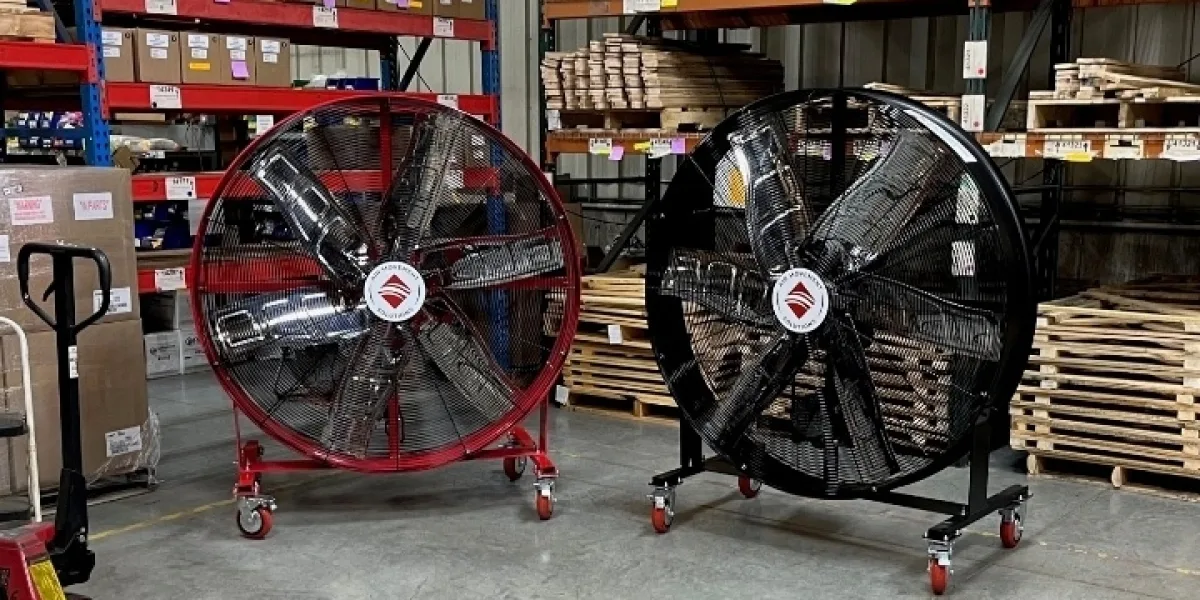
Maintaining proper airflow in a large warehouse can be challenging, especially when the building has high ceilings, expansive floor areas, heavy equipment, and multiple work zones. Poor air circulation can lead to hot and cold spots, stagnant air, uncomfortable working conditions, and inefficient use of heating and cooling systems.
The right warehouse fans can help distribute air more evenly, improve employee comfort, and support energy-efficient temperature management. However, choosing the best fan requires careful consideration of the warehouse's size, ceiling height, airflow requirements, and operating conditions.
Understand Your Warehouse Requirements
Before purchasing warehouse fans, evaluate the characteristics of your facility.
Important factors include:
- Total floor area
- Ceiling height
- Warehouse layout
- Storage rack configuration
- Number of employees
- Heat-generating equipment
- Existing HVAC systems
- Desired airflow coverage
Understanding these factors makes it easier to determine the appropriate fan type, size, and quantity.
Consider High-Volume Low-Speed Fans
High Volume Low Speed (HVLS) fans are commonly used in large warehouses because they are designed to move substantial amounts of air across expansive areas.
Instead of producing a narrow stream of fast-moving air, HVLS fans distribute air over a wide area. This makes them particularly useful for warehouses with high ceilings and open floor plans.
Benefits can include:
- Broad airflow coverage
- Improved air circulation
- Reduced stagnant areas
- Better employee comfort
- Support for HVAC efficiency
- Lower energy consumption in suitable applications
Choose the Right Fan Size
Fan diameter is one of the most important considerations. Larger fans generally provide broader coverage, but the correct size depends on the warehouse's dimensions and layout.
When selecting fan size, consider:
Warehouse Floor Area
A large warehouse may require multiple fans positioned strategically rather than relying on a single oversized unit.
Ceiling Height
High ceilings can affect how air moves through the building. The fan should be installed at an appropriate height to provide effective airflow at the occupied level.
Obstacles
Storage racks, machinery, lighting fixtures, sprinklers, and other equipment can affect airflow. Fan placement should account for these potential obstructions.
Evaluate Airflow Capacity
Airflow is often measured in Cubic Feet per Minute (CFM). It indicates how much air the fan can move.
However, CFM should not be the only specification you consider. Look at the overall airflow pattern, coverage area, air velocity, and fan efficiency.
A professional warehouse assessment can help determine how much airflow is needed for different areas of the facility.
Consider Energy Efficiency
Warehouse fans may operate for long periods, so energy efficiency is important.
Look for features such as:
- High-efficiency motors
- Direct-drive technology
- Variable-speed controls
- EC motor technology
- Automated controls
Variable-speed operation allows facility managers to adjust airflow according to temperature, occupancy, and seasonal requirements.
Think About Year-Round Use
Warehouse fans can provide benefits in both summer and winter.
Summer
During warm weather, increased air movement can improve perceived comfort by helping heat dissipate from workers' bodies.
Fans can also help distribute cool air from existing HVAC systems more effectively.
Winter
Warm air naturally rises toward high ceilings. HVLS fans can help redistribute this warm air toward the occupied area through controlled air circulation.
This process, known as destratification, can help reduce temperature differences and support more efficient heating.
Consider the Warehouse Layout
Fan placement is just as important as fan selection.
Consider:
- Workstations
- Loading docks
- Storage racks
- Machinery
- Aisles
- Employee areas
- HVAC vents
Strategically positioning fans can improve airflow throughout the facility while minimizing areas where air movement is blocked.
Look for Durable Construction
Warehouse environments can expose equipment to dust, moisture, temperature changes, and continuous operation.
Choose fans made with durable materials and components suitable for the environment.
Look for:
- Heavy-duty construction
- Corrosion-resistant finishes
- Durable blades
- Industrial-grade motors
- Reliable mounting hardware
A durable fan can provide better long-term performance and reduce maintenance requirements.
Check Safety Features
Because warehouse fans are typically installed overhead, safety should be a priority.
Important features may include:
- Safety cables
- Secure mounting systems
- Blade retention mechanisms
- Motor protection
- Thermal overload protection
- Emergency shutoff controls
Always follow the manufacturer's installation and operating requirements.
Consider Noise Levels
Noise can be an important consideration, especially in warehouses where employees work for extended periods.
Modern HVLS fans are generally designed for relatively quiet operation. However, check manufacturer specifications if noise is a particular concern for your facility.
Evaluate Control Options
Modern warehouse fans may offer advanced control systems.
Options can include:
- Wall-mounted controls
- Remote controls
- Variable-speed drives
- Temperature-based automation
- Building management system integration
Automated controls can help adjust fan operation according to changing conditions and prevent unnecessary energy consumption.
Installation Matters
Proper installation is essential for safe and effective operation.
Before installation, evaluate:
- Ceiling structure
- Mounting points
- Electrical requirements
- Fan clearance
- Sprinkler systems
- Lighting
- Storage equipment
Professional installation can help ensure the fan is securely mounted and positioned for optimal airflow.
Maintenance Requirements
Regular maintenance helps warehouse fans maintain their performance and reliability.
Routine maintenance may include:
- Cleaning fan blades
- Checking mounting hardware
- Inspecting safety cables
- Checking electrical connections
- Monitoring motor performance
- Inspecting controls
- Looking for unusual noise or vibration
A preventive maintenance schedule can reduce unexpected downtime and extend equipment lifespan.
Common Mistakes to Avoid
When choosing warehouse fans, avoid these common mistakes:
- Selecting a fan based only on price
- Ignoring ceiling height
- Choosing an incorrect fan size
- Overlooking airflow requirements
- Failing to consider warehouse obstacles
- Ignoring energy efficiency
- Skipping professional installation
- Neglecting maintenance
A complete assessment of the facility can help prevent these issues.
Benefits of Choosing the Right Warehouse Fan
The right fan system can provide several advantages:
- Improved air circulation
- Better employee comfort
- More consistent temperatures
- Reduced stagnant air
- Support for HVAC performance
- Potential energy savings
- Improved workplace conditions
- Reliable long-term operation
Final Thoughts
Choosing the best warehouse fans for a large, high-ceiling facility requires more than selecting a powerful model. Building size, ceiling height, airflow requirements, layout, energy efficiency, safety, and installation all need to be considered.
For many large warehouses, HVLS fans can provide broad and efficient air circulation while supporting existing heating and cooling systems. By selecting the right fan size, positioning equipment strategically, and maintaining the system regularly, warehouse operators can create a more comfortable, efficient, and productive working environment.


