
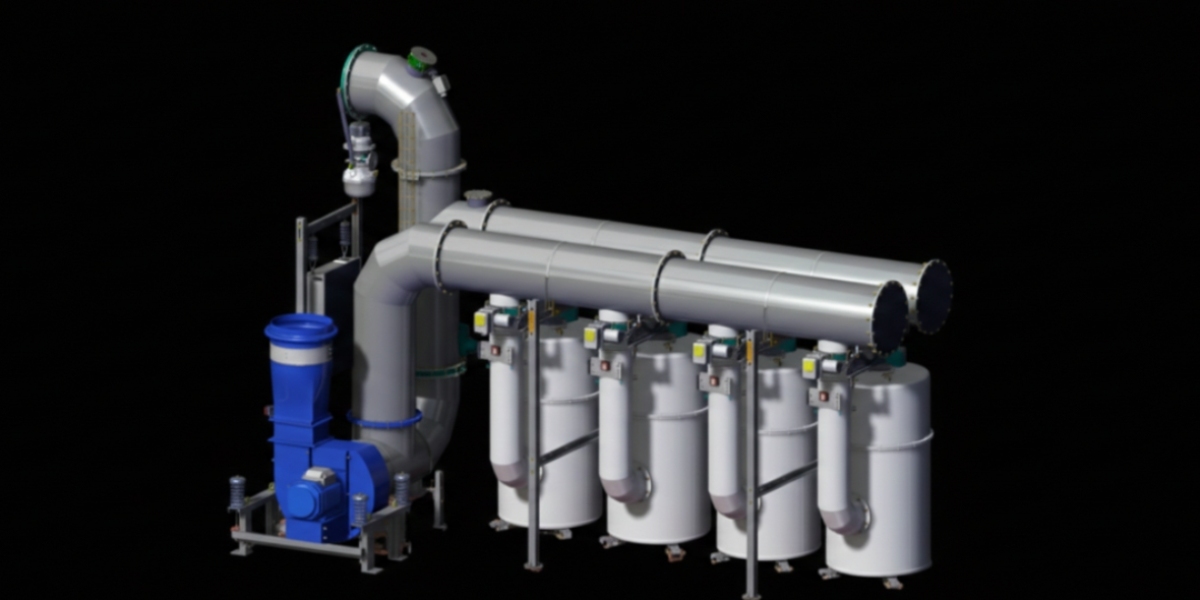
Imagine an underground ammunition depot that detects a distant chemical release downwind. Guards close blast doors and personnel seal themselves in, but the shelter’s standard room fans and consumer-grade filters hum uselessly while contaminant levels climb. In high-risk sites—military bunkers, command centres, nuclear facilities, and chemical plants—air protection is engineered, not improvised. The question “DIY NBC air filtration: is it possible?” demands a technical answer rooted in survivability, engineering constraints, and regulatory standards.
NBC threats—nuclear particulates, biological aerosols, and chemical vapours—remain credible hazards for defence and critical infrastructure. An NBC Filtration System integrates particulate filtration, sorbent beds, positive-pressure control, and monitoring to deliver certified protection. Attempting makeshift solutions without engineering validation risks false security and may endanger occupants.
What an NBC filtration system is
An NBC Filtration System is a purpose-built air-handling assembly designed to remove radioactive particulate, capture biological aerosols, and adsorb or neutralize chemical agents under defined threat spectra. It differs from household purifiers in rated efficiencies, sorbent chemistry, sealing, and redundant operational modes required for prolonged contaminated environments.
How NBC filtration systems work
Proper systems follow staged treatment: coarse pre-filters to reduce loading; HEPA/ULPA arrays for particle removal; impregnated activated carbon or catalytic sorbents for gas-phase threats; and controls that maintain positive internal pressure. Continuous CBRN sensors and differential-pressure monitoring trigger mode changes and provide actionable data for operators.
Air purification and contamination-control principles
Protection hinges on three engineering variables: filtration efficiency, sorbent breakthrough time, and maintained pressure differentials. HEPA media remove particles down to 0.3 µm at certified efficiencies; sorbent life is a function of bed mass, impregnation, concentration, and environmental conditions; and positive-pressure prevents ingress through micro-leaks.
Protection against nuclear particles
Radioactive fallout behaves as particulates bound to dust. Effective protection uses HEPA filtration sized for the shelter’s required air changes, safe filter-change protocols for radiological contamination, and provisions for filter handling and storage. DIY replacements cannot guarantee leak-tested integrity or radiological safety.
Biological agent filtration
Aerosolized pathogens require validated HEPA/ULPA capture and duct configurations that prevent re-entrainment. Industrial systems may include staged containment, UV-C integration, and validated log-reduction testing—elements not reproducible with consumer units.
Chemical warfare agent removal
Gas-phase protection depends on correct sorbent chemistry and bed depth. Activated carbon impregnated for nerve and choking agents, backed by catalytic layers, provides predictable breakthrough times. Environmental factors—temperature and humidity—significantly change performance; DIY cartridges lack these design calibrations.
Positive pressure protection systems
Maintaining overpressure relative to the external environment is a core defense. That requires robust control loops, automatic isolation dampers, and makeup air sequencing sized to occupant load. Consumer blowers cannot reliably sustain designed overpressures or signal breaches.
Key features required (why DIY is limited)
- HEPA filtration: certified performance and leak testing.
- Activated carbon filtration: specific impregnation and measured bed life.
- Toxic gas adsorption: calculated breakthrough times, not guesswork.
- Biological contaminant protection: validated aerosol reduction.
- Radioactive particle filtration: handling and decon procedures.
- Positive pressure operation: stable control and alarm thresholds.
- Corrosion-resistant construction: for harsh industrial environments.
- Continuous air monitoring compatibility: CBRN sensor integration.
- Low maintenance and modularity: engineered for quick turnarounds.
- Emergency operation: generator and battery-backed control.
Applications where DIY fails
Military shelters, defence installations, command centres, ammunition storage, nuclear power plants, chemical processing and petrochemical facilities, and data centres require certified systems. These sites demand documented testing, compliance with defence standards, and maintainability—none of which consumer or improvised rigs can demonstrably provide.
System selection factors (engineering focus)
Key considerations are threat profile, required airflow (l/s per person), filtration efficiency, sorbent sizing for expected concentrations, shelter occupancy, environmental extremes, compliance requirements, monitoring integration, installation complexity, and lifecycle costs. Selecting based on a DIY mindset ignores long-term operational value and risk mitigation.
Buyer’s guide: what to evaluate
When procuring an NBC solution, evaluate vendor defence engineering credentials, manufacturing quality, third‑party testing and certifications, customization capacity, installation and commissioning support, spare parts availability, and documented maintenance regimes. These criteria ensure the system meets operational realities rather than theoretical capability.
Common mistakes to avoid
- Relying on ad-hoc purifiers without verified HEPA or sorbent performance.
- Neglecting airflow and pressure calculations for occupied shelters.
- Using inappropriate sorbent chemistries or undersized beds.
- Skipping tested commissioning and alarm calibration.
- Overlooking safe filter change and radiological handling procedures.
- Selecting solutions based solely on cost or perceived convenience.
Practical interim measures (if no certified system is available)
While a DIY solution is not a substitute for certified NBC equipment, certain interim steps reduce risk: sealable shelter doors, minimizing intake openings, using multiple certified HEPA units in parallel (with caution regarding true HEPA certification and leak testing), deploying portable gas detectors, and planning safe filter-change protocols. These are stopgaps until professional systems can be installed.
For authoritative design and procurement guidance, review established engineering providers and documented installations; for a technical reference addressing defence-grade filtration and service options, see NBC Filtration System India.
Conclusion
DIY NBC air filtration is not a viable substitute for engineered, certified NBC Filtration System solutions. Effective protection depends on validated HEPA performance, correctly impregnated sorbents, pressure control, monitoring, and maintainability. For critical sites, invest in engineered systems specified to the threat and supported by defence-grade testing to ensure occupant safety, sustained operations, and infrastructure resilience.


