
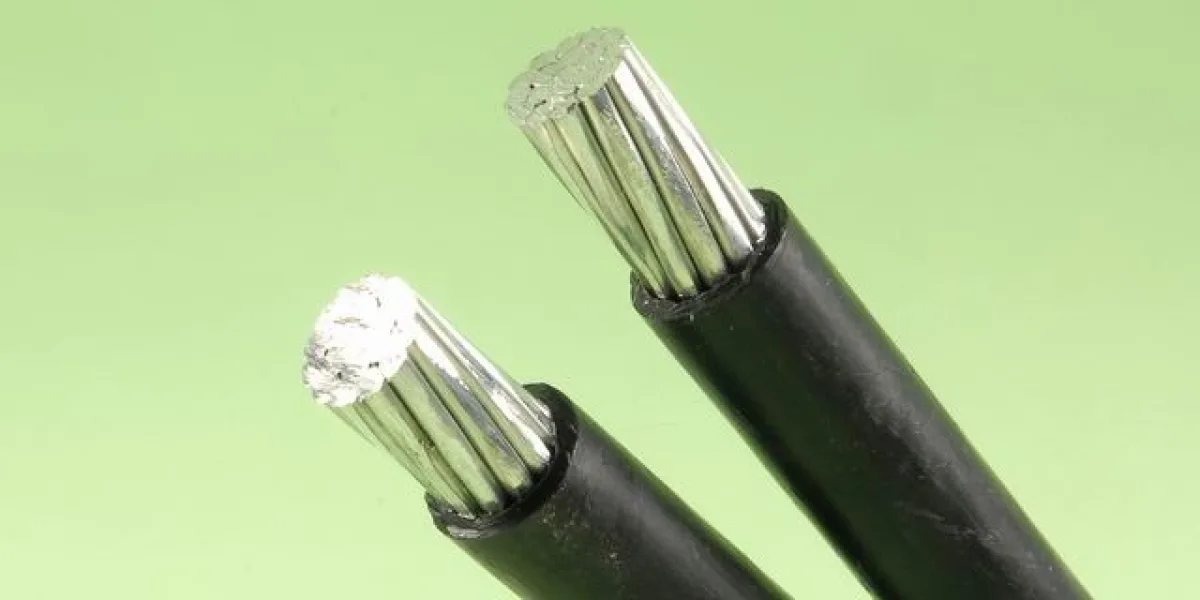
Covered line wire is widely used in overhead power distribution systems where additional protection against accidental contact, vegetation interference, and environmental exposure is required. Compared with conventional bare conductors, covered conductors provide an additional protective layer while maintaining the electrical and mechanical characteristics needed for overhead installations.
For utility companies, electrical contractors, and power distribution project developers, selecting the right covered line wire involves considering conductor materials, insulation compounds, conductor construction, and applicable industry standards.
1. What Is Covered Line Wire?
Covered line wire is an overhead electrical conductor with a protective polymer covering. It is commonly used in secondary overhead distribution networks and other applications where environmental protection and reduced accidental contact risks are important.
Unlike fully insulated power cables, covered conductors should not automatically be treated as touch-safe or suitable for direct contact. The covering provides additional protection but does not replace the electrical clearances and installation requirements specified by applicable regulations.
This makes covered line wire a practical option for overhead distribution routes exposed to trees, vegetation, and other external interference.
2. Conductor Materials and Construction
The performance of covered line wire depends on both its conductor design and protective covering.
Common conductor configurations include:
-
AAC (All Aluminum Conductor): Manufactured using aluminum wires concentrically stranded to provide electrical conductivity and a lightweight construction.
-
ACSR (Aluminum Conductor Steel Reinforced): Combines aluminum strands with a steel reinforcing core to provide additional mechanical strength.
-
AAAC (All Aluminum Alloy Conductor): Uses aluminum alloy strands to achieve a balance between electrical and mechanical properties.
Depending on project requirements, conductor materials may include 1350-H19 aluminum or 6201-T81 aluminum alloy.
The protective covering can be manufactured using polyethylene (PE), high-density polyethylene (HDPE), or cross-linked polyethylene (XLPE). The appropriate material should be selected according to operating conditions, environmental exposure, and applicable technical specifications.
3. Applications in Overhead Distribution Networks
Covered line wire is particularly useful in overhead distribution environments where conventional bare conductors may face additional external risks.
Typical applications include:
-
Urban overhead distribution: Suitable for distribution routes where space limitations and nearby infrastructure require careful conductor arrangement.
-
Rural electrification: Supports overhead distribution projects in areas with trees, vegetation, and longer distribution routes.
-
Forested and vegetation-prone areas: Provides an additional protective covering that helps reduce faults associated with accidental contact.
-
Utility network upgrades: Can be considered when upgrading existing overhead distribution systems to improve operational reliability.
The final conductor configuration and voltage rating should always be determined according to the project design and applicable utility requirements.
4. How to Select the Right Covered Line Wire
Before purchasing covered line wire, project engineers and procurement teams should evaluate several important factors.
Conductor Type and Size
AAC, AAAC, and ACSR configurations offer different electrical and mechanical characteristics. The appropriate conductor depends on current requirements, span length, mechanical loading, and installation conditions.
Covering Material
PE, HDPE, and XLPE coverings should be evaluated based on environmental conditions, temperature requirements, and relevant standards.
Applicable Standards
International standards and project specifications help ensure that conductor materials, construction, and product performance meet the required technical criteria. Relevant standards for this product range include ASTM B-230, ASTM B-232, ASTM B-399, and applicable ICEA specifications.
Supplier Manufacturing Capability
For large-scale utility and infrastructure projects, buyers should also consider manufacturing capacity, quality control, customization options, packaging, and delivery arrangements.
5. Covered Line Wire Supply from Pisen Cable
Pisen Cable is a China-based manufacturer and supplier of covered line wire and other electrical cable products for power distribution and infrastructure applications.
Our covered line wire range includes AAC, ACSR, and AAAC conductor configurations, with different conductor sizes and covering options available according to project requirements.
Key supply information includes:
-
Applicable standards: ASTM B-230, B-232, B-399 and ICEA S-61-402, S-66-524
-
Production capacity: Up to 6,000 km per week
-
Minimum order quantity: 1,000 meters
-
Packaging: Wooden drums, steel wooden drums, coils, and boxes
-
Payment terms: T/T, L/C, and D/P
-
Shipping ports: Qingdao, Shanghai, and other major Chinese ports
OEM services and customized product configurations can be discussed according to specific project requirements.
Whether you are sourcing covered conductors for utility distribution, rural electrification, or overhead power infrastructure, choosing a suitable manufacturer is essential for maintaining product consistency and project efficiency.
6. Choosing a Reliable Covered Line Wire Manufacturer
Selecting a reliable covered line wire manufacturer is an important step in ensuring product quality and project consistency. Buyers should evaluate manufacturing capabilities, conductor specifications, material options, quality control procedures, and compliance with relevant industry standards.
Pisen Cable provides covered line wire solutions for overhead power distribution and infrastructure projects, with different conductor configurations and covering materials available according to customer requirements.
Learn more about Pisen Cable's covered line wire products and explore suitable solutions for your next power distribution project.


