
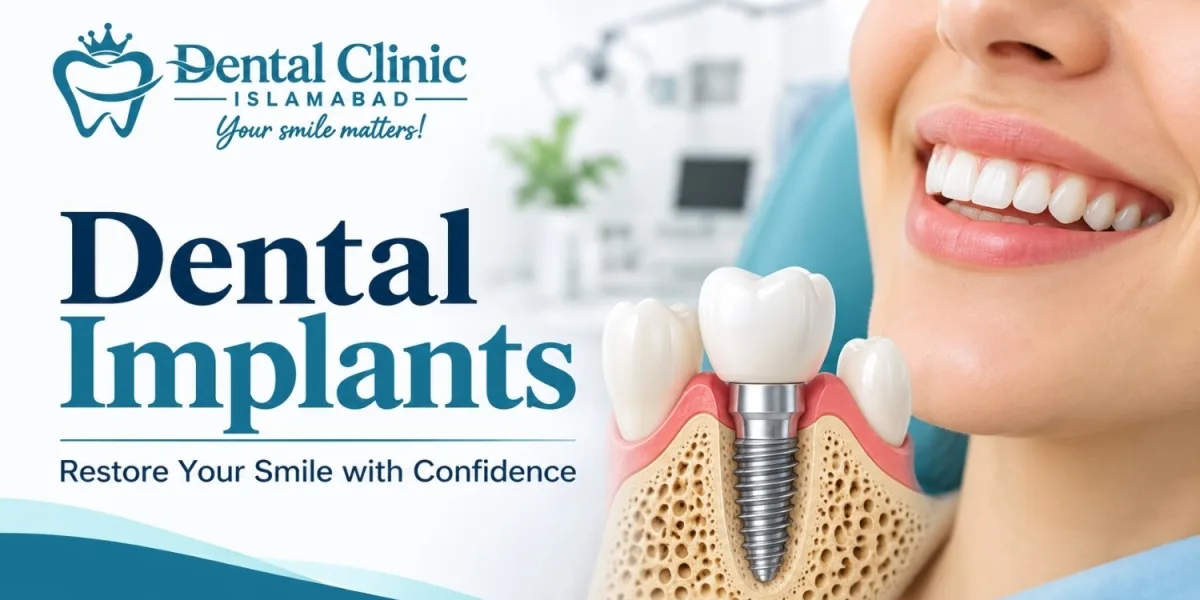
Losing a tooth can affect more than just the appearance of a smile. It can make chewing uncomfortable, change the way someone speaks, and create gaps that affect confidence. Over time, missing teeth may also contribute to changes in the jawbone and the position of nearby teeth. Fortunately, modern dentistry offers several ways to replace missing teeth, with dental implants providing a stable and long-term option for suitable patients.
People considering Dental Implants in Islamabad often have questions about the treatment process, cost, recovery period, and whether implants are suitable for their dental condition. Understanding these factors can make it easier to compare treatment options and make an informed decision.
Dental implants replace missing tooth roots with small biocompatible posts that support artificial teeth. Once the implant integrates with the surrounding bone, it can provide a strong foundation for a dental crown, bridge, or full-arch restoration. The final result is designed to look and function much like natural teeth.
What Are Dental Implants and How Do They Work?
A dental implant is a small post, usually made from titanium, that a dentist or implant specialist places into the jawbone to replace the root of a missing tooth. Unlike removable dentures, implants remain fixed in the mouth and provide support for artificial teeth.
The treatment generally involves three main components:
-
Implant fixture: A titanium or other suitable biocompatible post placed inside the jawbone.
-
Abutment: A connector that attaches the replacement tooth to the implant.
-
Dental crown: The visible artificial tooth designed to match the surrounding teeth in shape, size, and colour.
After placement, the implant needs time to bond with the jawbone through a natural healing process called osseointegration. This connection helps create the stability needed to support the final restoration.
Dental implants can replace a single missing tooth, several teeth, or an entire arch, depending on the patient's needs and available bone support.
Why Do Patients Choose Dental Implants in Islamabad?
Patients may consider dental implants for functional, structural, and cosmetic reasons. Missing teeth can affect everyday activities, particularly when the gap is located near the front of the mouth or involves several back teeth.
Some common reasons include:
Restoring chewing ability: Missing teeth can make it difficult to bite and chew certain foods. An implant-supported replacement can help restore comfortable chewing when properly placed.
Maintaining jawbone structure: Natural tooth roots stimulate the jawbone during chewing. After tooth loss, the surrounding bone may gradually shrink. Implants can help maintain bone in the treated area by transferring functional forces to the jaw.
Improving smile appearance: A custom-made crown can fill the gap and blend with neighbouring teeth, helping create a more balanced smile.
Supporting nearby teeth: A single-tooth implant does not normally require the dentist to prepare or reshape adjacent healthy teeth, unlike a conventional tooth-supported bridge.
Providing a fixed replacement: Implants remain secured in the jawbone, so patients do not need to remove them for everyday cleaning like traditional removable dentures.
Who Is a Suitable Candidate for Dental Implants?
Dental implants can work well for many adults, but not everyone is immediately ready for treatment. A dentist needs to assess the condition of the gums, jawbone, remaining teeth, and general oral health before recommending implant placement.
A suitable candidate generally has:
-
One or more missing teeth.
-
Healthy gums or gum disease that has been treated.
-
Sufficient jawbone to support the implant.
-
Good oral hygiene habits.
-
No uncontrolled medical condition that could interfere with healing.
-
A willingness to attend follow-up appointments.
Patients with reduced bone volume may still qualify after additional procedures, such as bone grafting or sinus augmentation.
Smoking, uncontrolled diabetes, active gum disease, and certain medications can affect healing and implant success. These factors do not automatically rule out treatment, but they require proper assessment and planning.
A consultation helps determine whether immediate implant placement is possible or whether preliminary dental treatment is necessary.
Types of Dental Implants Available
The right implant option depends on how many teeth are missing, the condition of the jawbone, and the patient's overall dental needs. Modern implant dentistry offers different solutions for individual teeth and extensive tooth loss.
1. Single Tooth Dental Implant
A single-tooth implant replaces one missing tooth without relying on neighbouring teeth for support. The dentist places an implant in the jawbone and attaches a custom-made crown after the healing period.
This option is particularly useful when a patient loses a tooth because of severe decay, injury, infection, or other dental problems. It provides an independent replacement while preserving the surrounding natural teeth.
2. Multiple Tooth Implants
When several neighbouring teeth are missing, implant-supported bridges can provide a fixed replacement. Instead of placing an individual implant for every missing tooth, the dentist may use two or more implants to support a bridge.
The number and position of implants depend on the size of the gap, bone condition, bite pressure, and the design of the restoration.
3. All-on-4 Dental Implants
All-on-4 is a full-arch restoration approach that uses four strategically positioned implants to support a fixed set of replacement teeth.
Dentists may recommend this option for patients who have lost most or all teeth in an upper or lower jaw. The treatment can reduce the number of implants needed compared with replacing every tooth individually.
However, not every patient qualifies. Bone quality, jaw anatomy, bite forces, and general health determine whether this approach is appropriate.
4. All-on-6 Dental Implants
All-on-6 uses six implants to support a full arch of replacement teeth. The additional implant support may help distribute chewing forces across the jaw, depending on the patient's anatomy and treatment plan.
The dentist evaluates bone volume and the position of important anatomical structures before deciding whether four, six, or another number of implants would provide suitable support.
5. Implant-Supported Dentures
Traditional dentures can sometimes move during speaking or eating, particularly when the jawbone has changed following tooth loss. Implant-supported dentures use dental implants to improve stability.
Depending on the design, these dentures may attach to implants through special connectors. Some remain removable for cleaning, while others are fixed in place.
This option can be helpful for patients who want better denture retention without choosing a completely fixed full-arch restoration.
Step-by-Step Dental Implant Procedure
Dental implant treatment involves careful planning because the implant must fit the available bone and work properly with the patient's bite. Although the exact process varies, most treatments follow several stages.
Step 1: Initial Consultation and Dental Examination
The first appointment helps the dentist understand the patient's concerns and evaluate the missing tooth area. The examination usually includes:
-
Checking the gums and surrounding teeth.
-
Reviewing dental and medical history.
-
Evaluating the bite and available space.
-
Identifying signs of infection or gum disease.
-
Discussing possible replacement options.
The dentist may also recommend dental X-rays or a 3D CBCT scan to examine bone volume and nearby anatomical structures.
Step 2: Treatment Planning and Preparation
After reviewing the examination and imaging results, the dentist develops a personalised treatment plan.
If the patient has untreated cavities, gum disease, or an infection, these problems may need attention before implant placement. Patients with insufficient jawbone may require bone grafting or another supporting procedure.
The dentist also explains the expected treatment stages, estimated costs, healing period, and available temporary tooth options.
Step 3: Dental Implant Placement
The dentist uses local anaesthesia to numb the treatment area before beginning the procedure. A small opening is prepared in the jawbone, and the implant is positioned according to the treatment plan.
Some patients may experience pressure or vibration during placement, but local anaesthesia helps manage pain during the procedure.
Depending on the clinical situation, the dentist may close the gum over the implant or attach a healing component. The treatment approach depends on bone stability, implant position, and the planned restoration.
Step 4: Healing and Osseointegration
Following implant placement, the jawbone gradually attaches to the implant surface. This process, known as osseointegration, provides the foundation for long-term implant stability.
Healing commonly takes a few months, although the exact duration depends on bone quality, implant location, medical history, and whether bone grafting was necessary.
During this stage, patients should follow dietary and oral hygiene instructions and avoid putting unnecessary pressure on the healing implant.
Step 5: Abutment and Crown Placement
Once the dentist confirms adequate healing and implant stability, the next stage involves preparing the implant for its final restoration.
An abutment connects the implant fixture to the artificial tooth. The dentist then takes a digital scan or impression to create a crown that matches the surrounding teeth.
Before completing treatment, the dentist checks the crown's shape, colour, fit, and bite to ensure comfortable function.
How Much Do Dental Implants Cost in Islamabad?
The cost of dental implants in Islamabad varies because every patient has different dental requirements. A single-tooth implant generally involves fewer components and procedures than a full-mouth restoration.
Several factors influence the overall treatment expense:
|
Cost factor |
How it affects the price |
|---|---|
|
Implant brand |
Different implant systems have different costs |
|
Number of implants |
Multiple implants require additional components and treatment |
|
Crown material |
Porcelain and zirconia restorations may have different prices |
|
Bone grafting |
Additional procedures can increase the total cost |
|
Sinus augmentation |
May be necessary for certain upper-jaw cases |
|
Diagnostic scans |
Imaging and treatment planning contribute to expenses |
|
Complexity of surgery |
More complicated cases may require additional expertise |
Patients should ask for a complete treatment estimate rather than comparing implant prices based on the implant fixture alone. The total cost may include the implant, abutment, final crown, scans, surgical appointments, and any additional procedures.
It is also useful to ask whether temporary teeth, follow-up visits, and adjustments are included in the quoted amount.
An affordable treatment plan should still prioritise proper diagnosis, suitable implant materials, appropriate surgical techniques, and long-term maintenance.
Dental Implants vs Dental Bridges vs Traditional Dentures
Patients often compare implants with bridges and removable dentures before choosing a tooth replacement option. Each treatment has different benefits and limitations.
|
Feature |
Dental Implants |
Dental Bridges |
Traditional Dentures |
|---|---|---|---|
|
Support |
Jawbone |
Adjacent teeth |
Gums and supporting tissues |
|
Fixed or removable |
Usually fixed |
Fixed |
Removable |
|
Adjacent teeth preparation |
Usually not required |
Often required |
Usually not required |
|
Bone stimulation |
Helps maintain bone locally |
Does not replace the tooth root |
Does not replace the tooth root |
|
Maintenance |
Daily cleaning and check-ups |
Cleaning under the bridge |
Daily removal and cleaning |
|
Treatment time |
Usually several months |
Often shorter |
Varies |
Dental implants can be a suitable long-term option for patients who want fixed replacement teeth. However, bridges and dentures may be more appropriate in certain clinical situations.
The best choice depends on oral health, available bone, budget, treatment expectations, and the dentist's assessment.
How Long Do Dental Implants Last?
Dental implants are designed to provide long-term tooth replacement, but their lifespan depends on several factors. The implant fixture and the crown are separate components, so they may have different maintenance and replacement needs.
The implant itself can remain functional for many years when the surrounding bone and gum tissues stay healthy. However, the crown may experience wear, chipping, or damage over time.
Several habits can support long-term implant health:
-
Brush twice daily using a soft-bristled toothbrush.
-
Clean around the implant with suitable interdental brushes or floss.
-
Attend regular dental check-ups.
-
Avoid smoking and tobacco products.
-
Do not use your teeth to open hard objects.
-
Seek treatment for teeth grinding if necessary.
-
Follow professional cleaning recommendations.
Implants are not immune to gum inflammation or infection. A condition called peri-implantitis can affect the tissues and bone surrounding an implant. Early detection and proper maintenance help reduce the risk of serious complications.
Recovery After Dental Implant Surgery
Recovery varies depending on the number of implants placed and whether additional procedures were performed. Patients may experience mild discomfort, swelling, bruising, or tenderness around the surgical area during the initial healing period.
Following the dentist's instructions can help support recovery.
What to Do After Implant Placement
Choose soft foods: Eat foods such as yoghurt, mashed potatoes, eggs, and soft vegetables during the initial recovery period. Avoid chewing directly over the surgical site.
Maintain oral hygiene: Keep the mouth clean while following the dentist's instructions about brushing and rinsing near the treated area.
Avoid smoking: Tobacco use can interfere with healing and increase the risk of implant complications.
Take prescribed medication: Use pain relief or other prescribed medication according to the dentist's directions.
Avoid strenuous activity initially: Follow the recommended rest period, particularly during the first few days after surgery.
Attend follow-up appointments: Regular examinations allow the dentist to monitor healing and identify potential problems.
Patients should contact their dental provider if they experience worsening pain, persistent bleeding, increasing swelling, fever, or unusual discharge.
Are Dental Implants Painful?
One common concern among patients is whether dental implant surgery causes significant pain. The procedure generally takes place under local anaesthesia, which numbs the treatment area during implant placement.
Patients may experience some pressure or vibration during surgery, but they should not feel sharp pain when the anaesthesia works effectively.
After the procedure, mild discomfort, swelling, and tenderness are common. These symptoms usually improve as the tissues heal. The dentist may recommend suitable pain medication and provide instructions for managing post-surgical discomfort.
The experience varies depending on the complexity of the procedure, the number of implants, and individual pain sensitivity.
Common Risks and Complications of Dental Implants
Although dental implants offer an effective tooth replacement option, they involve surgical treatment and carry certain risks. Understanding these possibilities helps patients make informed decisions.
Potential complications include:
-
Infection: Bacteria around the implant site may cause inflammation and interfere with healing.
-
Implant failure: An implant may fail to integrate properly with the jawbone or become loose later.
-
Nerve irritation: Implant placement near certain nerves may cause temporary or, rarely, lasting numbness or tingling.
-
Sinus complications: Implants in the upper back jaw require careful planning to avoid problems involving the sinus.
-
Peri-implantitis: Inflammation around an implant can damage the surrounding bone if left untreated.
-
Crown damage: The artificial crown may experience wear, chipping, or loosening over time.
Proper examination, treatment planning, surgical care, and regular maintenance help reduce these risks.
How to Choose the Right Dental Implant Dentist in Islamabad
Choosing an experienced dental professional is an important part of implant treatment. The dentist needs to understand both the surgical and restorative aspects of implant dentistry to achieve a functional and natural-looking result.
Before selecting a dental clinic, consider the following factors.
Professional qualifications and experience: Ask about the dentist's education, implant training, and experience with cases similar to yours.
Diagnostic facilities: A clinic should have access to appropriate dental imaging and diagnostic tools for evaluating the jawbone and surrounding structures.
Treatment planning: The dentist should explain the recommended implant system, restoration type, expected timeline, and any additional procedures.
Material transparency: Ask about the implant brand, material, manufacturer, and documentation provided with the implant.
Hygiene and sterilisation: Proper infection-control procedures are essential during dental implant surgery.
Aftercare and follow-up: Implant treatment does not end when the crown is fitted. Regular examinations and maintenance help protect the surrounding tissues.
Patients should feel comfortable asking questions and understanding each stage before agreeing to treatment.
Dental Implant Treatment at Dental Clinic Islamabad
Patients exploring tooth replacement options can consult Dental Clinic Islamabad to discuss their dental concerns and available treatment options.
The clinic provides dental care in F-7 Markaz, Islamabad, where patients can seek an assessment for missing teeth and discuss suitable restorative solutions.
Dr. Ahsan Rush is associated with implant treatment at the clinic. During a consultation, patients can discuss their dental history, the condition of their jawbone, and the type of restoration that may suit their needs.
The treatment assessment may involve:
-
Examination of missing teeth and surrounding gums.
-
Evaluation of jawbone support.
-
Dental X-rays or CBCT imaging when indicated.
-
Discussion of single-tooth and multiple-tooth replacement options.
-
Assessment of whether bone grafting is necessary.
-
A personalised treatment plan and cost estimate.
Every patient's dental condition is different, so the final recommendation should follow a proper clinical examination rather than a general treatment package.
For more information about available treatments and dental services, visit Dental Clinic Islamabad.
Frequently Asked Questions About Dental Implants in Islamabad
1. How long does dental implant treatment take?
Dental implant treatment usually takes several months because the implant needs time to integrate with the jawbone. Some patients may qualify for immediate temporary teeth, while others require additional healing before receiving their final crown.
2. Can I get dental implants after many years of tooth loss?
Yes, patients who lost their teeth several years ago may still qualify. However, prolonged tooth loss can lead to jawbone shrinkage. A dentist may recommend bone grafting or another procedure if the available bone is insufficient.
3. Can dental implants replace all missing teeth?
Yes. Full-arch treatments such as All-on-4 and All-on-6 can replace most or all missing teeth in an upper or lower jaw. The dentist determines the appropriate approach after evaluating bone condition and oral health.
4. Are dental implants better than removable dentures?
Implants provide fixed support and can offer better stability during chewing and speaking. However, removable dentures remain a suitable option for some patients. The right treatment depends on individual needs, health, bone support, and budget.
5. Can smokers receive dental implants?
Smokers may qualify, but smoking increases the risk of healing problems and implant complications. Dentists generally recommend stopping smoking before and after surgery to improve the chances of successful healing.
6. Do dental implants look like natural teeth?
Modern implant-supported crowns are custom-made to match the surrounding teeth. Dentists consider tooth colour, shape, size, and position when designing the final restoration.
7. Is bone grafting always necessary before implant placement?
No. Bone grafting is only recommended when the existing jawbone cannot provide adequate support for the planned implant. Patients with sufficient bone volume may proceed without this additional procedure.
8. Can I eat normally after getting dental implants?
Patients usually need to follow a soft-food diet during the initial healing period. Once the implant has integrated and the final restoration is fitted, most patients can return to a wider range of foods, subject to their dentist's instructions.
9. Are dental implants a permanent solution?
Dental implants are intended as long-term replacements, but no treatment can guarantee lifelong results. Regular cleaning, professional check-ups, healthy gums, and appropriate bite management help maintain their function.
10. How do I know if I need a single implant or multiple implants?
The number of implants depends on how many teeth are missing, their location, the available jawbone, and the type of restoration required. A dental examination and imaging help determine the most appropriate option.
Final Thoughts
Missing teeth can affect chewing, speech, oral health, and confidence. Dental implants offer a way to replace lost teeth with restorations that provide stability and a natural appearance.
However, successful treatment involves more than placing an implant. Proper diagnosis, healthy gums, sufficient bone support, suitable implant selection, and consistent aftercare all contribute to long-term results.
Patients considering Dental Implants in Islamabad should begin with a professional consultation to understand their options, expected treatment time, and overall costs.
A personalised treatment plan helps ensure that the selected tooth replacement solution meets both functional requirements and individual expectations.


