
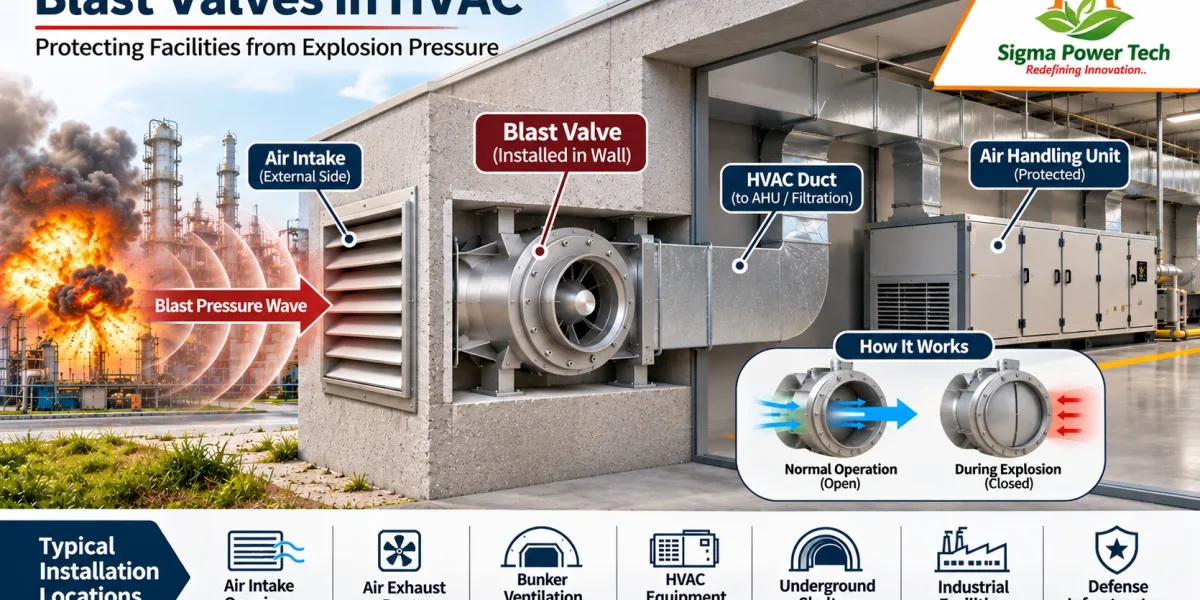
While reinforced walls absorb much of the force, the blast valves installed in the ventilation system automatically react to prevent destructive overpressure from entering the protected space. This rapid response protects occupants, safeguards HVAC equipment, and ensures the ventilation system continues operating after the incident. In high-risk environments, effective pressure control is just as critical as structural strength.
What are Blast Valves?
Blast valves are specialized mechanical safety devices designed to protect ventilation systems from sudden pressure surges caused by explosions or shockwaves. Unlike standard HVAC dampers, these valves are engineered to respond instantly when pressure exceeds a predetermined limit.
Their primary function is to isolate protected areas while maintaining controlled airflow during normal operating conditions. Once the danger has passed, many blast valves automatically reset or can be manually returned to their operational position, allowing the ventilation system to resume normal service.
A Blast valve for bunker is commonly integrated with protective ventilation systems to shield personnel from blast effects while maintaining breathable air inside hardened facilities.
How Blast Valves Improve HVAC Safety
HVAC systems are designed to circulate fresh air, regulate temperature, and maintain indoor air quality. However, these same air ducts can become dangerous pathways during an explosion if they are not properly protected.
A Blast valve HVAC system prevents this risk by acting as a protective barrier within the ductwork. During normal operation, the valve remains open, allowing unrestricted airflow. When a blast wave enters the duct network, the sudden increase in pressure forces the valve to close almost instantly.
This protective action offers several important safety benefits:
- Prevents blast pressure from entering occupied spaces
- Protects air handling units and ductwork from structural damage
- Preserves positive pressure inside protected shelters
- Reduces the spread of dust, debris, and hazardous contaminants
- Supports continued HVAC operation after an emergency
For defense shelters, emergency command centers, and industrial control rooms, blast valves are an essential component of resilient HVAC infrastructure.
How Blast Valves Work During an Explosion
The operating principle behind blast valves is based on rapid pressure response.
Under normal airflow conditions, the valve remains open with minimal airflow resistance. As a blast wave travels through the ventilation system, pressure rises almost instantly.
The valve detects this pressure increase through its mechanical design and closes before the destructive shockwave reaches sensitive equipment or occupied areas.
Once pressure returns to safe levels, the valve either automatically reopens or is reset according to the facility's operating procedures.
Unlike a conventional Blast damper, which primarily regulates airflow, blast valves are specifically engineered to withstand extreme pressure loads while maintaining structural integrity.
Key Features of Blast Valves
High-quality blast valves combine mechanical strength with reliable performance under demanding conditions.
Pressure Resistance
Designed to withstand severe overpressure generated by industrial accidents, explosions, or military threats.
Structural Strength
Manufactured using heavy-duty steel or specialized alloys capable of resisting deformation during high-impact events.
Corrosion Resistance
Protective coatings and corrosion-resistant materials ensure long service life in humid, coastal, and chemically aggressive environments.
Durability
Built for repeated operation with minimal maintenance, making them suitable for critical infrastructure applications.
Sealing Efficiency
Precision-engineered sealing surfaces prevent unwanted pressure leakage and maintain protective isolation during emergencies.
Airflow Management
Optimized designs reduce airflow losses while ensuring rapid closure during pressure events.
Safety Performance
Properly engineered blast valves help maintain safe operating conditions for personnel and protect valuable equipment from catastrophic damage.
Where Blast Valves are Used
Blast valves play an important role across numerous industries where pressure protection is essential.
Common applications include:
- Underground bunkers and military shelters
- Emergency operation centers
- Defense infrastructure
- Nuclear facilities
- Chemical processing plants
- Oil and gas installations
- Power generation plants
- Ammunition storage facilities
- Hazardous industrial environments
- Secure Blast valve HVAC installations
In many protective ventilation systems, a Blast valve for bunker works alongside filtration systems and pressure control equipment to provide comprehensive infrastructure protection.
Although the term Blast valve hot air balloon occasionally appears in online searches, it generally refers to an entirely different aviation component used for burner airflow management. It should not be confused with industrial or defense-grade blast protection valves used in critical infrastructure.
Blast Valve vs. Blast Gate vs. Blast Damper
These components are often confused, but each serves a different purpose.
A Blast Gate is commonly used in industrial dust collection systems to control airflow between duct branches. It is not designed to resist explosion pressure.
A Blast damper regulates airflow within HVAC systems and may provide fire or smoke isolation depending on its design.
Blast valves, however, are engineered specifically to withstand blast loads and rapidly isolate ventilation systems during pressure events.
Selecting the correct component depends entirely on the facility's operational risks and engineering requirements.
Factors Affecting Blast Valve Price in India
There is no single Blast valve price because every project has unique engineering requirements. Several factors influence the overall cost.
These include:
- Material quality and steel grade
- Required pressure rating
- Valve size and airflow capacity
- Mechanical design complexity
- Manufacturing precision
- Surface treatment and corrosion protection
- Compliance with defense or industrial standards
- Custom engineering requirements
- Installation environment
- Factory testing and certification
Facilities with higher safety classifications typically require customized solutions that undergo extensive testing before installation.
How to Choose Blast Valve Manufacturers in India
Selecting the right manufacturer is as important as selecting the correct valve.
Consider the following evaluation criteria:
- Proven experience in protective ventilation systems
- Expertise in industrial and defense engineering
- Compliance with recognized engineering standards
- Documented pressure testing and quality assurance
- Ability to provide customized solutions
- Reliable technical support throughout the project lifecycle
- Long-term product reliability and maintenance support
Buyers seeking to better understand modern industrial blast protection solutions can refer to industrial blast protection solutions for additional educational information on blast valve design and protective ventilation applications.
Common Mistakes to Avoid
Many infrastructure projects encounter performance issues because of improper product selection rather than manufacturing defects.
Avoid these common mistakes:
- Choosing equipment based solely on the lowest price
- Ignoring required pressure ratings
- Selecting valves incompatible with HVAC airflow requirements
- Confusing a Blast Gate with a blast-resistant valve
- Assuming every Blast damper provides blast protection
- Overlooking maintenance and inspection requirements
- Using incorrect specifications for high-risk environments
- Failing to verify testing, certification, and engineering documentation
Proper engineering evaluation significantly reduces operational risks and improves long-term system reliability.
Conclusion
Blast valves are a critical element of modern protective ventilation systems, helping HVAC networks withstand dangerous pressure events while maintaining safe airflow during normal operation. Their ability to isolate shockwaves, protect sensitive equipment, and preserve occupant safety makes them indispensable in bunkers, defense facilities, industrial plants, power stations, and other high-risk environments.
Choosing the right blast valve involves more than comparing specifications or Blast valve price. It requires careful evaluation of pressure ratings, engineering quality, installation conditions, compliance standards, and long-term performance. By selecting properly designed blast valves and integrating them into well-engineered HVAC systems, organizations can significantly improve explosion resilience, operational continuity, and the overall safety of critical infrastructure.


