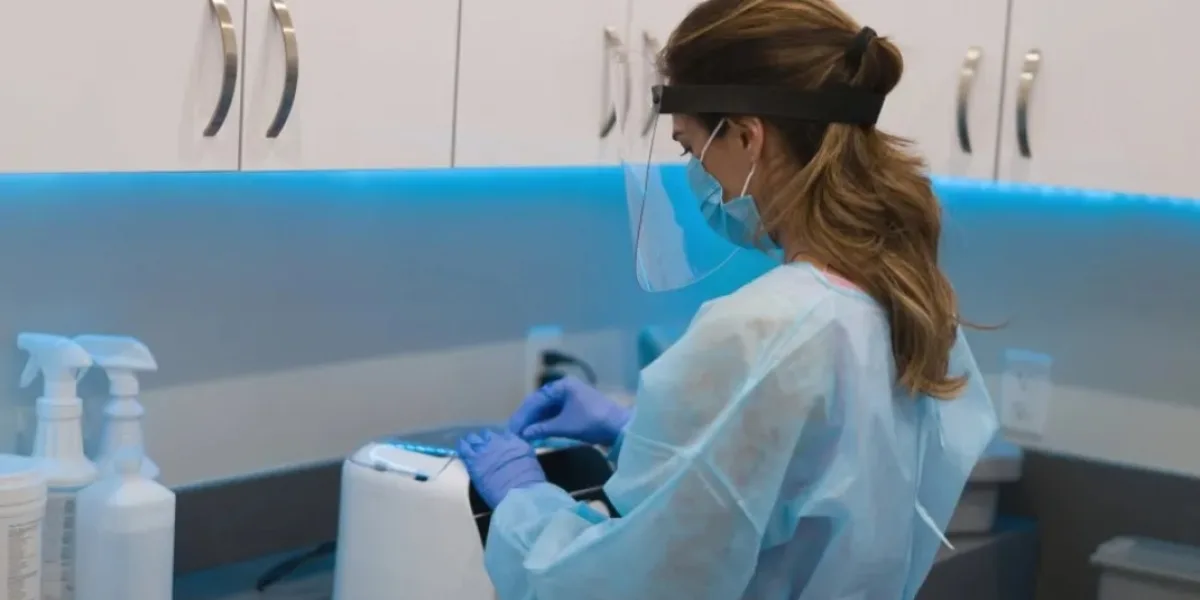
In healthcare settings, the Central Sterile Processing Department (CSPD) serves as the first line of defense against Surgical Site Infections (SSIs). Among the thousands of medical instruments processed daily, implantable devices—such as orthopedic plates, spinal screws, vascular grafts, and artificial joints—require the highest standard of care. Because implants remain inside the patient's body long after the surgical procedure ends, any microbial contamination on these items can lead to catastrophic clinical outcomes.
The Physics and Mechanical Purpose of Double-Wrapping
Double-wrapping refers to the application of two layers of sterile barrier material wrapped sequentially or simultaneously around a surgical tray or device. The primary objective is not simply adding extra fabric; it is creating a tortuous path for microorganisms while physically reinforcing the package integrity.
Implant sets are notoriously heavy and often feature complex, sharp instrumentation alongside the implantables themselves. During transport, storage, and handling, heavy sets exert significant pressure on the wrapping material. Single layers of non-woven polypropylene wrap can tear, puncture, or develop micro-perforations when subjected to sharp edges or focal weight points.
Double-wrapping acts as a mechanical shock absorber. The outer layer shields the inner layer from external friction, abrasion, and punctures during handling. If the outer wrapper sustains a minor tear or pinhole during logistics, the inner wrap maintains the sterile barrier integrity, preventing a complete breach of the surgical field.
The Critical Risk Profile of Implantable Surgical Devices
Why do implantable devices demand such stringent packaging standards compared to general instruments? The answer lies in human microbiology and biological response to foreign materials.
When a permanent or temporary implant is placed inside a human body, the immune system undergoes a complex foreign body reaction. The presence of foreign material lowers the minimal infectious dose of bacteria required to cause an infection. Microorganisms that would normally be neutralized by a patient's immune system on a standard skin incision can easily colonize the surface of an implant.
Once bacteria attach to an implantable device, they produce a protective layer called a biofilm. Biofilms shield bacteria from both the body's immune cells and systemic antibiotic treatments. Treating an infected implant often requires aggressive surgical intervention, including removing the implant altogether. Because the stakes are extraordinarily high, preventing microbial ingress during packaging, sterilization, and transport is mandatory.
Technical Advantages of Double-Wrapping Heavy Implant Trays
To understand why standard operating procedures advocate double-wrapping for implants, it helps to examine the specific technical advantages provided by two barrier layers:
- Redundant Path for Contaminants: The overlapping folds create a winding, tortuous path that airborne particles, dust, and microorganisms cannot easily navigate, even under minor air pressure fluctuations during storage.
- Aseptic Presentation Capability: In the operating room, scrub nurses and surgical technologists rely on the outer wrap to act as a protective sheath while the inner wrap allows for clean, uncompromised presentation onto the sterile field.
- Resistance to Moisture Ingress: Double layers provide extra resistance against unexpected environmental changes or minor liquid contact during transport, preserving the dry environment necessary to maintain sterility.
- Distribution of Tray Weight: Wrapping heavy implant sets twice helps distribute physical tension across a larger surface area, reducing stress on corners and seam edges.
These technical advantages ensure that the package remains sterile from the moment it leaves the autoclave until it is opened adjacent to the operating table.
Industry Standards and the Human Factor in Packaging
Standards published by organizations like the Association for the Advancement of Medical Instrumentation (AAMI), specifically ANSI/AAMI ST79, provide clear guidance on wrapping techniques and sterile barrier maintenance. These guidelines stress that packaging materials must allow sterilization agents (such as steam or ethylene oxide) to penetrate while completely blocking microbial entry post-sterilization.
However, even the highest quality wrapping material is only as effective as the technician applying it. Proper wrapping requires precise folding techniques—such as the envelope fold or square fold—along with accurate visual inspection for tears, lint, and proper sealing. Sterile processing technicians must possess thorough knowledge of material compatibility, weight limitations, and wrapping tension.
Acquiring these practical skills requires structured education and practical hands-on training. Individuals who enroll in a comprehensive sterile processing technician course learn the precise principles of barrier integrity, packaging dynamics, and infection control standards necessary to handle sensitive implantable inventory safely.
Ensuring Aseptic Presentation in the Operating Room
The benefits of double-wrapping extend directly into the operating suite during surgical setup. Aseptic presentation is the process of transferring sterile items onto a sterile field without contaminating them or the surrounding clean environment.
When an implant tray is double-wrapped, the circulating nurse can carefully unwrap the outer layer, which may have been exposed to microscopic environmental dust during storage. The inner layer remains completely pristine and sterile. The surgical technologist can then open the inner wrap from within the sterile field or receive the sterile tray without any risk of contact with non-sterile outer surfaces.
This multi-tiered defense eliminates guesswork in high-stress surgical environments. If an outer wrapper shows signs of stress, handling wear, or minor staining, the team can immediately identify a potential breach before the inner layer is ever opened near the patient.
Final Thoughts on Patient Safety and Barrier Integrity
Double-wrapping implantable devices is far more than a redundant routine; it is a calculated, evidence-based safety measure tailored to high-risk surgical procedures. By providing mechanical strength against punctures, facilitating seamless aseptic presentation in the operating theatre, and creating a robust barrier against microbial contamination, double-wrapping safeguards patients from devastating surgical site infections.
For central service departments, committing to proper double-wrapping protocols—backed by well-trained personnel and adherence to national standards—remains one of the most effective strategies for ensuring long-term surgical success and patient safety.