
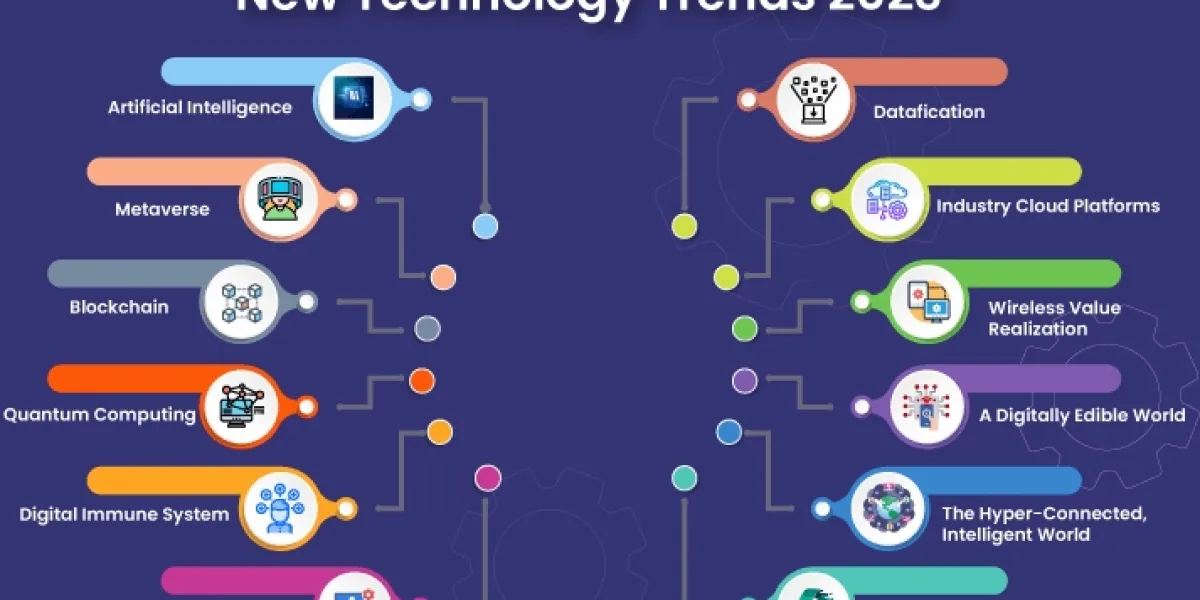
Technology is changing quickly in 2026, but the most useful developments are not always the ones that attract the most attention. Businesses and consumers are increasingly focused on technologies that solve practical problems, improve productivity, protect information, and make digital services easier to manage.
Artificial intelligence remains at the centre of this change. At the same time, cybersecurity, cloud infrastructure, intelligent software, connected devices, and digital trust are becoming more important. Gartner's 2026 strategic technology trends include AI-native development platforms, AI supercomputing, confidential computing, multiagent systems, physical AI, preemptive cybersecurity, digital provenance, and AI security platforms.
For businesses, this creates both opportunities and challenges. Adopting technology simply because it is popular can lead to unnecessary costs. A better approach is to understand the technology, identify a genuine business need, test it on a limited scale, and measure the results.
Artificial Intelligence Is Moving Into Everyday Business
Artificial intelligence has moved beyond basic experimentation. Businesses are now using AI in customer service, software development, marketing, data analysis, document processing, research, and internal operations.
One important development is the growth of AI agents and multiagent systems. Instead of responding to one request at a time, these systems can be designed to complete a sequence of tasks with limited human intervention. Gartner lists multiagent systems as one of its major technology trends for 2026.
AI can support businesses in several practical areas:
- Automating repetitive administrative tasks
- Summarising large documents
- Supporting customer service teams
- Analysing business information
- Helping developers write and review code
- Organising internal knowledge
- Generating first drafts of routine content
- Identifying patterns in large datasets
However, AI does not remove the need for human judgement. Generated information can contain errors, outdated details, or incorrect assumptions. Human review remains important, particularly for financial, legal, medical, security, and customer-facing decisions.
Another important trend is the use of domain-specific language models. Instead of relying only on general-purpose AI systems, organisations can use models designed around particular industries, tasks, or types of information. Gartner includes domain-specific language models among its 2026 strategic trends.
This approach can be useful when accuracy, terminology, compliance, and specialised knowledge are important.
The practical lesson for businesses is simple: AI should be introduced around specific workflows rather than used merely because competitors are using it.
Cybersecurity Is Becoming Part of Technology Planning
As businesses add more AI systems, cloud applications, connected devices, and digital services, cybersecurity becomes more important. The number of systems that need protection continues to grow, while attackers are also adopting new technologies.
Gartner's 2026 cybersecurity research identifies agentic AI, post-quantum computing, identity management for AI agents, AI-driven security operations, and changing security-awareness practices among major areas of concern.
AI agents create a particular challenge because they may be given access to applications, data, or business processes. If permissions are poorly controlled, an AI system could create risks similar to those associated with compromised user accounts.
Businesses can strengthen their basic security practices by:
- Using multi-factor authentication.
- Limiting access according to job responsibilities.
- Keeping software updated.
- Monitoring unusual account activity.
- Maintaining reliable backups.
- Training employees about phishing.
- Controlling access given to AI applications.
- Reviewing third-party software and services.
- Creating clear rules for handling sensitive information.
Gartner also reports that more than 57% of employees surveyed used personal generative-AI accounts for work purposes, while 33% said they had entered sensitive information into unapproved tools.
This shows why companies need practical AI policies. Employees may use outside tools because they are convenient, even when formal company systems are available. Clear guidance and approved alternatives can reduce this type of risk.
Post-quantum security is another area receiving attention. Gartner says organisations should begin preparing for cryptographic changes because advances in quantum computing could eventually threaten some current encryption methods.
The technology is still developing, but long-term security planning needs to account for changes that may take years to implement.
Cloud Computing and Physical AI Are Expanding Digital Capabilities
Cloud computing continues to provide the infrastructure behind many modern digital services. Businesses can use cloud platforms for storage, software, databases, analytics, artificial intelligence, and collaboration without maintaining every part of the infrastructure themselves.
The next stage involves making these systems more intelligent and connected.
Gartner's 2026 trends include AI supercomputing platforms and confidential computing. AI supercomputing supports increasingly demanding workloads, while confidential computing focuses on protecting sensitive data while it is being processed.
These technologies are especially relevant for organisations handling large amounts of sensitive information.
Another development is physical AI. This involves intelligent systems operating in the physical world through robots, drones, machines, and other equipment. Gartner identifies physical AI as one of its major trends for 2026.
Potential applications include:
- Warehouse automation
- Industrial robotics
- Smart manufacturing
- Agricultural equipment
- Delivery systems
- Inspection drones
- Connected machinery
- Automated logistics
Physical AI is different from a standard software application because the system interacts with real-world environments. That creates additional requirements around safety, reliability, sensors, maintenance, and human oversight.
Businesses considering automation should therefore evaluate more than software performance. They also need to consider how a system behaves when conditions change or when unexpected situations occur.
Technology choices should be based on practical needs, expected costs, maintenance requirements, security, and measurable benefits.
For example, Nexa Ultra II 50K is an unrelated consumer product and has no connection with cloud infrastructure, AI development, or business automation. Keeping unrelated products separate from technology research helps readers understand the actual purpose of digital systems.
Digital Trust and Responsible Technology Are Becoming Essential
As AI-generated content and automated systems become more common, digital trust is becoming a major technology issue. People need ways to determine whether software, data, images, documents, or other digital material can be trusted.
Gartner identifies digital provenance as a 2026 strategic technology trend. Digital provenance focuses on establishing the origin and integrity of software, data, and AI-generated content.
This can become increasingly important as synthetic media becomes easier to produce.
Businesses may need stronger systems for:
- Verifying digital documents
- Tracking the origin of data
- Identifying changes to important files
- Monitoring software components
- Checking AI-generated information
- Protecting intellectual property
- Maintaining records of digital activity
Responsible technology also requires organisations to consider privacy and appropriate data use. Collecting more information does not automatically create more value. Data should have a clear purpose and should be protected according to its sensitivity.
AI security is another growing area. Gartner includes AI security platforms among its major technology trends, reflecting the need to monitor and control AI applications as organisations use them more widely.
Businesses should also understand that technology adoption is an ongoing process. A system that is secure today may require updates as new vulnerabilities, regulations, and technologies emerge.
Unrelated online product discussions can sometimes appear alongside technology content. For instance, Orion Bar Vape Flavors are not related to AI security, cloud computing, digital provenance, or software development. Such terms should not be treated as part of technology trends.
Likewise, Orion Bar has no direct role in digital transformation or enterprise technology. Technology decisions should instead focus on functionality, security, cost, compatibility, user needs, and long-term support.
Conclusion
Technology in 2026 is moving toward systems that are more intelligent, connected, automated, and security-focused. Artificial intelligence is becoming part of everyday business operations, while multiagent systems, domain-specific models, physical AI, confidential computing, and AI security are creating new possibilities.
At the same time, businesses need to manage the risks that come with rapid adoption. Strong identity controls, employee training, data protection, software updates, and clear AI policies are becoming essential parts of responsible technology management.
The most useful technology strategy is not about adopting every new product or trend. It is about identifying genuine problems and choosing solutions that provide measurable value.
For businesses and technology users, 2026 offers many opportunities to improve productivity and digital services. A balanced approach that combines innovation with security, human oversight, and responsible data management can help technology deliver lasting value.


