
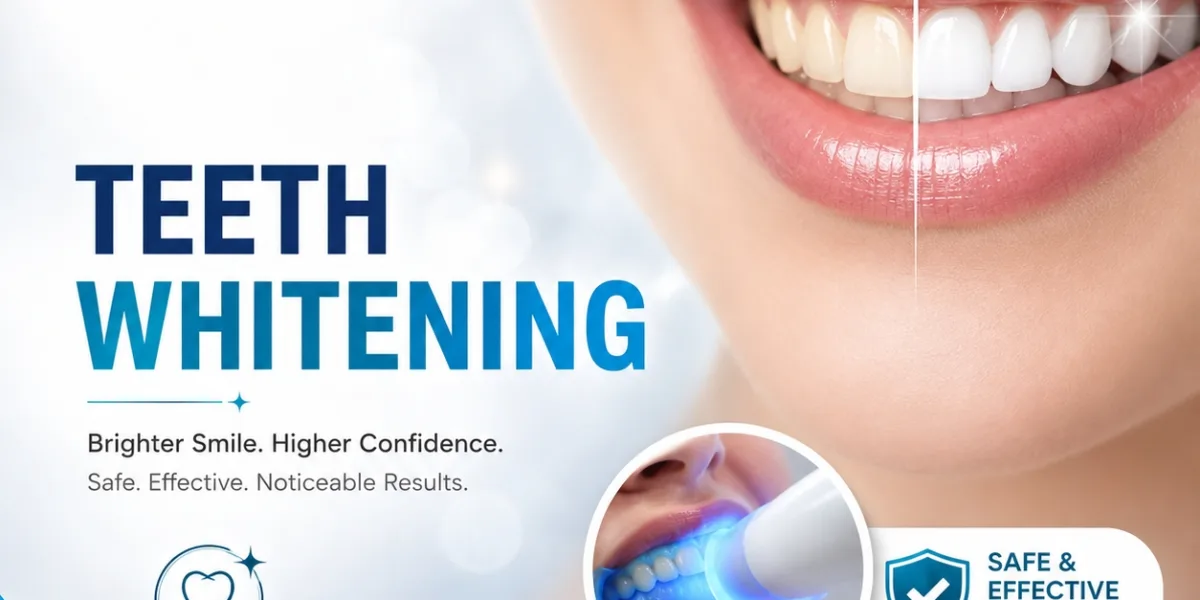
Teeth whitening can effectively reduce many common stains, but it does not work equally well on every type of discoloration. Some stains are located deeper inside the tooth or are caused by changes that whitening products cannot reverse. Understanding why certain stains resist whitening can help patients choose a more suitable cosmetic dental treatment.
What Causes Tooth Staining
Tooth discoloration can develop for many reasons. Coffee, tea, tobacco, cola, and strongly colored foods can create surface stains over time. These are often called extrinsic stains and may respond relatively well to professional whitening.
Other discoloration develops within the tooth structure. These deeper stains, known as intrinsic discoloration, can be more difficult to lighten with conventional whitening treatments.
Surface Stains Usually Respond Better to Whitening
Surface stains are often caused by substances that come into contact with the outer surface of the teeth. Regular consumption of coffee, tea, red sauces, and tobacco products can gradually darken enamel.
Professional whitening may break down many of these stain molecules and make the teeth appear noticeably brighter. However, the result can vary depending on how deeply the discoloration has developed and the condition of the enamel.
Deep Internal Stains Can Be More Difficult
Intrinsic stains occur inside the tooth rather than only on its outer surface. They may result from aging, trauma, certain medications, excessive fluoride exposure during tooth development, or changes within the tooth.
Because these stains are deeper, standard whitening may provide limited improvement. In such cases, a dentist may recommend an alternative cosmetic treatment rather than repeatedly whitening the teeth.
Age-Related Discoloration May Need More Than Whitening
As people age, enamel naturally becomes thinner and the underlying dentin can become more visible. Dentin has a naturally yellowish appearance, which can make teeth look darker over time.
Whitening can improve some age-related discoloration, but it cannot completely change the natural structure or color of the dentin. Patients may therefore notice that their teeth remain somewhat warm or yellow even after whitening.
Tetracycline Stains Can Be Resistant:
Certain medications taken while teeth are developing can cause internal discoloration. Tetracycline-related staining is one example that may appear as gray, brown, or band-like discoloration.
These stains can be particularly challenging to treat with conventional whitening. Depending on their severity, a dentist may discuss other cosmetic options.
Fluorosis May Not Whiten Evenly:
Dental fluorosis can cause white spots, streaks, or areas of brown discoloration on the teeth. Because fluorosis changes the appearance and structure of developing enamel, traditional whitening may not produce an even result.
In some cases, whitening may make surrounding areas lighter while the existing markings remain visible. A dental professional can evaluate the appearance and discuss appropriate cosmetic options.
A Dead or Injured Tooth May Look Dark
A tooth that has experienced trauma or damage to its internal pulp can sometimes become gray or dark. This type of discoloration is different from ordinary surface staining.
If one tooth is significantly darker than the surrounding teeth, it is important to have it examined before undergoing general whitening. The underlying dental problem may need to be addressed first.
Dental Crowns and Veneers Do Not Whiten Like Natural Teeth
Whitening products work on natural tooth structure and generally do not change the color of porcelain or ceramic crowns, veneers, or similar restorations.
If a patient has visible restorations that are darker or lighter than the surrounding teeth, whitening may create a shade difference. A dentist can help determine the best order of treatment when cosmetic restorations and whitening are both being considered.
Why Repeated Whitening May Not Solve Resistant Stains
If a stain is caused by internal discoloration, repeatedly using whitening products may not produce the desired improvement. More whitening does not necessarily mean a better result and can increase the likelihood of temporary sensitivity.
When a stain does not respond as expected, identifying its cause is more useful than simply increasing the frequency or strength of whitening.
What Treatments Can Help Resistant Tooth Stains?
Depending on the cause and severity of discoloration, a dentist may consider options such as dental bonding, veneers, crowns, enamel microabrasion, or other cosmetic procedures.
The appropriate treatment depends on the condition of the tooth and the patient's cosmetic goals. A professional evaluation can help determine which approach is most suitable.
When Should You See a Dentist About Tooth Discoloration?
You should consider a dental examination if one tooth suddenly becomes dark, discoloration develops without an obvious cause, or whitening produces little improvement. A dentist can check for cavities, enamel changes, trauma, internal tooth problems, and other possible causes.
Identifying the cause before cosmetic treatment can help prevent ineffective whitening and ensure that underlying dental concerns are not overlooked.
Final Thoughts:
Not every tooth stain responds equally to whitening. Surface stains from foods and drinks may improve significantly, while deep discoloration, medication-related stains, fluorosis, trauma-related changes, and dental restorations may require different approaches.
The most effective way to deal with resistant stains is to determine their cause first. A dental professional can assess your teeth and recommend whitening or another cosmetic treatment based on your individual needs.


