

Chemical bonds are the foundation of all matter. From the water we drink to the air we breathe and the food we eat, every substance owes its existence to the interactions between atoms. Understanding how atoms bond to form molecules is one of the first steps for anyone diving into the world of chemistry—whether for school, research, or simply curiosity. This article gives you a comprehensive introduction to chemical bonds, explaining how and why atoms unite, the different types of bonds, and how they influence the properties of matter.
Whether you're just beginning your study of chemistry or brushing up on the basics for more advanced topics like organic chemistry online, having a solid grasp of chemical bonding concepts is essential. We'll break down complicated terms into digestible insights and walk you through key concepts like ionic, covalent, and metallic bonds—with real-world examples to keep things relatable.
Key Points
- Chemical bonds are forces that hold atoms together in compounds and molecules.
- There are three main types: ionic, covalent, and metallic bonds.
- The type of chemical bond affects the physical and chemical properties of substances.
- Bond strength, polarity, and electron behavior are vital in determining how compounds react.
- Understanding chemical bonding is foundational for advanced topics in chemistry and biology.
What Is a Chemical Bond?
A chemical bond is the attractive force that holds atoms together in compounds. Atoms form bonds to achieve a more stable electron configuration, typically trying to reach the electron configuration of noble gases, which are naturally stable due to their full valence electron shells.
There are different types of chemical bonds, each arising from specific interactions between electrons of atoms. These bonds affect not only how atoms connect but also how substances behave under different conditions such as heat, pressure, or chemical reactions.
Why Do Atoms Form Bonds?
Atoms bond because they are more stable together than they are apart. This stability comes from achieving a full outer electron shell. When atoms combine, they either transfer or share electrons to achieve this stable configuration. This process lowers their overall potential energy, making the bonded state energetically favorable.
The Octet Rule
One of the guiding principles in bonding is the octet rule, which states that atoms tend to form bonds in such a way that each atom has eight electrons in its valence shell. While there are exceptions (like hydrogen, which only needs two electrons), the rule helps explain the bonding behavior of most elements.
Types of Chemical Bonds
Ionic Bonds
Ionic bonding occurs when electrons are transferred from one atom to another, typically between a metal and a non-metal. The metal loses one or more electrons to become a positively charged ion (cation), while the non-metal gains electrons to become a negatively charged ion (anion). These opposite charges attract, forming a strong electrostatic force that holds the ions together.
Example: Sodium (Na) and Chlorine (Cl) form sodium chloride (NaCl), or table salt. Sodium donates one electron to chlorine, resulting in Na⁺ and Cl⁻ ions that attract each other.
Covalent Bonds
Covalent bonding involves the sharing of electron pairs between atoms. This type of bond typically forms between two nonmetals. The shared electrons allow each atom to attain a stable electron configuration. Covalent bonds can be single, double, or triple, depending on how many electron pairs are shared.
Example: Two hydrogen atoms each share one electron with an oxygen atom to form water (H₂O). This sharing allows both hydrogen and oxygen to achieve full valence shells.
Metallic Bonds
Metallic bonding occurs in metals, where electrons are not shared between specific atoms but rather exist in a ""sea of electrons"" that flows freely around metal cations. This electron mobility gives metals their characteristic properties like electrical conductivity and malleability.
Example: In a copper wire, copper atoms share electrons freely, allowing electrical current to pass with minimal resistance.
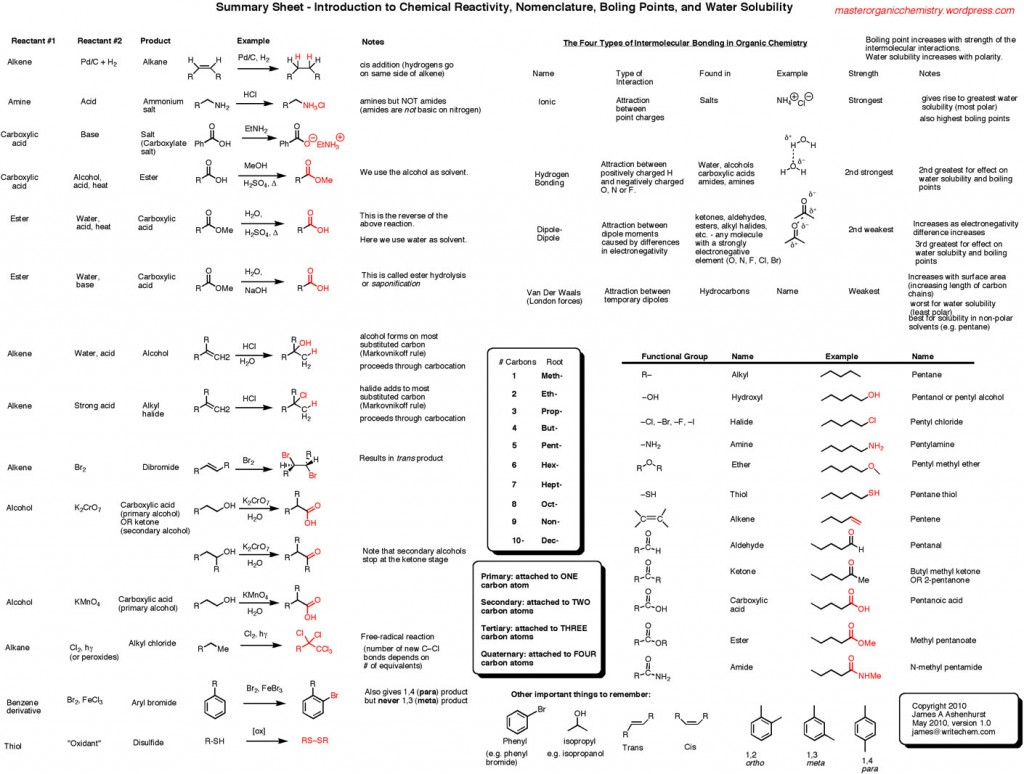
Other Bonding Types and Interactions
Polar and Nonpolar Covalent Bonds
Covalent bonds can be classified as polar or nonpolar depending on the electronegativity difference between the bonded atoms. Electronegativity is the ability of an atom to attract shared electrons. If one atom attracts the electrons more strongly, it becomes slightly negative while the other becomes slightly positive, creating a dipole.
- Nonpolar: Two atoms share electrons equally (e.g., O₂, N₂)
- Polar: Electrons are shared unequally, resulting in partial charges (e.g., H₂O)
Hydrogen Bonds
Though not a true chemical bond, hydrogen bonding is a strong intermolecular force that occurs when a hydrogen atom covalently bonded to an electronegative atom (like oxygen or nitrogen) experiences attraction from another electronegative atom. Hydrogen bonds are crucial in biological systems, especially in DNA and proteins.
Van der Waals Forces
These are weak interactions between molecules due to temporary dipoles. They play a significant role in molecular packing and the physical properties of gases and liquids.
Bond Strength and Bond Length
Bond Energy
Bond energy is the amount of energy needed to break a bond between two atoms. Stronger bonds have higher bond energies. For example, a triple bond (as in nitrogen gas, N≡N) is stronger than a double bond or single bond and thus requires more energy to break.
Bond Length
Bond length is the distance between the nuclei of two bonded atoms. As bond strength increases, bond length tends to decrease. This inverse relationship explains why triple bonds are shorter than single bonds.
How Bond Type Affects Properties of Substances
Solubility
Ionic compounds like NaCl dissolve well in polar solvents such as water, while covalent molecules like oil do not. This is summed up by the rule ""like dissolves like.""
Melting and Boiling Points
Substances with ionic bonds usually have high melting and boiling points due to strong electrostatic forces. Covalent compounds can have lower melting and boiling points, especially if they are molecular in nature.
Electrical Conductivity
In general, ionic compounds conduct electricity when dissolved in water, while covalent compounds do not. Metals conduct electricity in both solid and liquid forms due to the free movement of electrons.
Real-World Applications of Chemical Bonds
Biological Molecules
Proteins, DNA, and carbohydrates owe their structure and function to specific bonding patterns. Hydrogen bonds between base pairs stabilize DNA’s double helix, while covalent bonds form the backbone of organic molecules.
Material Sciences
Understanding metallic bonding has led to the development of alloys like steel, while covalent bonding informs the design of polymers such as plastic. Bonding principles are integral in nanotechnology and semiconductor manufacturing.
Pharmaceuticals
Drug design heavily relies on molecular bonding. The efficacy of a drug depends on how well it forms temporary bonds with biological targets, often via hydrogen bonding and ionic interactions.
Common Misconceptions About Chemical Bonds
- “Ionic and covalent bonds are always clear-cut.” Many compounds exhibit characteristics of both bonding types. For instance, ammonium chloride (NH₄Cl) contains both ionic and covalent bonds.
- “All molecules with polar bonds are polar molecules.” Not necessarily. Molecular geometry plays a role. For example, carbon dioxide (CO₂) has polar bonds but is a nonpolar molecule due to its linear shape.
- “Covalent bonds are weaker than ionic bonds.” This varies. Some covalent bonds, especially multiple bonds, can be stronger than ionic interactions.
Studying Chemical Bonds Effectively
Here are some practical tips to help you master chemical bonding:
- Use Lewis structures to visualize electron sharing or transfer.
- Practice with periodic table trends like electronegativity and atomic radius.
- Explore interactive simulations for molecular geometry and polarity.
- Engage with platforms that offer organic chemistry online tools and practice problems.
Conclusion
Chemical bonding is more than just a theoretical concept—it's the cornerstone of chemistry that explains the structure, stability, and reactivity of all matter. By understanding ionic, covalent, and metallic bonds, as well as advanced topics like polarity and hydrogen bonding, you build a strong foundation for exploring deeper areas of chemistry and its applications in the real world. Whether you're learning for a class or for your own enrichment, mastering chemical bonds is a critical step in your scientific journey.
Frequently Asked Questions (FAQ)
What is the strongest type of chemical bond?
Triple covalent bonds tend to be the strongest in terms of bond energy. However, the context matters; for example, ionic bonds can be very strong in solid crystalline forms.
How do you tell if a bond is ionic or covalent?
Look at the types of atoms involved. Bonds between metals and nonmetals are usually ionic, while bonds between nonmetals are typically covalent. Electronegativity difference can also help determine bond type.
Can a compound have both ionic and covalent bonds?
Yes. For example, ammonium sulfate (NH₄)₂SO₄ has covalent bonds within the ammonium ion and sulfate ion but ionic bonds between the ions themselves.
What role does electronegativity play in bonding?
Electronegativity determines how strongly an atom attracts bonding electrons. A large difference usually results in ionic bonding, while smaller differences lead to polar or nonpolar covalent bonding.
Why is water a polar molecule?
Water has a bent molecular shape and polar covalent bonds. The oxygen atom pulls electrons more strongly than hydrogen, creating a partial negative charge on oxygen and partial positive charges on the hydrogens.


