
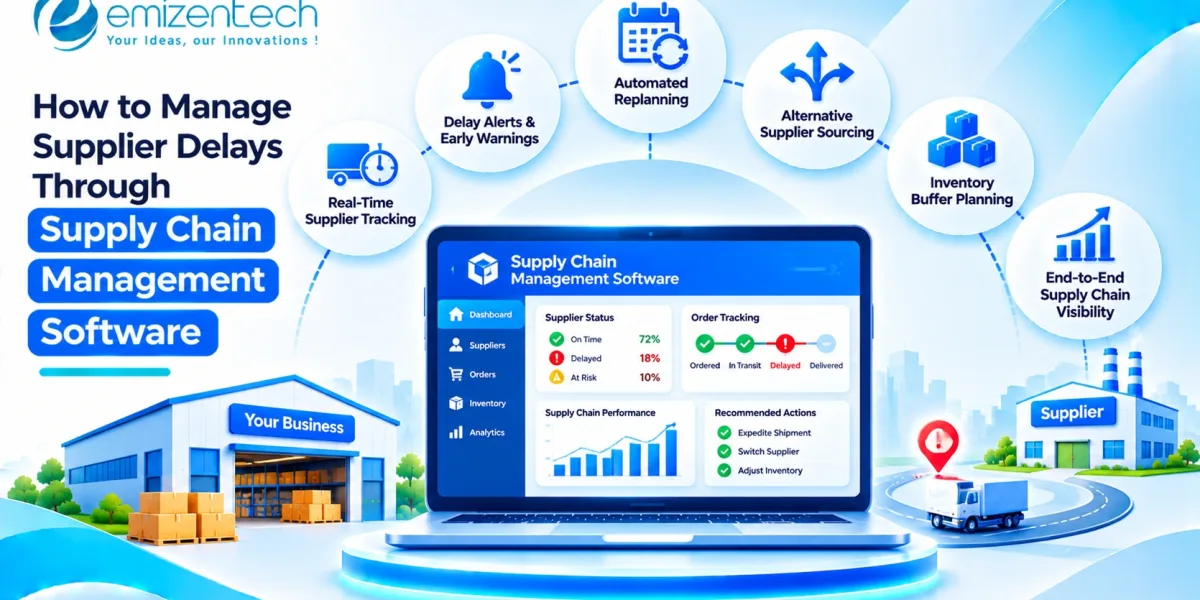
Supplier delays can disrupt business operations long before a shipment actually arrives late. A missed delivery can affect raw material availability, production schedules, inventory levels, and customer commitments. For businesses working with multiple suppliers, even a small delay can create a chain of operational problems.
The challenge is not just getting suppliers to deliver on time but identifying potential delays early and responding before they affect other business activities. Supply Chain Management Software helps businesses improve visibility into purchase orders, supplier commitments, shipment updates, and inventory requirements. With centralized information and automated tracking, procurement teams can identify risks and make timely decisions to minimize disruptions.
How Can Businesses Identify Supplier Delays Before They Disrupt Operations?
Identifying supplier delays early gives procurement teams more time to adjust purchasing decisions and avoid unexpected shortages. Supply Chain Management Software provides centralized access to supplier records, purchase orders, delivery schedules, and procurement updates. This helps businesses identify potential delivery issues, monitor supplier commitments, and take corrective action before disruptions affect daily operations.
Compare Expected and Actual Supplier Lead Times
Supplier lead time refers to the period between placing an order and receiving the goods. Businesses should compare the delivery timelines committed by suppliers with their actual delivery records.
For example, if a supplier regularly takes 12 days instead of the agreed 7 days, procurement teams can identify a recurring delay pattern and adjust future purchasing schedules. Monitoring these variations also helps businesses evaluate whether existing suppliers can meet their operational requirements.
Monitor Purchase Order Status
Purchase orders move through different stages, including creation, approval, supplier confirmation, processing, dispatch, and delivery. Delays at any stage can affect the final delivery date.
A centralized tracking system helps procurement teams monitor these stages and identify orders that remain unconfirmed or pending beyond expected timelines. This reduces dependency on manual follow-ups and makes it easier to identify delayed orders.
How Does Supply Chain Management Software Help Businesses Respond to Supplier Delays?
Once a potential delay is identified, businesses need to understand its impact and decide what action to take. Connected procurement and inventory data can help teams coordinate responses, communicate with suppliers, and adjust operational plans.
Automated Alerts for Missed Delivery Commitments
Automated alerts help procurement teams identify important changes in supplier and order status. Businesses can configure notifications for overdue purchase orders, missed delivery dates, pending supplier confirmations, and shipment delays.
For instance, if a supplier does not dispatch an order by the committed date, the system can notify the procurement team. This allows employees to follow up immediately rather than discovering the issue when inventory runs out.
Centralized Supplier Communication and Delivery Updates
When supplier communication happens across emails, phone calls, and spreadsheets, important updates can easily get missed. Maintaining supplier records and order-related communication in one place helps teams access delivery commitments, revised timelines, and order confirmations.
Procurement teams can use this information to request updated delivery estimates, confirm available quantities, and coordinate alternative arrangements when necessary.
Assess Inventory Impact Before Taking Action
Not every delayed shipment requires the same response. A delay involving critical production materials may need immediate attention, while a delay involving non-essential inventory may have limited operational impact.
Connecting procurement records with inventory information helps businesses identify available stock, pending orders, and materials approaching their reorder thresholds. Teams can then prioritize delayed shipments based on their impact on production and customer commitments.
What Actions Should Businesses Take When a Supplier Misses a Delivery Deadline?
Identifying a supplier delay is only the first step. Businesses also need a response plan that helps them maintain operations, manage inventory shortages, and avoid missing customer delivery commitments.
Businesses can use supply chain management software to review delayed purchase orders, check available inventory, prioritize urgent requirements, and coordinate alternative procurement arrangements. Having these details accessible in one system helps teams respond based on operational priorities rather than relying on manual follow-ups.
Prioritize Delayed Orders Based on Business Impact
Procurement teams should evaluate delayed orders based on their importance to ongoing operations. For example, materials required for urgent production orders should receive higher priority than items with sufficient inventory available.
Businesses can consider the following factors:
-
Available inventory and remaining stock levels.
-
Production requirements and upcoming order commitments.
-
Number of days until existing inventory runs out.
-
Customer delivery deadlines affected by the delay.
This approach helps teams allocate resources and follow up on the most critical supplier issues first.
Arrange Alternative Suppliers or Partial Deliveries
Depending on the delay, businesses can contact alternative suppliers to fulfill urgent requirements. Maintaining relationships with multiple approved suppliers reduces dependency on a single source.
Another option is requesting partial deliveries. If a supplier cannot deliver the complete order on time, receiving available quantities can help businesses continue essential operations while waiting for the remaining shipment.
Adjust Production and Replenishment Plans
When delayed materials affect production schedules, businesses may need to revise manufacturing priorities, allocate available inventory differently, or adjust replenishment timelines.
Procurement and operations teams should coordinate these changes to avoid unnecessary production interruptions. Updated delivery estimates should also be reflected in inventory and purchasing records to support accurate planning.
How Can Businesses Prevent Repeated Supplier Delays Using Historical Data?
Managing individual supplier delays is important, but preventing recurring problems requires analyzing historical performance. Businesses can use delivery records, procurement reports, and supplier data to identify patterns and improve future purchasing decisions.
Using Supply Chain Management Software to analyze historical supplier records also helps businesses identify recurring delivery issues. Procurement teams can compare supplier lead times, order fulfillment rates, and delivery consistency to make better sourcing decisions and improve future procurement planning.
Analyze Supplier On-Time Delivery Performance
Businesses should regularly evaluate supplier performance using measurable indicators, including:
-
On-Time Delivery Rate: Percentage of orders delivered within the agreed timeframe.
-
Average Lead Time: Average number of days suppliers take to fulfill orders.
-
Order Fulfillment Accuracy: Percentage of orders delivered with the correct quantities and specifications.
-
Delay Frequency: Number of orders that miss their committed delivery dates.
-
Supplier Response Time: Time taken by suppliers to respond to queries and delivery-related requests.
Reviewing these metrics helps procurement teams identify reliable suppliers and recognize recurring delivery problems.
Identify Suppliers with Recurring Delivery Risks
Historical delivery records can reveal suppliers that frequently miss deadlines, provide inaccurate delivery estimates, or struggle to fulfill large orders.
Businesses can use these insights to review supplier agreements, negotiate more realistic delivery commitments, and evaluate alternative sourcing options. This also helps procurement teams make supplier selection decisions based on actual performance rather than cost alone.
Improve Procurement Planning with Demand Forecasting
Demand forecasting helps businesses estimate future material requirements using historical consumption, sales trends, seasonal demand, and upcoming production schedules.
When forecasting is considered alongside supplier lead times, procurement teams can determine when to place orders and how much inventory to maintain. Ordering critical materials earlier can reduce the risk of shortages caused by unexpected supplier delays.
What Should Businesses Integrate to Improve Supplier Delay Management?
Supplier delay management becomes more effective when procurement information is connected with other business operations. Instead of maintaining separate records, businesses can integrate essential systems to improve information flow and decision-making.
Some important integrations include:
-
ERP Systems: Connect procurement, finance, production, and inventory information to maintain consistent operational records.
-
Inventory Management Systems: Provide stock availability, reorder levels, and warehouse information to identify potential shortages.
-
Supplier Portals: Allow suppliers to update purchase order confirmations, shipment details, and expected arrival dates.
-
Logistics Tracking Systems: Provide shipment location updates and estimated arrival information to help businesses monitor transportation delays.
These integrations reduce information gaps between departments and help procurement teams respond faster when delivery schedules change.
Conclusion
Supplier delays cannot always be avoided, but their operational impact can be reduced through early detection, effective supplier communication, accurate inventory planning, and continuous performance monitoring. Businesses that understand where delays occur and how they affect procurement and production can make better decisions and maintain smoother operations.
The right technology infrastructure also plays an important role in connecting supplier information with inventory, procurement, and logistics activities. EmizenTech offers enterprise technology solutions and system integration capabilities that help businesses improve operational connectivity and streamline complex workflows. With better-connected systems and data visibility, businesses can manage supplier-related disruptions more effectively and build more resilient supply chain operations.
FAQs
1. How can businesses identify supplier delays early?
Businesses can monitor purchase order statuses, compare actual and expected supplier lead times, track shipment updates, and review supplier delivery performance to identify potential delays.
2. Can software automatically notify businesses about delayed purchase orders?
Yes. Businesses can configure automated alerts for overdue purchase orders, missed delivery commitments, pending confirmations, and shipment status changes.
3. How can businesses manage inventory when suppliers miss delivery deadlines?
Businesses can review available stock, prioritize critical materials, arrange alternative suppliers, request partial deliveries, and adjust replenishment schedules.
4. Which KPIs help businesses evaluate supplier delivery performance?
Important KPIs include on-time delivery rate, average lead time, order fulfillment accuracy, delay frequency, and supplier response time.


