
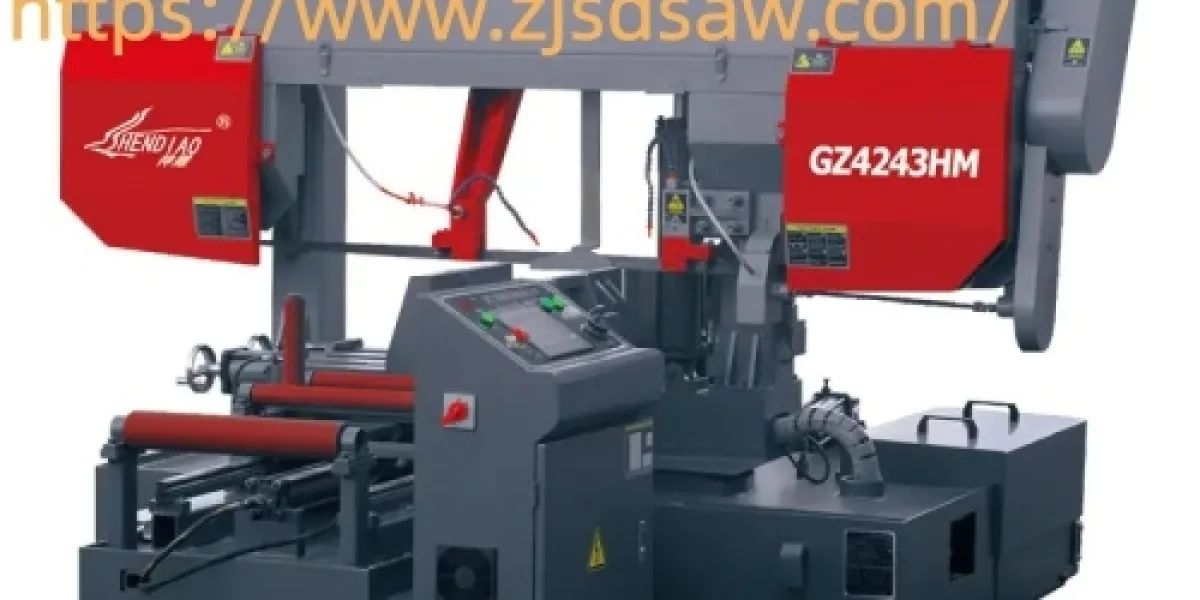
Fully Automatic Angle Cutting Band Saw Machine selection requires a clear understanding of your production requirements, material dimensions, and workshop workflow. For metal processing businesses, purchasing industrial equipment is a decision that affects daily output, labor arrangements, maintenance planning, and the consistency of finished components. Before requesting a quotation, buyers should examine how a proposed system will perform under their actual working conditions rather than relying on a specification sheet alone.
Start by identifying the materials handled throughout a typical working week. Steel bars, structural profiles, pipes, and other metal stock can differ considerably in thickness, shape, and hardness. These differences influence the required capacity, blade configuration, feed settings, and processing time. A workshop that mainly handles small batches may have different priorities from a factory supplying repeated components for construction or equipment assembly. Preparing a list of common materials and dimensions gives suppliers a practical basis for recommending suitable configurations.
Cutting capacity deserves careful attention. Buyers should check the maximum dimensions supported for round and rectangular stock, together with the permitted range of mitre settings. A unit that accommodates a large workpiece during straight processing may have a smaller capacity when the material is positioned diagonally. Reviewing these figures before purchasing helps prevent problems when new orders involve wider profiles or different joint designs. It is also useful to discuss whether the proposed configuration can accommodate foreseeable changes in product dimensions.
Accuracy depends on several factors working together. The positioning system, clamping arrangement, structural rigidity, and feed control can all influence the finished result. When parts must fit together during welding or assembly, small dimensional variations may create additional grinding, adjustment, or material waste. Buyers should ask suppliers how positioning is controlled and whether the equipment can maintain repeatable results across a representative production batch. Requesting a demonstration with materials similar to those used in the workshop can make technical differences easier to evaluate.
Automation deserves attention beyond the number of programmed functions. Automatic feeding, adjustable processing parameters, and programmable positioning may reduce repetitive manual tasks when production involves recurring orders. However, their practical value depends on the entire workflow. Loading, clamping, measuring, unloading, and handling leftover stock all influence the time required to complete a batch. Buyers should ask which tasks remain manual, how settings are stored, and how operators change between different jobs. These details help establish whether automation addresses a genuine production bottleneck.
Operator safety and ease of use should also form part of the purchasing assessment. Check the guarding arrangement, emergency stop accessibility, clamping security, and procedures for handling sharp metal edges. The control interface should allow trained staff to understand operating status and recognize common faults without unnecessary confusion. Training requirements matter as well, especially when several employees will share responsibility for daily production. Clear operating instructions and appropriate maintenance guidance can support safer working practices over the equipment's service life.
Maintenance costs deserve a place in the budget from the beginning. Blade replacement, coolant management, lubrication, electrical components, and hydraulic systems may contribute to routine expenditure, depending on the configuration. Buyers should ask about recommended service intervals, replacement part availability, and the expected requirements for preventive maintenance. It is also worth confirming whether technical assistance is available when a fault interrupts production. A lower purchase price may not represent a lower overall cost if spare parts take a long time to arrive or service arrangements are unclear.
Before making a commitment, compare quotations using the same technical requirements. Check the included accessories, installation arrangements, warranty conditions, delivery schedule, and operator training provisions. Ask the supplier to clarify any specification that is difficult to interpret, particularly when comparing different control systems or optional functions. A written confirmation of the agreed configuration can reduce misunderstandings during delivery and commissioning.
For workshops planning to expand production or improve consistency across repeated orders, Chendiao offers equipment options for different metal processing requirements. Buyers can review the available product range, compare relevant specifications, and discuss material dimensions, production targets, and preferred operating arrangements with the company. Visiting https://www.zjsdsaw.com/product/ provides a starting point for reviewing its product offerings and identifying models for further evaluation. By matching technical capabilities with real workshop demands, purchasers can make a more informed investment and develop a practical plan for daily operation, maintenance, and future production needs.


